


Introduction:
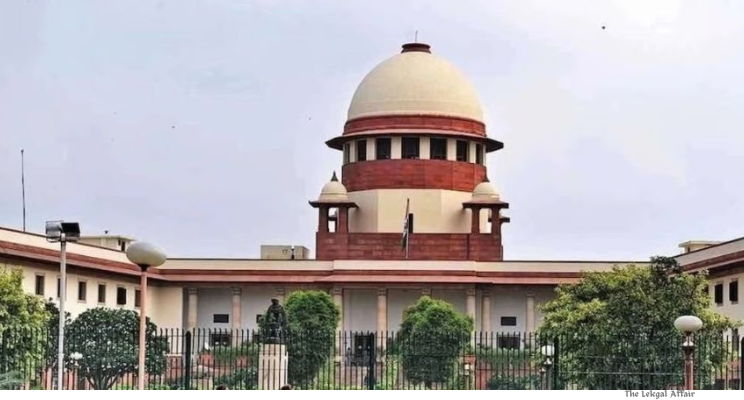
The Supreme Court of India has once again intervened to correct what it found to be an unjustified and disproportionate award of compensation by the National Consumer Disputes Redressal Commission (NCDRC), reiterating that damages, particularly running into crores of rupees, cannot be granted on conjectures, assumptions, or unsubstantiated claims. The appeal arose from a long-standing consumer dispute between ITC Limited, the operator of the luxury ITC Maurya Hotel, New Delhi, and Aashna Roy, a professional model, who alleged that a faulty haircut at the hotel’s salon caused severe professional, financial, and emotional loss. The matter was adjudicated by a Bench comprising Justice Rajesh Bindal and Justice Manmohan, with the judgment authored by Justice Bindal and reported as 2026 LiveLaw (SC) 129. The Court was examining whether the NCDRC, despite an earlier remand by the Supreme Court in 2023, had properly reassessed the quantum of compensation or had merely reiterated its earlier flawed approach by again awarding ₹2 crore in damages without reliable proof.
Arguments:
On behalf of the appellant, ITC Limited, it was vehemently argued that the NCDRC had acted in clear disregard of the Supreme Court’s earlier judgment of 2023, wherein the apex court had categorically held that the respondent–model failed to substantiate her claim of loss with cogent material and had remanded the matter only for a fresh determination of quantum based on legally acceptable evidence. Senior counsel appearing for ITC contended that instead of complying with the directions of the Supreme Court, the NCDRC mechanically reiterated the same compensation figure of ₹2 crore, relying solely on photocopies of documents purportedly showing loss of assignments and income exceeding ₹5 crore. It was argued that such photocopies were neither proved in accordance with law nor supported by any independent corroboration such as contracts, tax returns, bank statements, or testimony from agencies or clients. The appellant emphasized that consumer fora, though not bound by strict rules of the Evidence Act, are nonetheless required to follow principles of natural justice and reasonableness, especially when adjudicating claims involving enormous sums of money. It was further submitted that the alleged deficiency in service, even if assumed, could not automatically translate into speculative future loss, reputational damage, and trauma quantified at crores of rupees without a clear causal link and credible proof.
On the other hand, the respondent–model, appearing as a caveator-in-person, defended the impugned order by asserting that as a professional model, her appearance was central to her livelihood, and a visibly faulty haircut directly impacted her marketability, professional prospects, and mental health. She contended that the trauma and stress caused by the incident prevented her from maintaining original documents and that photocopies should suffice in consumer proceedings, which are meant to be summary and consumer-friendly. The respondent argued that loss in creative and appearance-based professions cannot always be calculated with mathematical precision and that the NCDRC rightly took a holistic view of her suffering, professional setback, and emotional distress. It was further argued that the hotel was a luxury establishment charging premium prices and owed a higher duty of care to its consumers, particularly when providing services impacting personal appearance. According to the respondent, the award of ₹2 crore was justified as a composite compensation for financial loss, mental agony, and loss of future opportunities.
Judgment:
After carefully considering the rival submissions and scrutinizing the record, the Supreme Court categorically held that the NCDRC had committed a serious error in again awarding ₹2 crore as compensation without any legally sustainable basis. The Court noted that its earlier judgment of 2023 was unequivocal in holding that the respondent had failed to place material on record to substantiate her claim, and the remand was specifically for a fresh and reasoned determination of quantum based on evidence. However, the NCDRC, instead of undertaking a genuine reassessment, merely relied on photocopies of documents to justify a compensation claim exceeding ₹5 crore and awarded ₹2 crore without demonstrating how such loss was actually suffered. Justice Bindal, writing for the Bench, made strong observations that damages cannot be awarded on presumptions or on the whims and fancies of a complainant, particularly when the claim runs into crores of rupees. The Court emphasized that while consumer fora may adopt a flexible approach, they cannot abandon the fundamental requirement of trustworthy and reliable evidence. It was categorically held that this was not a case involving a minor inconvenience where compensation could be granted on a thumb rule; rather, it involved an extraordinary monetary claim which demanded clear proof of actual loss directly attributable to the alleged deficiency in service. The Court rejected the NCDRC’s reasoning that trauma justified reliance on mere photocopies, observing that even if originals were unavailable, there are several other legally acceptable methods to substantiate claims, such as secondary evidence properly proved, independent verification, or corroborative material. Finding the award of ₹2 crore wholly unjustified and disproportionate, the Supreme Court set aside the impugned order and partly allowed the appeal, finally determining the compensation at ₹25 lakh, which amount had already been deposited by ITC Limited with the NCDRC. The Court thus brought finality to the dispute while reinforcing the principle that consumer justice must remain grounded in reason, proportionality, and proof.