


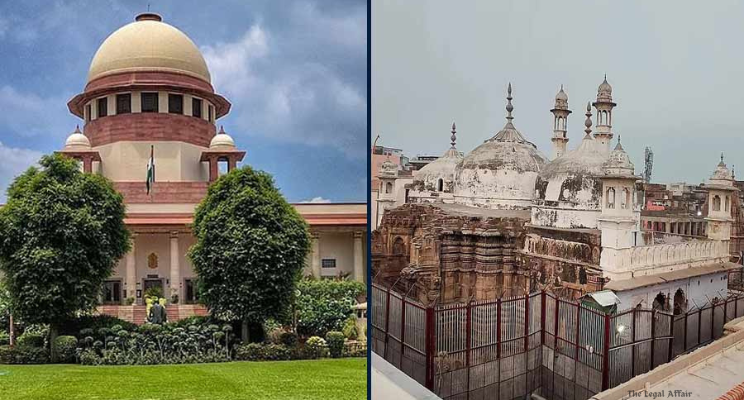
Introduction:
The Supreme Court recently issued notice on a Special Leave Petition filed by the Gyanvapi mosque committee challenging orders permitting Hindu religious rituals at a tehkhana (cellar) of the mosque. The dispute arose from orders of the Varanasi District Court and the Allahabad High Court, prompting the mosque committee to seek intervention. The Court ordered maintenance of status quo regarding Namaz by Muslims in the mosque and Hindu worship at the tehkhana, with a directive that any alteration requires prior sanction. The case involves intricate questions of religious rights, property possession, and the interpretation of court orders.
Arguments of Both Sides:
The counsel for the Gyanvapi mosque committee, Mr. Hufeza Ahmadi, argued that the orders of the lower courts allowing Hindu religious rituals at the tehkhana of the mosque amounted to final relief at an interim stage. He emphasized that there was no tearing urgency for granting a mandatory injunction and raised concerns about the implementation of the orders by the State government, highlighting the potential for unrest and the restoration of a 30-year-old status quo ante.
On the other hand, Senior Advocate Shyam Divan, representing the plaintiffs, contended that the orders of the trial judge appointing a receiver and allowing Hindu worship at the tehkhana were justified and well-reasoned. He emphasized the historical possession of the tehkhana by Hindus and argued that the interim arrangement need not be disturbed.
Court’s Judgement:
The Supreme Court, led by CJI DY Chandchrachud and Justices JB Pardiwala and Manoj Misra, issued notice on the Special Leave Petition filed by the mosque committee challenging the lower court orders. It ordered that the status quo be maintained regarding the observance of Namaz by Muslims in the mosque and Hindu worship at the tehkhana, with no alteration allowed without prior sanction from the Supreme Court.
The Court further directed that Hindu religious worship at the tehkhana should be conducted in accordance with the District Court’s order and under the custody of the receiver. It took note of the separate entrances to the tehkhana and the mosque and emphasized the need to maintain status quo to enable both communities to offer worship.