


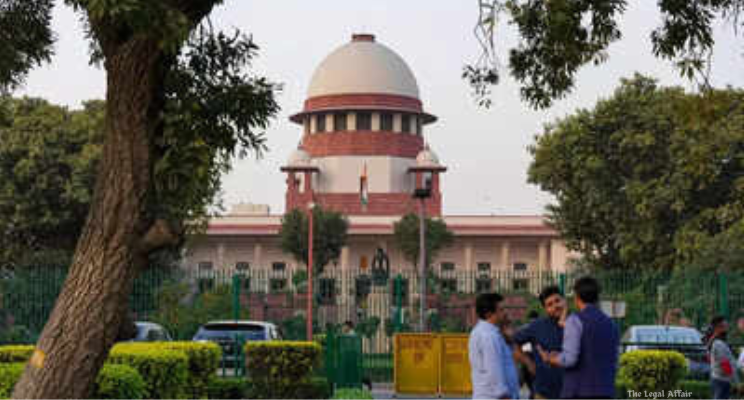
Introduction:
In the case of Kailash Kumar v. State of Himachal Pradesh & Anr., the Supreme Court of India overturned a High Court ruling that had cancelled the bail of an accused charged under Section 307 (attempt to murder) of the Indian Penal Code (IPC). The Bench of Justices Dipankar Datta and Manmohan strongly reaffirmed the constitutional principle that personal liberty should not be interfered with lightly unless compelling reasons exist. The Court observed that there was no evidence indicating that the appellant misused his liberty post bail, influenced witnesses, tamper with evidence, or delayed trial proceedings. Consequently, the Apex Court reinstated the appellant’s bail and issued directions ensuring compliance with court proceedings.
Petitioner’s Arguments:
The petitioner, Kailash Kumar, argued that the High Court erred in cancelling his bail without any cogent material justifying such an action. His counsel contended that he had been in custody for two years before being granted bail and had not indulged in any activity that warranted its cancellation. Out of the 43 prosecution witnesses, 17 had already been examined, and there was no evidence of the appellant threatening witnesses, tampering with evidence, or using dilatory tactics to delay the trial. The petitioner’s counsel cited the Supreme Court’s ruling in Ajwar v. Waseem and Anr., where the Court outlined the grounds under which bail could be cancelled, such as misuse of liberty, influencing witnesses, tampering with evidence, or perverse and illegal bail orders. Since none of these grounds were met, the High Court’s interference was unjustified.
Respondent’s Arguments:
The State of Himachal Pradesh argued that the presence of the appellant at the crime scene was undisputed, and he, along with the co-accused, caused injury to the complainant. Despite the injury being simple, the High Court held that there was a common intention under Section 34 IPC, thereby justifying a stringent approach. The prosecution also contended that the seriousness of the offence should weigh against granting bail, asserting that the cancellation order was necessary to prevent further harm and ensure an unbiased trial.
Court’s Judgment:
After carefully considering the submissions of both parties, the Supreme Court emphasized that bail should not be cancelled arbitrarily unless there is substantial material proving post-bail misconduct. The Court criticized the High Court’s approach, noting that it had effectively conducted a “mini-trial” while assessing the cancellation request, which was beyond the scope of bail jurisprudence. Citing its earlier ruling in Ajwar v. Waseem and Anr., the Court reiterated that cancellation of bail should be justified by specific instances of misuse of liberty, such as influencing witnesses, tampering with evidence, or delaying trial. The Apex Court found no such allegations or evidence against the appellant. Moreover, it stated that the presence of the appellant at the crime scene and the application of Section 34 IPC could not be a ground for cancellation, especially when the injury caused was simple. The Court observed that the High Court’s reasoning lacked a legal basis and was unjustified in depriving the appellant of his liberty.
Accordingly, the Supreme Court set aside the High Court’s order and restored the appellant’s bail while clarifying that it had not examined the merits of the case. As a precautionary measure, the Court mandated that the appellant must appear before the Trial Court on scheduled dates, warning that any default could result in bail cancellation. The judgment reasserted the fundamental principle that an individual’s liberty should not be curtailed without compelling reasons and due process.