


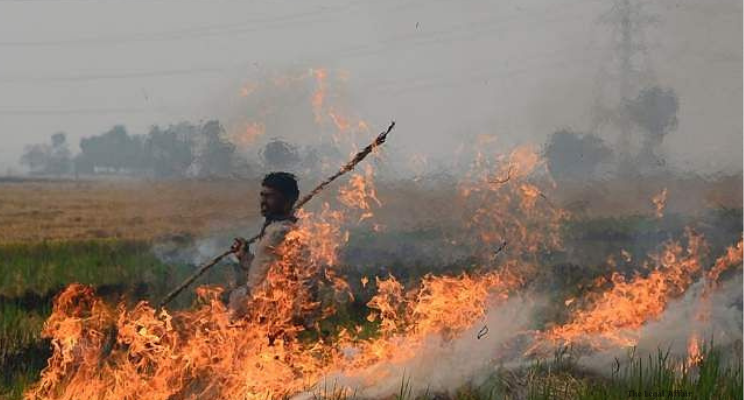
In the case of *Concerns over Deteriorating Air Quality in Delhi-NCR*, the Supreme Court presided over by Justices Sanjay Kishan Kaul and Sudhanshu Dhulia, addressed critical issues revolving around the alarming air quality in the region. The Court emphasized the urgency to curb stubble burning, a major contributor to the hazardous pollution during winters.
The arguments put forth by the government representatives and the Court’s subsequent judgment highlighted a necessity for immediate action. The Court directed Punjab and Haryana to implement measures to curb stubble burning within two months and report their progress, stressing the need for a substantial improvement in air quality by the following winter.
The government, through Attorney-General R Venkataramani, presented notes outlining steps for both states to adopt and emphasized the necessity for continuous monitoring. Acknowledging Punjab’s efforts with a 53% environmental compensation recovery rate, the Court urged acceleration in these efforts and a halt to farm fires.
Furthermore, the Court directed Haryana and Punjab to comply with stipulated actions, emphasizing compliance reports within the designated timeframe. The Delhi government was also instructed to submit a report, while the Court highlighted the need for the effective implementation of color-coded sticker schemes, stressing strict enforcement by all states.
Addressing concerns about e-waste burning, the Court directed the Commission for Air Quality Management (CAQM) to provide a report on the status and measures in place, emphasizing the importance of judicial monitoring to avert future crises.
In a proactive move, the Court expressed the need for periodic re-listing of the case to ensure consistent monitoring, despite the existence of the CAQM. The Court acknowledged the efforts of the amicus curiae, Aparajita Singh, in addressing these critical issues.