


Introduction:
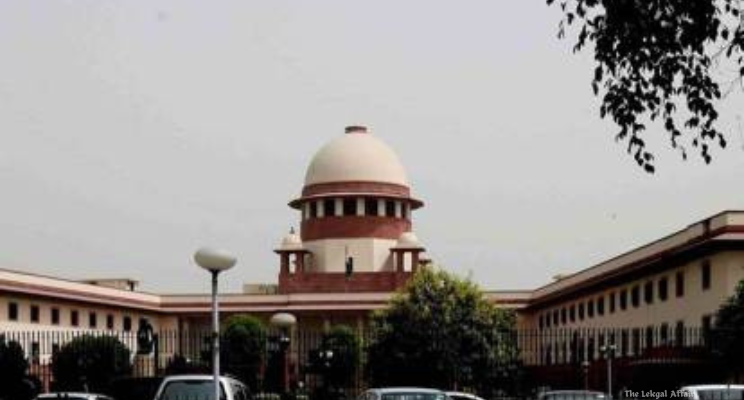
The Supreme Court of India, by an order passed on Monday, declined to entertain a writ petition seeking wide-ranging directions to the Union of India and all States to mandate registration (or recognition) of all schools and institutions imparting secular education and/or religious instruction to children up to the age of fourteen years. The petition was filed by Advocate Ashwini Kumar Upadhyay and was heard by a Division Bench comprising Justice Dipankar Datta and Justice Satish Chandra Sharma.
The petition invoked the constitutional mandate under Article 21A (Right to Free and Compulsory Education), read with Articles 39(f), 45 and 51A(k), and raised substantial constitutional questions concerning the scope of Articles 19(1)(g), 26 and 30, particularly the meaning of the expression “educational institutions of their choice” under Article 30. The petitioner contended that thousands of unregistered and unregulated institutions imparting religious instruction—especially to children below the age of fourteen—were functioning across the country, thereby undermining the constitutional guarantee of quality and compulsory education and raising concerns of child welfare, equality, and national security.
At the threshold, however, the Supreme Court questioned the maintainability of the writ petition, particularly in the absence of any prior representation to the executive authorities. Ultimately, the Court permitted the petitioner to withdraw the writ petition with liberty to approach the appropriate authority first, observing that judicial intervention would be warranted only after the executive had an opportunity to consider and decide the issue.
Background and Cause of Action:
According to the petition, the cause of action arose on January 16, 2026, when the Allahabad High Court, in Madarasa Ahle Sunnat Imam Ahmad Raza v. State of Uttar Pradesh, permitted an unregistered madrasa to continue imparting religious instruction. The petitioner asserted that upon further inquiry, it was revealed that a large number of unregistered madrasas and similar institutions—particularly in border districts—were functioning without any statutory oversight or regulatory supervision.
The petitioner contrasted this position with that adopted by the Kerala High Court, which had taken a diametrically opposite view by holding that institutions imparting education or instruction to children could not operate without recognition and were liable to be closed down. This divergence of judicial opinion, according to the petitioner, necessitated authoritative intervention by the Supreme Court to settle the law and ensure uniform constitutional compliance across the country.
Issues Raised Before the Court:
The writ petition raised several constitutional, legal, and policy questions of considerable significance, including:
Whether the State is constitutionally obligated to register or recognise all institutions—religious or non-religious—imparting education or religious instruction to children up to the age of fourteen.
Whether unregulated religious instruction to children violates Article 21A, read with Articles 39(f), 45 and 51A(k).
Whether institutions imparting religious instruction fall within the ambit of Article 26 (freedom to manage religious affairs) rather than Articles 19(1)(g) or 30(1).
Whether the phrase “educational institutions of their choice” under Article 30(1) is confined to secular or professional educational institutions and excludes purely religious institutions.
Whether extending Article 30 protection to minority religious institutions, while subjecting similar non-minority institutions to Article 26, violates Article 14 of the Constitution.
Arguments on Behalf of the Petitioner:
Appearing for the petitioner, Senior Advocate Gopal Sankaranarayanan advanced detailed submissions emphasizing the constitutional duty of the State to ensure that children receive free, compulsory, and quality education. He clarified at the outset that although the petition used the term “registration,” the substance of the prayer was for “recognition”, enabling regulatory oversight rather than interference with religious freedom.
It was contended that Article 21A is not merely a formal guarantee of access to education but also encompasses the obligation to ensure quality education. According to the petitioner, quality education cannot be ensured in the absence of minimum standards relating to infrastructure, teacher qualifications, curriculum oversight, and child safety—standards that are impossible to enforce without registration or recognition.
The petitioner argued that thousands of unregistered institutions imparting religious instruction operate outside the regulatory framework, leading to serious consequences. These institutions, it was submitted, often lack qualified teachers, do not follow any audited or approved curriculum, and remain beyond the reach of child welfare schemes and inspections. As a result, children studying in such institutions are deprived of holistic education and State benefits guaranteed under the Constitution.
It was further argued that the issue was not confined to madrasas alone but extended to any institution imparting religious instruction, irrespective of faith. The petitioner stressed that the concern was not religious freedom but the protection of children who are “gullible and naïve due to their tender age.”
A significant thrust of the argument related to constitutional classification. The petitioner contended that institutions imparting religious instruction should fall under Article 26, which governs religious affairs, and not under Article 30, which protects minority educational institutions. According to the petitioner, the phrase “educational institutions of their choice” in Article 30 refers to secular or professional education and cannot be stretched to include institutions imparting purely religious instruction. Extending Article 30 protection to minority religious institutions while subjecting non-minority religious institutions to Article 26, it was argued, creates an impermissible classification violative of Article 14.
The petition also highlighted broader concerns of national security, child trafficking, and child labour. It was contended that unregulated institutions create an opaque environment where children may be susceptible to indoctrination, manipulation, or exploitation, and where the State is unable to track enrolment, attendance, or welfare. Registration and supervision, according to the petitioner, were therefore necessary safeguards in a constitutional democracy.
Submissions and Observations of the Court:
At the very outset, Justice Dipankar Datta expressed reservations about the nature of the relief sought. The Bench questioned what exactly was meant by “registration” and whether the prayer was sufficiently precise. Upon clarification by Senior Advocate Sankaranarayanan that the relief effectively sought recognition, the Court proceeded to examine the maintainability of the petition.
Justice Datta pointedly observed that the petitioner had not approached any executive authority with the same prayer before invoking the extraordinary jurisdiction of the Supreme Court under Article 32. The Bench emphasized the settled principle that where the grievance is capable of being addressed by the executive, the Court would ordinarily insist that the petitioner exhaust such remedies first.
The Court noted that the petition sought wide-ranging policy directions involving regulation of educational and religious institutions across the country. Such matters, the Bench opined, are primarily within the domain of the executive and legislature, and judicial intervention at the first instance would be premature.
Justice Datta observed:
“Before the Court, you have to show that you have approached the authority with the same prayer and the authority has either declined to consider or is sitting tight. You go to the authority; in the next round, we will consider.”
While acknowledging the petitioner’s concern regarding conflicting views taken by different High Courts, the Bench maintained that even such divergence does not dispense with the requirement of first approaching the appropriate authority, particularly when the relief sought involves formulation or enforcement of regulatory policy.
The Court did not enter into the merits of the constitutional questions raised, including the scope of Articles 21A, 26, and 30, or the alleged violation of Article 14. Instead, it reiterated the principle of judicial restraint, especially in matters involving complex socio-legal and policy considerations.
Judgment and Order:
In view of the above, the Supreme Court permitted the petitioner to withdraw the writ petition. The petition was dismissed as withdrawn with liberty to approach the appropriate authority—either at the Union or State level—by way of a detailed representation raising the same issues and prayers.
The Bench made it clear that if, after such representation, the authority either refuses to consider the matter or fails to take a decision within a reasonable time, the petitioner would be at liberty to approach the Court again, at which stage the Court would consider the matter “in the next round.”
Accordingly, W.P.(C) No. 143/2026 was disposed of without adjudication on merits.