


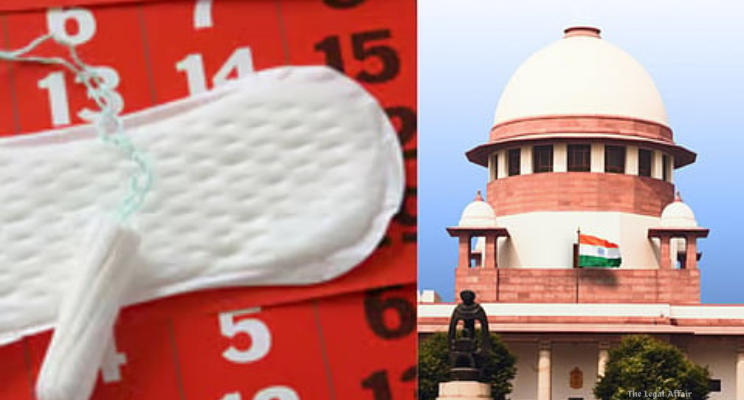
Introduction:
In Dr. Jaya Thakur v. Government of India and Others (W.P.(C) No. 1000/2022), the Supreme Court of India delivered a significant judgment recognizing menstrual hygiene as an integral part of the fundamental right to life and dignity under Article 21 of the Constitution. The case raised pressing concerns regarding menstrual health management among adolescent girls, accessibility to sanitary products, infrastructure inadequacies in schools and colleges, and the prevailing stigma associated with menstruation in Indian society.
The petitioner, Dr. Jaya Thakur, approached the Supreme Court seeking directions to the Union Government and the States/Union Territories to ensure free and equitable access to menstrual hygiene products, improved sanitation infrastructure, and increased awareness programmes to eliminate stigma. The matter highlighted systemic barriers faced by adolescent girls, including absenteeism from schools, compromised health, and psychological distress arising out of societal taboos surrounding menstruation.
The matter was heard by a bench comprising Justice J.B. Pardiwala and Justice R. Mahadevan, who emphasized the collective responsibility of society in addressing menstrual health concerns. The Court examined not only infrastructural deficiencies but also cultural and educational shortcomings that perpetuate stigma and discrimination against menstruating girls. The judgment marked a progressive step in expanding the constitutional understanding of dignity, equality, and access to education through the lens of menstrual health and hygiene management.
Arguments Advanced By The Petitioner:
The petitioner argued that menstrual hygiene is directly linked to the fundamental rights guaranteed under Articles 14, 15, 19, and 21 of the Constitution of India. It was contended that denial of access to sanitary products and proper sanitation facilities disproportionately affects adolescent girls, thereby infringing upon their right to equality, health, dignity, and education.
The petitioner submitted that menstruation continues to be treated as a taboo subject in India, leading to misinformation, lack of awareness, and social exclusion of menstruating girls. It was argued that the stigma surrounding menstruation discourages open discussions, thereby perpetuating unhealthy practices such as the use of unhygienic alternatives to sanitary pads, which increases the risk of infections and long-term reproductive health complications.
Further, the petitioner highlighted alarming data demonstrating the high rate of absenteeism among adolescent girls during their menstrual cycles. It was asserted that lack of adequate toilet facilities, unavailability of sanitary napkins, absence of disposal mechanisms, and insensitive attitudes from teachers and school staff collectively contribute to girls dropping out of school. The petitioner argued that such circumstances undermine the constitutional mandate of providing equal access to education and opportunities.
The petitioner also stressed that governmental schemes relating to menstrual hygiene management were fragmented and inadequately implemented. It was argued that while certain welfare schemes exist, they suffer from poor coordination, lack of monitoring mechanisms, and insufficient coverage, particularly in rural and marginalized communities.
Another important submission of the petitioner was that menstrual hygiene must not be viewed solely as a women’s issue but as a public health and social equality issue. The petitioner emphasized the necessity of involving male teachers, staff members, and students in menstrual awareness programmes to dismantle societal stigma. It was argued that without addressing the attitudinal barriers among men and boys, infrastructural improvements alone would not achieve the intended results.
The petitioner therefore sought comprehensive directions to ensure free distribution of sanitary pads to school and college-going girls, establishment of gender-segregated and hygienic toilets in educational institutions, implementation of awareness campaigns, and training programmes for teachers and school staff to handle menstrual-related issues sensitively.
Arguments Advanced By The Respondents:
The Union Government, represented by the Additional Solicitor General, submitted that various schemes and initiatives had already been implemented to address menstrual hygiene management across the country. It was argued that the Government has introduced several welfare programmes aimed at providing affordable sanitary products and improving sanitation infrastructure in schools and public institutions.
The respondents highlighted initiatives such as the Menstrual Hygiene Scheme under the Ministry of Health and Family Welfare, which aims to promote menstrual hygiene awareness among adolescent girls, particularly in rural areas. It was submitted that the Government has been actively distributing subsidized sanitary napkins through public health centres and educational institutions.
The respondents further contended that under schemes like Swachh Bharat Mission and Samagra Shiksha Abhiyan, substantial efforts have been made to construct separate toilets for girls in schools and to ensure proper sanitation facilities. The Government emphasized that infrastructure development remains a continuous process and that substantial progress has already been achieved.
The respondents also argued that education and awareness programmes regarding menstrual hygiene have been integrated into various school curricula and community outreach programmes. It was submitted that teacher training modules and health education sessions have been introduced to promote awareness among adolescents.
However, the respondents acknowledged that implementation challenges persist, particularly in remote and socio-economically disadvantaged regions. They submitted that the Government remains committed to strengthening existing schemes and improving coordination between different departments to ensure effective delivery of menstrual hygiene services.
The respondents also raised concerns regarding financial implications and logistical challenges associated with universal free distribution of sanitary products. It was argued that such initiatives require careful planning, budgetary allocation, and collaboration with State Governments, as education and public health are subjects falling within the concurrent jurisdiction of both the Centre and States.
Court’s Judgment:
The Supreme Court delivered a progressive and socially transformative judgment, recognizing menstrual hygiene as an essential component of the fundamental right to life and personal dignity under Article 21 of the Constitution. The Court emphasized that access to menstrual hygiene products and facilities is intrinsically linked to the physical health, mental well-being, and educational opportunities of adolescent girls.
The Court underscored that menstruation is a natural biological process and must not be surrounded by stigma or secrecy. It observed that societal taboos and cultural inhibitions have historically marginalized menstruating girls, leading to discrimination, embarrassment, and exclusion from educational and social activities.
The Court stressed that infrastructural provisions such as gender-segregated toilets and availability of sanitary pads, although essential, are insufficient in isolation. It observed that unless societal attitudes towards menstruation change, infrastructural measures would remain underutilized. The Court highlighted the necessity of creating a supportive and stigma-free environment in educational institutions.
In a significant observation, the Court emphasized the role of male teachers, staff members, and students in promoting menstrual hygiene awareness. It held that male educators must be sensitized to address menstrual health concerns with empathy and understanding. The Court observed that insensitive responses from teachers or classmates could discourage girls from attending school and negatively impact their academic progress.
The Court further observed that educating boys about the biological realities of menstruation is essential to eliminate harassment, teasing, and discriminatory behaviour. It held that awareness among boys fosters empathy and contributes to creating an inclusive educational environment.
The bench remarked that menstrual health is a shared societal responsibility rather than an issue confined to women. It emphasized that awareness programmes must include boys, parents, teachers, and school staff to effectively dismantle stigma and misinformation surrounding menstruation.
The Court issued directions to all States and Union Territories to ensure the provision of free sanitary pads to girls in colleges. It further directed authorities to ensure the availability of gender-segregated toilets in both government and private schools. The Court emphasized that these facilities must be hygienic, accessible, and properly maintained.
The Court also stressed the importance of teacher training and sensitization programmes to equip educators with knowledge and sensitivity to address menstrual health concerns effectively. It observed that educational institutions must adopt a compassionate and supportive approach towards menstruating students, particularly when they require restroom breaks or temporary absence from classes.
The Court concluded by reiterating that menstrual health must be recognized as a matter of constitutional significance and social justice. It emphasized that eliminating stigma and ensuring access to menstrual hygiene facilities are essential steps towards achieving gender equality and empowering adolescent girls.