


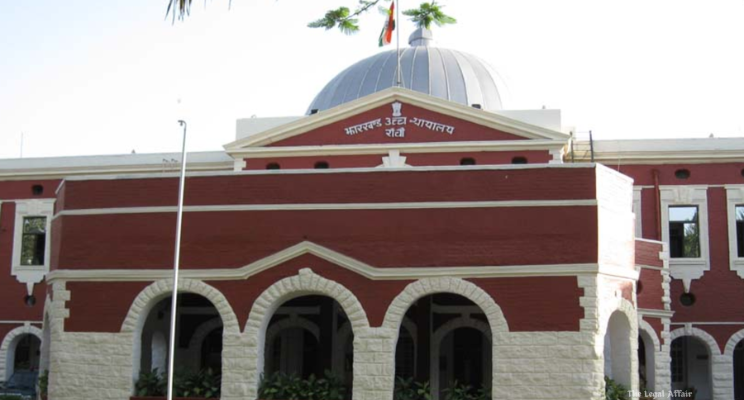
Introduction:
The Jharkhand High Court, while hearing W.P.(C) No. 95 of 2026 titled Dhanbad Institute of Technology, Dhanbad v. State of Jharkhand & Ors., passed a strongly worded order directing a Central Bureau of Investigation (CBI) inquiry into the conduct of the Jharkhand University of Technology (JUT) and the All India Council for Technical Education (AICTE) in relation to the admission and academic fate of diploma students enrolled for the academic session 2025–26. Justice Rajesh Kumar, who heard the writ petition filed by the Dhanbad Institute of Technology, expressed grave concern over what appeared to be a systemic failure and possible corrupt practices by statutory and state authorities, resulting in students being admitted under valid regulatory approvals but later denied affiliation and registration by the university, thereby jeopardizing their right to appear in examinations and continue their academic careers. The petitioner institute contended that it had obtained valid approval from AICTE for conducting the Diploma in Electrical Engineering course for the relevant academic session, pursuant to which students were lawfully admitted and commenced their studies, but despite repeated representations, JUT failed to grant affiliation or complete registration for sixty students of that particular branch. The Court observed that this situation effectively placed the students in an academic limbo, where they were allowed to join the course but were subsequently barred from the formal university system, rendering their education uncertain and placing their careers at serious risk. Making unusually candid remarks, the Court compared the conduct of the authorities to traffic police who remove “No Entry” or “No Parking” signs only to later trap unsuspecting commuters and collect fines, observing that a similar tactic appeared to have been adopted by education authorities who first allowed admissions under approval and later refused recognition, thereby trapping students in a regulatory maze for which they bore no responsibility.
Arguments:
On behalf of the petitioner institute, it was argued that AICTE, being the statutory body responsible for granting approval to technical institutions, had duly inspected and approved the institute for the academic session 2025–26, including for the Diploma in Electrical Engineering course, and that admissions were made strictly in accordance with that approval. The institute contended that once AICTE grants approval, the university is expected to process affiliation and registration as a matter of course, subject to compliance with procedural requirements, and that students cannot be punished for any inter-institutional conflicts between regulatory authorities. It was submitted that the institute had complied with all formalities, submitted all required documents, and repeatedly approached JUT seeking registration of students, but no effective action was taken, resulting in the students being denied the right to appear in examinations despite having attended classes and paid fees. The petitioner further argued that such conduct not only violated the principles of natural justice but also infringed the students’ fundamental right to education and equal treatment, especially when similarly placed institutions and students were granted registration. The petitioner urged the Court to protect the academic careers of innocent students who had relied on regulatory approvals and had no role in administrative failures. On the other hand, the respondents, including the State authorities, JUT, and AICTE, attempted to justify the situation by referring to alleged procedural lapses, deficiencies, and compliance issues, though the Court noted that no convincing explanation was placed on record as to why AICTE granted approval if essential requirements were not satisfied or why JUT failed to take timely action if any shortcomings existed. The authorities sought to shift responsibility onto each other, with the university indicating that certain requirements were not fulfilled by the institute and AICTE maintaining that its approval process was independent and based on statutory norms. However, the Court found that such mutual blame-shifting only aggravated the injustice suffered by students, who were caught between two powerful institutions without any effective remedy. The arguments revealed not merely administrative delay but a deeper systemic problem where regulatory bodies acted in silos, with little accountability for the consequences of their decisions on students’ lives.
Judgment:
After examining the record and hearing the parties, the Jharkhand High Court came to the prima facie conclusion that the matter disclosed serious irregularities and possible corrupt practices on the part of authorities entrusted with regulating technical education, and that the issue could not be resolved merely through routine judicial directions. Justice Rajesh Kumar observed that the manner in which students were allowed to take admission under AICTE approval but were subsequently denied affiliation and registration by JUT suggested that the students were effectively “trapped” by the system, raising serious questions about the integrity of regulatory processes. The Court strongly criticized the mechanical and unaccountable functioning of authorities, stating that students’ futures cannot be treated as collateral damage of bureaucratic failures or institutional ego clashes. Taking note of the gravity of the allegations and the potential involvement of multiple authorities, the Court directed the Central Bureau of Investigation to conduct a detailed inquiry into two specific questions: first, how the students came to be trapped by AICTE and JUT despite formal approvals and admissions, and second, who played what role in orchestrating or allowing such a situation to arise. The Court ordered that the CBI submit its investigation report in a sealed cover within two weeks, indicating the urgency and seriousness with which the matter was being treated, and further directed both AICTE and JUT to fully cooperate with the investigation and provide all necessary documents and assistance. By directing a central investigative agency to step in, the Court signaled that the matter went beyond mere administrative error and potentially involved deliberate or negligent conduct requiring criminal or disciplinary scrutiny. The Court fixed the next date of hearing as February 3, 2026, making it clear that further judicial orders would depend on the findings of the investigation. While the immediate relief of examination rights was not granted at this stage, the Court’s intervention focused on uncovering systemic wrongdoing and ensuring accountability, reflecting the view that long-term justice for students requires structural correction rather than temporary judicial patches. The order thus stands as a strong assertion of judicial oversight over educational governance and emphasizes that statutory authorities cannot escape responsibility when their actions or inactions threaten the academic future of young students.