


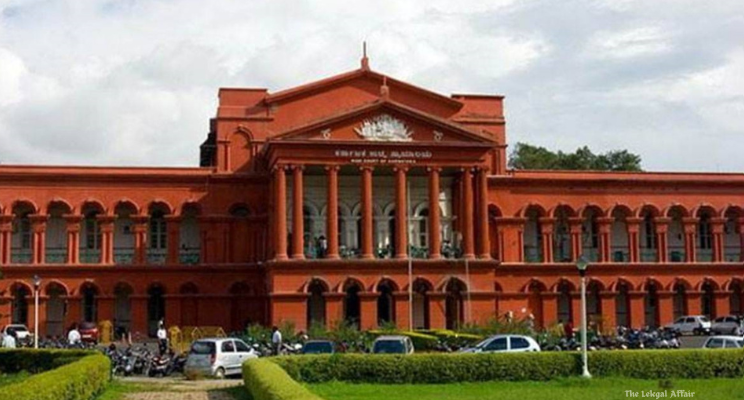
Introduction:
The case of Employees’ State Insurance Corporation & Anr. v. Sri Abhishek Choudhari & Ors. marks a significant judicial pronouncement by the Karnataka High Court on the enforceability of service bonds imposed on medical students who avail subsidised education. The Division Bench comprising Chief Justice Vibhu Bakhru and Justice C.M. Poonacha was called upon to examine the legality of compulsory service bonds required by the Employees’ State Insurance Corporation (ESIC) from MBBS students admitted to its medical institutions.
The controversy arose from a challenge mounted by a group of medical students who had secured admission to the ESIC Medical College & PGIMSR, Rajajinagar, Bengaluru, under government quota seats for the academic year 2012–13. At the time of admission, these students had executed service bonds undertaking to serve for a period of five years in ESIC hospitals upon completion of their course. In case of default, they were required to pay liquidated damages amounting to ₹7,50,000, which was later reduced to ₹5,00,000 following policy changes in 2020.
After completing their medical education in 2018, the students were assigned postings in ESIC hospitals in accordance with the bond conditions. However, they approached the High Court contending that the bonds were coercive, violative of their fundamental rights, and amounted to bonded labour. The learned Single Judge accepted these contentions and held that ESIC could not impose such bonds in addition to the compulsory rural service mandated by the State Government.
Aggrieved by this decision, ESIC preferred an appeal before the Division Bench. The central question before the Court was whether such service bonds constitute an unreasonable restriction on the fundamental rights of medical graduates or whether they are a valid contractual obligation arising from the benefit of subsidised education.
Arguments of the Appellants (ESIC):
The Employees’ State Insurance Corporation, representing the appellants, strongly defended the validity and enforceability of the service bonds.
At the outset, ESIC argued that it is a statutory body empowered under Sections 59 and 59-B of the Employees’ State Insurance Act to establish and maintain hospitals and medical colleges. In furtherance of this mandate, it provides medical education at highly subsidised rates, thereby enabling students to access quality education at a fraction of the actual cost.
The appellants contended that the service bond executed by the students was a form of consideration for the subsidised education provided by the institution. They emphasized that such arrangements are common in professional education and are designed to ensure that public investment in education yields corresponding benefits to society.
ESIC further argued that the students had voluntarily executed the bonds at the time of admission, fully aware of the terms and conditions. The execution of the bond was a precondition for securing admission, and the students had accepted it without protest. Having availed the benefits of subsidised education, they could not subsequently challenge the very conditions under which they were admitted.
The appellants also rejected the contention that the service bonds amounted to bonded labour. They argued that the obligation to render service or pay damages in lieu thereof is fundamentally different from forced labour prohibited under Article 23 of the Constitution. The bond merely imposed a contractual obligation, which the students were free to discharge either by serving or by paying the stipulated amount.
Additionally, ESIC submitted that the period of compulsory service had been rationalised over time. While the original bond required five years of service, it was subsequently reduced to one year from 2020 onwards. The liquidated damages were also reduced from ₹7,50,000 to ₹5,00,000. Therefore, the appellants argued that the current framework was reasonable and not unduly burdensome.
The appellants further contended that the Single Judge had erred in holding that ESIC could not impose its own service bond in addition to the State Government’s rural service requirement. They argued that the two obligations operate in different domains and serve distinct purposes.
Finally, ESIC relied on the Supreme Court’s judgment in Association of Medical Super Speciality Aspirants and Residents v. Union of India (2019), which upheld the validity of compulsory service bonds in medical education.
Arguments of the Respondents (Medical Students):
The respondent students challenged the service bonds on multiple constitutional and equitable grounds.
They argued that the bonds imposed by ESIC were coercive in nature and violated their fundamental right to practise a profession of their choice under Article 19(1)(g) of the Constitution. According to them, compelling graduates to serve in specific institutions for a fixed period amounted to an unreasonable restriction on their professional freedom.
The students further contended that the bonds effectively forced them into involuntary service, thereby violating Article 23, which prohibits bonded labour. They argued that the threat of heavy financial penalties created a coercive environment, leaving them with no real choice but to comply.
A key argument advanced by the respondents was that they had executed the bonds under compulsion, as refusal to do so would have resulted in the loss of their medical seats. They claimed that they were not fully aware of the implications of the bond at the time of admission.
The students also contended that the imposition of ESIC’s service bond, in addition to the mandatory rural service required by the State Government, resulted in an excessive burden. They argued that the cumulative effect of these obligations was unreasonable and disproportionate.
Furthermore, the respondents questioned the fairness of enforcing a five-year bond when the policy had subsequently been modified to require only one year of service. They argued that the revised policy should be applied retrospectively to their case.
The students also raised concerns about the conditions of service in ESIC hospitals, including issues related to infrastructure, remuneration, and working conditions. They argued that these factors made the compulsory service unduly onerous.
In essence, the respondents sought to portray the service bonds as an unjust imposition that curtailed their rights and imposed an unfair burden.
Judgment of the Karnataka High Court:
The Division Bench of the Karnataka High Court delivered a comprehensive judgment, allowing the appeal filed by ESIC and setting aside the order of the Single Judge.
At the outset, the Court rejected the contention that service bonds amount to bonded labour. It observed that such a characterization is legally untenable, as the bonds are part of a voluntary contractual arrangement entered into by the students.
The Court drew an analogy with student loans, stating that just as borrowers are required to repay loans after completing their education, students who avail subsidised education can be required to render service as consideration.
The Bench observed:
“The conclusion that executing a service bond as a part of availing education for subsidised rate is bonded labour is without any basis in law.”
The Court further held that the service bonds do not violate Article 19(1)(g), as they constitute a reasonable restriction in the interest of the general public. The obligation to serve for a limited period was found to be proportionate and justified.
On the issue of dual obligations, the Court noted that even if the State Government’s rural service requirement is taken into account, the total period of compulsory service does not exceed two years. This, the Court held, cannot be considered excessive or onerous.
The Court also emphasized that the students had voluntarily executed the bonds and could not now resile from their obligations after completing their education. It held that the execution of the bond was a precondition for admission, and the students had knowingly accepted it.
The Bench relied on the Supreme Court’s judgment in Association of Medical Super Speciality Aspirants, reaffirming that compulsory service bonds are legally valid and enforceable.
Importantly, the Court applied the revised policy prospectively, holding that the respondent students would be required to serve for one year or pay ₹5,00,000 as damages in lieu thereof.
The Court also adopted a balanced approach by observing that students could approach ESIC for reasonable extensions or deferment of service in appropriate cases, such as when they are pursuing further education.
In conclusion, the Court upheld the enforceability of the service bonds and allowed the appeal.