


Introduction:
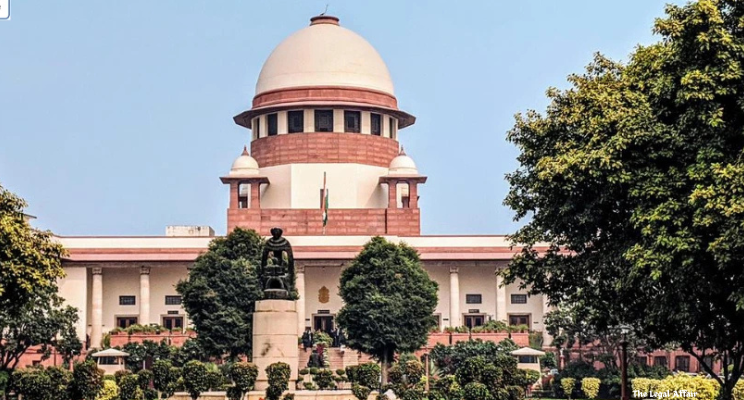
The Supreme Court of India, in North Eastern Development Finance Corporation Ltd. (NEDFI) v. M/s L. Doulo Builders and Suppliers Co. Pvt. Ltd., reported as 2025 LiveLaw (SC) 1216, dismissed an appeal filed by a financial institution seeking to enforce recovery proceedings under the Securitisation and Reconstruction of Financial Assets and Enforcement of Security Interest Act, 2002 (SARFAESI Act) in the State of Nagaland. The judgment was delivered on December 16 by a Division Bench comprising Justice Dipankar Datta and Justice Aravind Kumar.
The case raised significant questions concerning the territorial applicability of Central legislation in Nagaland under Article 371A of the Constitution, the concept of “security interest” under the SARFAESI Act, and the limits of jurisdiction of secured creditors seeking to bypass ordinary recovery mechanisms. The Appellant, NEDFI, a statutory financial corporation, had initiated recovery proceedings as early as 2011 by issuing a demand notice under Section 13(2) of the SARFAESI Act. However, the Act itself was formally adopted and made applicable in Nagaland only in December 2021 through a notification issued by the Governor.
Apart from the constitutional issue of applicability, the Court also examined whether the arrangements between the lender, borrower, and a Village Council—necessitated by restrictions on transfer of tribal land—could amount to the creation of a valid “security interest” under SARFAESI. Upholding the judgment of the Gauhati High Court, the Supreme Court concluded that the SARFAESI Act had been invoked without jurisdiction and that no legally enforceable security interest existed in favour of the Appellant. The appeal was consequently dismissed.
Arguments:
The Appellant–secured creditor contended that it had validly invoked the SARFAESI Act to recover its dues arising out of a loan sanctioned in 2001 to the Respondent company, a Nagaland-based entity, for establishing a cold storage unit in Dimapur. It was argued that due to constitutional and customary restrictions on alienation of tribal land in Nagaland under Article 371A, a conventional mortgage in favour of the lender was not feasible. To address this, a tripartite arrangement was devised whereby the borrower mortgaged its assets to the Model Village Council, and the Village Council, in turn, executed a Deed of Guarantee in favour of the Appellant. According to the Appellant, this structure effectively secured the loan and satisfied the requirements of a “security interest” under the SARFAESI Act.
The Appellant further argued that upon default by the borrower, it was entitled to invoke SARFAESI, issue a demand notice under Section 13(2) in 2011, and take possession of the secured assets, which it eventually did in 2019. It was submitted that the High Court had erred in holding that SARFAESI was inapplicable and in concluding that no security interest had been created. The Appellant urged that the substance of the transaction, rather than its form, should guide the Court, and that the guarantee furnished by the Village Council was sufficient to clothe the Appellant with the status of a “secured creditor.”
On the issue of applicability of the SARFAESI Act in Nagaland, the Appellant attempted to downplay the significance of the 2021 notification, suggesting that the Act, being a Central legislation dealing with banking and financial recovery, ought to have been applicable even prior to its formal adoption. Alternatively, it was contended that subsequent adoption should cure any procedural irregularity in the initiation of proceedings.
The Respondent borrower, on the other hand, supported the judgment of the Gauhati High Court and argued that the entire SARFAESI action was void ab initio. It was submitted that at the time when the demand notice was issued in 2011, the SARFAESI Act was not in force in Nagaland, owing to the special constitutional protection under Article 371A(1)(a)(iv), which mandates that Central laws affecting land and its transfer do not apply to the State unless so decided by the State legislature or notified by the Governor. Since the Governor’s notification extending SARFAESI to Nagaland was issued only on December 10, 2021, any action taken prior thereto was without jurisdiction.
The Respondent further argued that even on merits, the Appellant could not be considered a “secured creditor” under the SARFAESI Act because no security interest had been created in its favour. The mortgage was admittedly in favour of the Village Council, not the Appellant, and a Deed of Guarantee does not amount to a security agreement creating a charge, mortgage, or hypothecation over a secured asset as contemplated under the statute. The Respondent stressed that SARFAESI is a drastic remedy allowing enforcement without court intervention and therefore must be strictly construed.
It was also pointed out that the Appellant was not left remediless and could have availed the ordinary recovery mechanism under the Recovery of Debts and Bankruptcy Act, 1993 (RDB Act), which permits recovery of both secured and unsecured debts through adjudication before the Debts Recovery Tribunal. Instead, the Appellant had wrongly attempted to short-circuit the process by invoking SARFAESI, which was legally impermissible.
Judgment:
The Supreme Court, after carefully considering the submissions, declined to interfere with the impugned judgment of the Gauhati High Court and dismissed the appeal. The Court’s reasoning rested on two independent but complementary grounds: first, the non-applicability of the SARFAESI Act in Nagaland at the time of initiation of proceedings, and second, the absence of any valid security interest in favour of the Appellant within the meaning of the Act.
On the question of applicability, the Court took judicial notice of the notification dated December 10, 2021, issued by the Governor of Nagaland under Article 371A(1)(a)(iv) of the Constitution, by which the SARFAESI Act was formally implemented in the State with effect from that date. The Bench noted that the Appellant had initiated recovery proceedings as early as 2011 by issuing a demand notice under Section 13(2). Since the Act was not operational in Nagaland at that time, the invocation of its provisions was clearly without jurisdiction. The Court rejected any suggestion that subsequent adoption could validate earlier illegal actions.
However, the Court made it clear that its decision did not rest solely on the constitutional issue. Justice Dipankar Datta, writing for the Bench, emphasised that even assuming the SARFAESI Act were applicable, the Appellant would still fail because it was not a “secured creditor” in the eyes of law. The Court reiterated that under the SARFAESI Act, the creation of a security interest—such as a mortgage, charge, or hypothecation over a secured asset in favour of the creditor—is a sine qua non for invoking the statute.
Examining the documents on record, the Court held that the mortgage was created in favour of the Village Council and not in favour of the Appellant. The Deed of Guarantee executed by the Village Council was merely a promise to pay the debt in case of default and did not amount to the creation of a security interest over any property. Such a guarantee, the Court held, has “no persuasive value in the eyes of law” for the purposes of SARFAESI. The Bench categorically observed: “We reiterate, no security interest in respect of any property (secured asset) was created in favour of the Corporation within the meaning of the SARFAESI Act and, therefore, the Corporation is not a secured creditor.”
The Court further clarified that once the invocation of SARFAESI was held to be without jurisdiction, there was no question of relegating the Respondent to the remedy under Section 17 of the Act before the Debts Recovery Tribunal. Section 17 presupposes a valid action under SARFAESI, which was absent in the present case. The Bench underscored that while SARFAESI allows enforcement of security interest without court intervention, the RDB Act follows an adjudicatory route, culminating in execution of a decree passed by the Tribunal.
Importantly, the Court pointed out that the Appellant was not without remedy. It observed that the Appellant could have invoked the provisions of the RDB Act, 1993, which permits filing of an original application for recovery of dues in respect of both secured and unsecured loans. The insistence on invoking SARFAESI, despite the absence of a valid mortgage and the Act’s inapplicability in Nagaland at the relevant time, was therefore misconceived.
Resultantly, the Supreme Court dismissed the appeal, affirming the High Court’s view that the SARFAESI Act had been erroneously and without jurisdiction invoked by the Appellant.