


Introduction:
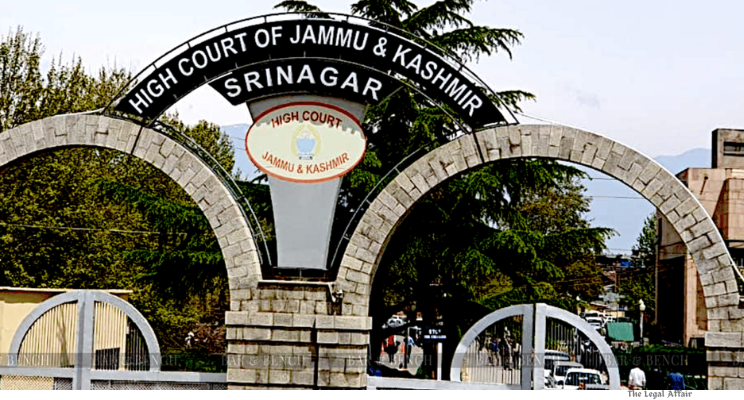
In the matter of Mohammad Yousuf Mir vs Union Territory of J&K & Ors (LPA No. 4/2023 in WP (C) No. 747/2021), the Jammu and Kashmir High Court was called upon to decide an important question concerning the retirement age of employees serving in Cooperative Societies within the Union Territory of Jammu & Kashmir. The appellants, who had served in Cooperative Societies, contended that they were entitled to continue in service until the age of 60 years, relying on the Government order enhancing the retirement age of Government employees from 58 to 60 years under SRO 164 of 2014. They further relied on recommendations made by the Registrar of Cooperative Societies for a similar enhancement for Cooperative Society employees. However, the respondents maintained that the service conditions of Cooperative employees are specifically governed by statutory rules framed under SRO 233 of 1988, which unambiguously prescribe 58 years as the age of retirement. The Single Judge dismissed the writ petitions and upheld retirement at 58 years. Aggrieved, the appellants preferred intra-court appeals, leading to the present decision before the Division Bench of Justices Sindhu Sharma and Shahzad Azeem, which affirmed the earlier order and clarified the legal position in detail.
Arguments of the Appellants:
The appellants argued that they were entitled to parity with Government employees, as both categories of service required recognition of similar retirement benefits. They referred to SRO 164 of 2014, which raised the retirement age of Government employees from 58 to 60 years. Their central contention was that since Cooperative Societies function under the control of the Government, their employees too should receive the benefit of this enhancement. They particularly emphasized a communication issued on 01.08.2019 by the Registrar of Cooperative Societies, which recommended enhancement of the retirement age from 58 to 60 years for Cooperative employees. They argued that when the Government itself had already extended such benefits to its own employees, there was no justification to treat Cooperative employees differently, especially when proposals and draft amendments had already been made to align the retirement age with that of Government employees. According to them, denying the benefit of 60 years of service amounted to hostile discrimination, which was arbitrary and violative of the principle of equality under Article 14 of the Constitution of India. They urged that since administrative steps were already underway, the Court should not adopt a hyper-technical approach and instead grant them relief by allowing their continuation in service until the age of 60 years.
Arguments of the Respondents:
The respondents, on the other hand, argued that the service conditions of Cooperative Society employees are governed exclusively by statutory rules framed under the J&K Cooperative Societies Act, namely SRO 233 of 1988. Rule 13 of these rules explicitly prescribes that employees of Cooperative Societies shall retire at the age of 58 years. They emphasized that these rules have never been amended, modified, or repealed. The respondents further contended that SRO 164 of 2014, which enhanced the retirement age of Government employees, applied only to employees directly employed under the Government and not to those employed in Cooperative Societies. It was highlighted that Cooperative Societies, though regulated by the State, function as independent entities and their employees are not automatically equated with Government employees for service-related matters. The respondents strongly objected to the reliance on the Registrar’s recommendation of 2019, contending that such a recommendation had no binding force in law unless translated into a formal amendment of the statutory rules. They argued that proposals, draft amendments, or departmental communications could not override a statutory provision, and until such time that SRO 233 of 1988 was amended, the retirement age would remain fixed at 58 years. They also pointed out that one of the appellants continued service beyond 58 years only due to interim protection granted by the Writ Court, but such continuation was clearly at his own risk, as stated in the court order, and hence he could not claim salary for that period.
Court’s Judgment:
The Division Bench of the Jammu and Kashmir High Court began its analysis by examining the statutory framework under which the service conditions of Cooperative Society employees are governed. It observed that SRO 233 of 1988 was framed under the J&K Cooperative Societies Act, 1960, and continues to be in force under the J&K Cooperative Societies Act, 1989. Rule 13 of SRO 233 explicitly states that an employee of the Cooperative Societies shall retire upon attaining the age of 58 years. The Court noted that no statutory amendment has ever been carried out to this rule. The judges categorically held that neither departmental recommendations nor administrative proposals have any legal effect in altering statutory provisions. For any change in the retirement age to take place, a formal amendment to SRO 233 of 1988 was necessary. Unless and until such an amendment is made, the retirement age of Cooperative Society employees remains 58 years.
The Court rejected the appellants’ reliance on SRO 164 of 2014, holding that it was confined strictly to Government employees and had no applicability to employees of Cooperative Societies. The Court reasoned that though Cooperative Societies operate under a regulatory framework, their employees are governed by their own set of statutory service rules and cannot automatically be extended benefits applicable to Government servants. It reiterated that statutory rules cannot be amended through executive orders or departmental communications, as that would violate the principle of separation of powers and undermine the sanctity of statutory rule-making.
On the claim for salary beyond the age of 58 years, the Court carefully examined the facts. It noted that one appellant, the Assistant Manager, had continued to work beyond 31.03.2021 only under the interim order of the Writ Court, which specifically stated that such continuation would be at his own risk and responsibility. Accordingly, the Court held that he was not entitled to salary for that extended period, since his retirement age had legally expired at 58 years. In the case of the other appellant, the Manager, the Court observed that he had not worked beyond 58 years, and therefore no question of salary arose in his case.
Finally, the Division Bench dismissed the appeals, affirming the decision of the Single Judge that Cooperative Society employees are to retire at 58 years in terms of SRO 233 of 1988, and that any alteration to this rule could only be effected through formal statutory amendment, not by recommendations or draft proposals. The Court’s judgment thus reinforced the principle that statutory rules are binding and cannot be overridden by executive actions, proposals, or departmental decisions. It made clear that unless and until the competent authority amends the statutory framework, the retirement age of Cooperative Society employees in Jammu & Kashmir shall remain 58 years.