


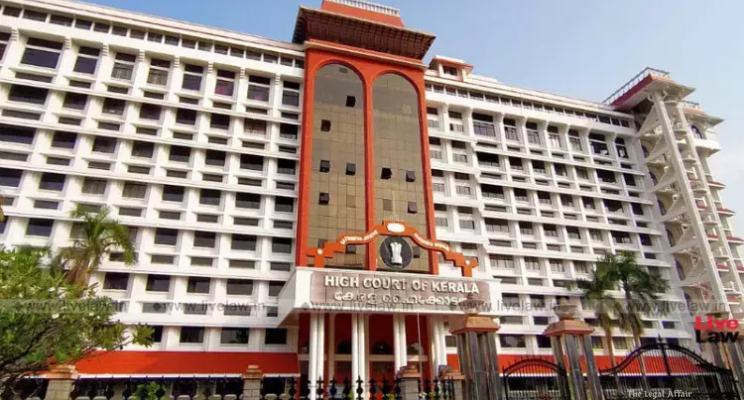
Introduction:
The Kerala High Court, in a significant pronouncement reinforcing foundational principles of administrative and constitutional law, has held that a statutory authority exercising quasi judicial functions cannot be treated as an aggrieved person entitled to maintain a writ appeal against a judgment that interferes with or sets aside its own orders. The ruling was delivered by a Division Bench comprising Justice Anil K Narendran and Justice Muralee Krishna S in a writ appeal filed by the Admission Supervisory Committee for Medical Education in Kerala. The appeal arose from a judgment of a Single Judge dated 30 January 2025, whereby the orders passed by the Committee disapproving and cancelling the admission of a NEET UG 2023 candidate to the BAMS course under the OBC category were set aside. The first respondent candidate had secured admission for the academic year 2023 to 2024 in a stray vacancy at Santhigiri Ayurveda Medical College on the basis that he belonged to the Chakkala Nair community, which had been included in the Other Backward Classes list through a Government Order dated 11 September 2023. Following disputes raised by the Admission Supervisory Committee regarding the validity of the caste status claimed by the candidate, the matter travelled to the High Court. While the Single Judge ruled in favour of the candidate, the Committee sought to challenge that judgment by filing a writ appeal. The Division Bench was thus called upon to decide a crucial jurisdictional issue, namely whether a statutory body exercising adjudicatory powers under the Kerala Medical Education Regulation and Control of Admission to Private Medical Educational Institutions Act 2017 could itself be regarded as an aggrieved person competent to prefer an appeal against a judicial order setting aside its quasi judicial decision.
Arguments:
On behalf of the appellant Admission Supervisory Committee, it was contended that the Committee was entrusted with an important statutory duty under the Act of 2017 to supervise and regulate admissions to private medical educational institutions in the State of Kerala. It was argued that the Committee was not a mere passive adjudicator but a regulatory authority tasked with ensuring that admissions were conducted in a fair transparent and unbiased manner and strictly in accordance with law. According to the Committee, if its decisions were interfered with by the High Court and it was denied the right to challenge such interference, the very purpose of its statutory existence would be defeated. The Committee submitted that it had a duty not merely to decide disputes but to uphold the integrity of the admission process as a whole, and therefore it ought to be permitted to approach the appellate forum when a judgment of a Single Judge undermined that objective. It was further argued that the Act of 2017 did not expressly prohibit the Committee from filing an appeal and that denying it locus standi would result in injustice particularly in cases where larger public interest in maintaining the sanctity of admissions was involved. The Committee also attempted to distinguish precedents relied upon by the respondent by contending that those cases related to purely adjudicatory bodies with no overarching regulatory responsibilities, whereas the Admission Supervisory Committee had a hybrid role combining adjudication with supervision and enforcement.
On the other hand, the first respondent candidate strongly opposed the maintainability of the writ appeal and contended that the Admission Supervisory Committee, being a statutory authority exercising quasi judicial powers, could not be treated as a person aggrieved by a judgment that merely set aside its own orders. It was argued that the Committee had acted as an adjudicator while deciding upon the approval and cancellation of the candidate’s admission and that once its decision was subjected to judicial review under Article 226 of the Constitution, the Committee could not step into the shoes of a litigant and challenge the judgment of the High Court. The candidate relied on well settled principles of law and binding precedents which hold that quasi judicial authorities must maintain neutrality and cannot defend or assail their own decisions before superior courts. It was submitted that permitting such authorities to file appeals would strike at the root of judicial discipline and blur the distinction between an adjudicator and a litigant. The respondent further pointed out that Section 12 of the Act of 2017 expressly provides a right of appeal to any person aggrieved by an order of the Committee, and that such person would necessarily be a party whose rights were affected by the Committee’s decision, such as a candidate or an institution, and never the Committee itself. The respondent argued that the Committee had no personal or legal interest in the outcome of the dispute and therefore lacked the essential ingredient of grievance required to maintain an appeal.
Judgment:
After carefully considering the rival submissions and examining the statutory framework, the Division Bench dismissed the writ appeal as not maintainable, holding unequivocally that the Admission Supervisory Committee could not be treated as an aggrieved person entitled to challenge the judgment of the Single Judge. The Court began by analysing the scheme and object of the Kerala Medical Education Regulation and Control of Admission to Private Medical Educational Institutions Act 2017. It noted that the Admission Supervisory Committee is constituted under Section 3 of the Act and is vested with wide powers under Section 8 to inquire into the legality and propriety of admissions made by private medical educational institutions. The Court emphasised that for the purpose of conducting such inquiries, the Committee is conferred with powers akin to those of a civil court, including the power to summon witnesses and call for documents, which clearly demonstrates the adjudicatory nature of its functions.
The Bench further observed that the role of the Committee under the Act is to act as an impartial adjudicator when disputes relating to admissions arise, and not as a partisan authority advancing one side of the dispute. The Court placed significant reliance on Section 12 of the Act, which provides a statutory right of appeal to any person aggrieved by an order of the Committee. Interpreting this provision, the Court held that the expression person aggrieved could only refer to individuals or institutions whose rights or interests were adversely affected by the Committee’s decision. The Committee itself, being the decision maker, could not logically or legally be said to be aggrieved by its own order being set aside.
The Court reiterated the well established principle that a quasi judicial authority cannot challenge an order passed by a superior court interfering with its decision. Doing so would amount to the authority abandoning its role as an impartial adjudicator and assuming the role of a litigant, which is impermissible in law. The Bench cautioned that if such authorities were permitted to file appeals whenever their decisions were overturned, it would result in an anomalous and undesirable situation where adjudicatory bodies would routinely challenge judicial scrutiny of their actions, thereby undermining the hierarchy of courts and the discipline of the judicial system.
The Court also rejected the argument that merely because the Committee was arrayed as a respondent in the writ petition before the Single Judge, it acquired the status of an aggrieved person. It clarified that being a necessary or proper party to proceedings does not automatically confer a right to appeal, especially when the party has no independent legal grievance. The Bench held that the Committee’s duty to ensure fair admissions does not translate into a right to litigate against judicial orders passed in exercise of constitutional jurisdiction.
Relying on binding precedents, the Court reaffirmed that adjudicatory authorities must accept the decisions of superior courts with institutional humility and cannot seek to defend or resurrect their own orders through appellate proceedings. On these grounds, the writ appeal was dismissed as not maintainable, and the Court consciously refrained from examining the merits of the dispute relating to the candidate’s admission, leaving the judgment of the Single Judge undisturbed.