


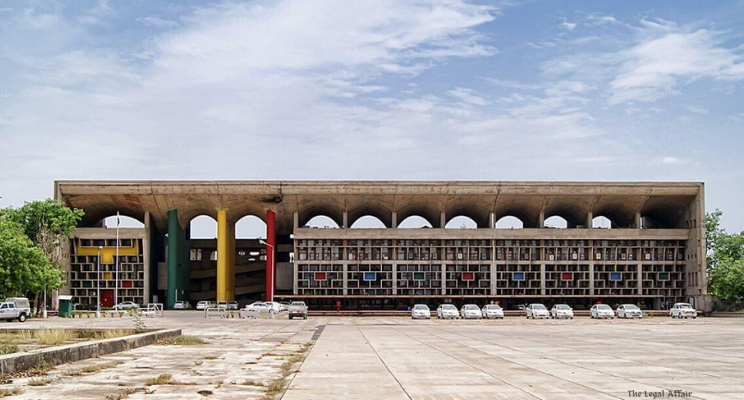
Introduction:
The case of Smt. Mukeshvati v. Union of India and others came before the Punjab and Haryana High Court, raising an important question on whether the family of a soldier who dies in a non-combat situation, specifically in a drunken altercation with a colleague, can claim the benefits of the Liberalised Family Pension (LFP) scheme. The petitioner, Smt. Mukeshvati, widow of the deceased soldier, approached the High Court after the Armed Forces Tribunal (AFT), Regional Bench, Chandigarh, denied her request to extend the benefit of the Liberalised Family Pension. She contended that her husband’s death should be treated as one occurring in the line of duty, thereby entitling her to benefits under the LFP. On the other hand, the Union of India opposed this plea by highlighting the limited scope of the scheme, arguing that the petitioner had already been granted the Special Family Pension, and the Liberalised Family Pension was available only in strictly defined circumstances such as death in war zones, operational areas, or due to enemy action. The division bench comprising Justice Harsimran Singh Sethi and Justice Vikas Suri carefully analyzed the provisions of the pension scheme, the nature of the death, and the arguments put forth by both sides, ultimately dismissing the plea and holding that a personal fight between two soldiers in a drunken condition could not be stretched to qualify as death in combat, operational duty, or under hostile circumstances envisioned in the scheme.
Arguments of the Petitioner:
The petitioner, represented by Advocate R.S. Panghal, argued that though she had already been granted the benefit of the Special Family Pension, she was entitled to a more generous scheme, namely the Liberalised Family Pension. She urged the Court to consider the circumstances of her husband’s death as one akin to combat-related death, given that it occurred while he was serving in a military unit. The petitioner submitted that the classification of pensionary benefits for families of soldiers should be interpreted liberally, keeping in mind the sacrifices made by servicemen and the hardships faced by their dependents. According to her, the essence of the scheme was to provide enhanced financial security to the families of soldiers who lose their lives while serving the nation, and the mere fact that her husband died in a violent incident within the military establishment should not deprive her of LFP benefits. She further contended that Clause (g) of the Liberalised Pension Scheme, which provides coverage in cases of death resulting from “an act of violence/attack by extremists, anti-social elements, etc.,” should be given a broad interpretation. In her view, the violent nature of the incident in which her husband was shot during a quarrel with a colleague qualified as “an act of violence,” and therefore, the benefit of the scheme should be extended to her. She also suggested that military life involves constant exposure to risks and dangers, and the government should not narrowly construe such incidents when it comes to the welfare of soldiers’ families.
Arguments of the Respondent:
The Union of India, represented by Advocate Rohit Verma, firmly opposed the plea, emphasizing that the petitioner’s husband’s death did not fall within the defined circumstances under which the Liberalised Family Pension could be granted. The respondents clarified that the petitioner had already been awarded the Special Family Pension, which recognized that the soldier’s death was service-related. However, the respondents drew a clear distinction between the Special Family Pension and the Liberalised Family Pension, explaining that the latter is available only in exceptional cases where the death of a soldier occurs due to combat, operational duties, enemy attacks, insurgency, terrorism, or hostile actions. They argued that the definition of Clause (g), which covers deaths arising from “acts of violence/attacks by extremists, anti-social elements, etc.,” cannot be extended to situations of personal fights between two soldiers in an intoxicated state. Such an incident, though tragic, was unrelated to any operational duty, counter-insurgency measure, or external threat. Furthermore, the respondents submitted that another clause of the scheme concerning death during “battle inoculation training exercises or demonstrations with live ammunition” was also not attracted in this case, as the death occurred during a drunken altercation and not during training with live ammunition. The Union emphasized that expanding the definition of Liberalised Family Pension to cover private quarrels would dilute the very object of the scheme and lead to misuse, resulting in an undue burden on public funds without serving the intended purpose of supporting families of soldiers killed in combat or operational duties.
Court’s Judgment:
After carefully considering the submissions, the division bench of Justice Harsimran Singh Sethi and Justice Vikas Suri upheld the decision of the Armed Forces Tribunal and dismissed the plea filed by the petitioner. The Court noted that the Liberalised Family Pension is a special category of pension created to provide enhanced benefits to families of soldiers who die under extraordinary and hostile circumstances, such as combat operations, war, counter-insurgency measures, terrorist attacks, or training with live ammunition. The Court observed that the death of the petitioner’s husband occurred due to a private fight with a colleague while both were in a drunken condition. The Court ruled that such a circumstance could not, by any stretch of interpretation, be brought under Clause (g) of the LFP scheme. While Clause (g) mentions “an act of violence/attack by extremists, anti-social elements, etc.,” the Court emphasized that this provision was meant for incidents involving hostile forces or anti-national elements, not for internal disputes between colleagues in a state of intoxication. The judges categorically stated that although the petitioner’s husband’s death was indeed an act of violence, the context and nature of the incident were not what the framers of the scheme had in mind while drafting Clause (g). The Court further clarified that the provision relating to death during “battle inoculation training exercises or demonstrations with live ammunition” was equally inapplicable in the present case, as the death did not occur in the course of any such training exercise. Importantly, the Court held that once the petitioner had already been granted the Special Family Pension, the State had recognized the service connection of the death. However, the Liberalised Family Pension could not be claimed as a matter of right, particularly when the circumstances of death fell completely outside the ambit of the scheme. The judges underscored that judicial interpretation cannot stretch the scheme beyond its original intent, as doing so would create categories of entitlement that were never envisaged by policymakers. Ultimately, the Court dismissed the petition, thereby upholding the decision of the Armed Forces Tribunal, which had earlier rejected the claim for LFP.