


Introduction:
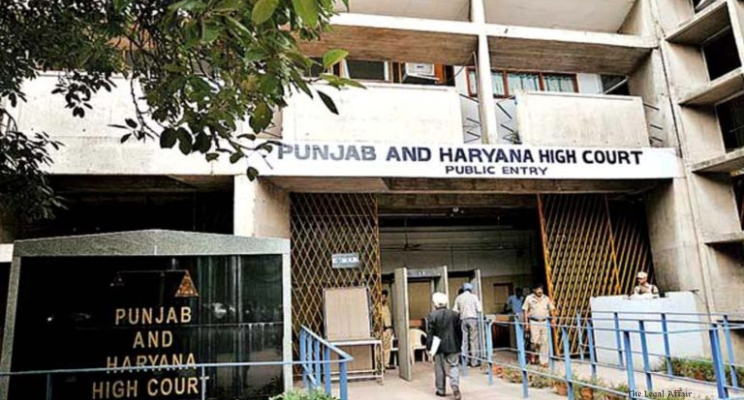
In a significant ruling, the Punjab and Haryana High Court, through a single-judge bench of Justice Jagmohan Bansal, set aside a Labour Court decision that had awarded overtime wages to a pump operator employed by the Punjab Water Supply and Sewerage Board. The workman had sought unpaid wages for working 12 hours daily over a decade, invoking Section 33C(2) of the Industrial Disputes Act, of 1947. However, the High Court held that the Labour Court lacked jurisdiction under Section 33C(2) to decide entitlement claims, as this provision is limited to the computation of pre-existing rights or benefits. The court underscored that contested issues requiring detailed evidence and adjudication fall outside the Labour Court’s ambit under Section 33C(2).
Arguments of Both Sides:
The petitioner, Punjab Water Supply and Sewerage Board, contended that Section 33C(2) of the ID Act cannot be invoked to establish new claims or determine entitlement. They argued that the respondent’s claim involved disputed facts such as whether he worked 12 hours daily, whether there was any documentation supporting his claim, and whether the claim was filed within the limitation period. The petitioner emphasized that the Labour Court’s powers are restricted to computing benefits already recognized or adjudicated, and hence, the Labour Court’s decision was beyond its jurisdiction. The petitioner also submitted that the respondent had not raised any objection about overtime pay during his employment and argued that the Labour Court improperly assumed adjudicatory powers.
On the other hand, the respondent pump operator claimed that he had worked 12 hours daily between 1996 and 2006 but was paid for only 8 hours of work. He argued that his application under Section 33C(2) was for computing wages already owed to him based on existing laws and principles, including the Payment of Wages Act, of 1936. He maintained that his claim did not involve creating new rights but merely sought enforcement of existing benefits. The respondent argued that denying the claim would amount to ignoring his hard work and would let the petitioner evade its obligations under labor laws.
Court’s Judgment:
The Punjab and Haryana High Court held that Section 33C(2) of the ID Act is a provision designed exclusively for computing benefits or rights that are pre-determined or undisputed. Justice Jagmohan Bansal, relying on the precedent set in State Bank of India v. Ram Chandra Dubey (2001) and MCD v. Ganesh Razak (1995), reiterated that this provision cannot be used to decide entitlement claims involving contested issues. The court observed that the Labour Court overstepped its jurisdiction by deciding whether the respondent was entitled to overtime wages, as this issue had not been previously adjudicated or acknowledged.
The court pointed out that the respondent’s claim raised unresolved factual questions, including whether the pump operator had indeed worked 12-hour shifts, whether any records corroborated his assertion, and whether his application was within the prescribed limitation period. These issues, the court explained, required a full-fledged adjudication process, which the Labour Court is not empowered to undertake under Section 33C(2).
Further, the court clarified that the proper legal recourse for the respondent was to seek a reference of his dispute under the appropriate provisions of the Industrial Disputes Act. It explained that entitlement claims must first be established through adjudication by a competent authority before any computation of benefits can be sought under Section 33C(2). Justice Bansal noted that bypassing this process would undermine the jurisdictional limits imposed by the ID Act and lead to improper use of Section 33C(2).
The High Court also emphasized that the Labour Court’s reliance on Section 33C(2) distorted the legal framework governing industrial disputes. The provision’s purpose, the court noted, is to provide a quick and efficient mechanism for computing benefits that are already determined, not to entertain or resolve new claims requiring evidence and adjudication. By attempting to establish the respondent’s right to overtime wages, the Labour Court ventured into an area it was not competent to address.
The court ultimately quashed the Labour Court’s 2013 award, which had ordered payment of overtime wages to the respondent. It directed the respondent to initiate proceedings for adjudication of his entitlement if he wished to pursue his claim further. The judgment reinforced the principle that claims involving entitlement disputes must undergo proper adjudication before computation under Section 33C(2) can be sought.