


Introduction:
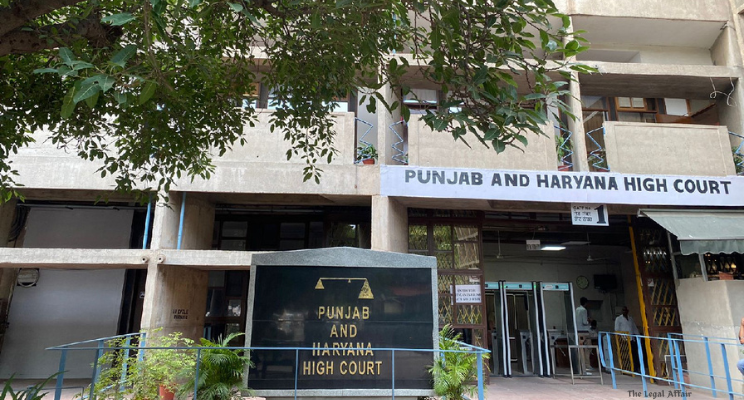
In Shilpa Jain (Since Deceased) Through LRs and Others versus Inderjeet Jain and Others, the Punjab and Haryana High Court delivered a significant judgment reaffirming that the work performed by a housewife is not confined to domestic caretaking but constitutes a broad spectrum of economic and managerial services that would attract substantial remuneration if outsourced, and on this basis enhanced the compensation in a motor accident claim from ₹58.22 lakh to ₹1.18 crore, with Justice Sudeepti Sharma observing that a homemaker contributes to family stability through cooking, procurement of household supplies, cleaning and maintenance, budgeting and financial planning, child care and education, care of elderly dependents, coordination of repairs, and management of home based healthcare, all of which have clear economic value in the open market; the appeal arose from an award passed in 2016 by the Motor Accident Claims Tribunal at Sirsa under Section 166 of the Motor Vehicles Act 1988, where the claimant Shilpa Jain had suffered grievous injuries in a road accident on 8 October 2014 and remained in a complete vegetative state until her death on 21 November 2017, and the Tribunal had granted compensation of ₹58.22 lakh with interest at 9 percent per annum, which was challenged as inadequate by her legal representatives; the High Court was therefore called upon to reassess both pecuniary and non pecuniary heads of compensation in light of evolving judicial standards, inflationary realities, and constitutional recognition of dignity of labour, especially in relation to unpaid domestic work performed by women.
Arguments:
On behalf of the appellants, counsel argued that the Tribunal had committed serious errors in assessing the notional income of the deceased on the lower side and in granting meagre amounts under heads such as pain and suffering, attendant charges, and loss of amenities, submitting that the claimant had suffered catastrophic brain injuries, was on ventilatory support, and lived in a persistent vegetative state for more than three years, which entailed enormous physical suffering, emotional trauma for the family, and continuous financial burden; it was urged that the Tribunal failed to appreciate the true economic worth of a homemaker and that the compensation must be enhanced in line with settled Supreme Court jurisprudence recognising that domestic labour has measurable monetary value, with reliance placed on precedents such as Lata Wadhwa v State of Bihar and Jasbir Singh v Surjit Singh, as well as recent judgments granting higher compensation under non pecuniary heads in cases of severe disability; the appellants further contended that future medical expenses and attendant charges were inevitable given the medical condition of the claimant and could not be curtailed merely because she later succumbed to her injuries, since such expenses form part of the estate recoverable by legal heirs; on the other hand, the insurance company opposed enhancement and argued that the Tribunal had already awarded generous compensation, particularly under the head of future medical expenses, which was alleged to be arbitrary and unsupported by concrete bills, and it was also pointed out that the insurer had filed a separate appeal seeking reduction of compensation; the insurer maintained that notional income should be kept modest in absence of documentary proof and that excessive amounts under non pecuniary heads would disturb the balance between just compensation and speculative generosity; however, during the course of hearing, the Court examined medical records and the long duration of vegetative state and questioned how such circumstances could justify minimal compensation, especially when judicial trends have consistently moved towards realistic valuation of both economic and human loss in catastrophic injury cases.
Court’s Judgment:
After considering the submissions and scrutinising the evidence, the High Court held that the Tribunal had indeed erred in undervaluing the economic contribution of the deceased who was a homemaker, reiterating that a housewife cannot be equated merely with a skilled or unskilled worker because her role extends to full scale household management that substitutes multiple paid services in the market, and taking note of inflation and rising cost of living, the Court reassessed the notional monthly income at ₹15,000, thereby substantially enhancing the multiplicand used for calculating loss of dependency; the Court also added 40 percent towards future prospects, observing that even homemakers are entitled to consideration of incremental value of their services over time, particularly when courts now recognise that domestic work evolves and expands with family responsibilities; on the aspect of pain and suffering, the Court relied on the Supreme Court decision in K S Muralidhar v R Subbulakshmi (2024) and granted ₹15 lakh, holding that a person who remains in a vegetative state after traumatic brain injury endures immeasurable physical and mental agony, and denial of adequate compensation under this head would amount to ignoring the human dimension of injury law; the Court further enhanced attendant charges to ₹8 lakh, reasoning that continuous care over several years would necessarily require round the clock assistance, whether paid or provided by family members, whose labour also deserves monetary recognition; rejecting the insurer’s objection to future medical expenses, the Court relied on Dhannalal @ Dhanraj v Nasir Khan (2025) and held that medical and attendant expenses incurred during the lifetime of an injured person in a vegetative state form part of the estate and are recoverable even after death, since such expenses are a direct consequence of the tortious act; the Court also increased amounts under transportation, special diet, and loss of amenities of life, and upheld the award for future medical expenses, concluding that the total compensation should be recalculated at ₹1,18,20,000, resulting in an enhancement of ₹59,98,000 over the Tribunal’s award, with interest at 9 percent per annum from the date of filing of the claim petition till realization, and directed the insurance company to deposit the enhanced amount within two months, thereby reinforcing the principle that just compensation must reflect both economic reality and human suffering, and that the invisible labour of homemakers must be accorded visible legal value.