


Introduction:
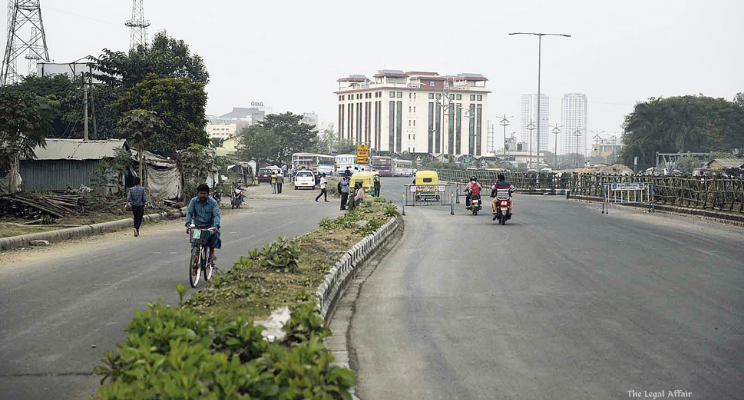
A public interest litigation (PIL) was recently filed before the Calcutta High Court challenging the widespread use of blue and white color schemes on road and bridge markings across Kolkata, contending that these colors pose a significant safety hazard to drivers. The PIL argues that the color scheme deviates from the prescribed standards of the Indian Roads Congress (IRC) and that using yellow, black, and white—globally recognized traffic safety colors—would be more suitable. The matter was brought before a division bench led by Chief Justice TS Sivagnanam. The court acknowledged the concerns, noting the potential dangers of the current color scheme, and adjourned the matter for further deliberation.
Arguments:
The petitioner’s counsel submitted that the standard traffic marking colors, as per the Indian Roads Congress, are yellow, black, and white, with yellow being particularly crucial for warnings and demarcations. The use of blue and white instead of these prescribed colors, the counsel argued, creates confusion, especially at night, thereby increasing the risk of accidents. Furthermore, the petition noted that colored images highlighting the problem had not been supplied to the opposing parties, necessitating their replacement for better assessment. The Chief Justice supported this contention, emphasizing that color selection should follow scientific principles since different wavelengths impact visibility. The bench also noted that mandatory yellow coloring for school buses is an example of safety regulations being enforced based on visibility science.
On the other hand, the respondents may argue that the blue and white color scheme is a matter of policy and aesthetic governance rather than a technical violation. They may submit that while aesthetics play a role in urban planning, the impact on driver safety needs to be empirically established before considering any policy changes. Additionally, the defense might claim that the existing color scheme has been in place for years without substantial documented evidence of increased accidents due to color-based confusion.
Court’s Judgment:
While the court has not yet delivered a final verdict, Chief Justice TS Sivagnanam acknowledged the merit in the petitioner’s arguments, describing the issue as “very valid.” The bench recognized that color schemes significantly impact driver visibility, particularly at night. The court adjourned the matter to allow for further deliberation and submission of necessary evidence, directing that all relevant documents, including colored copies, be properly served to all parties involved.