


Introduction:
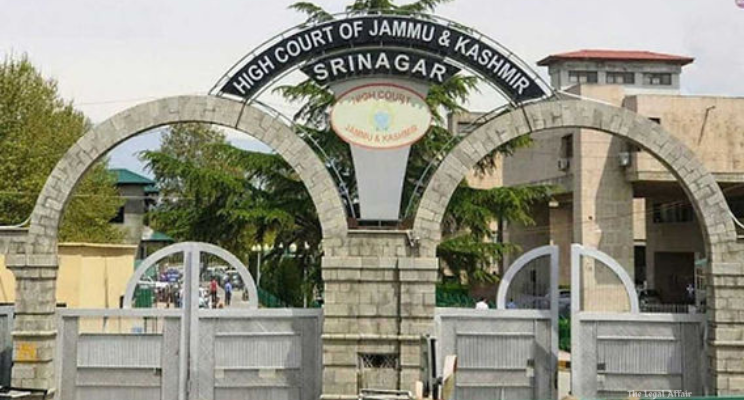
The case of Babu Ram & Ors. v. Kewal Krishan (2026 LiveLaw (JKL)) before the High Court of Jammu & Kashmir and Ladakh deals with a crucial procedural safeguard in criminal law—whether a Magistrate can summon an accused on the same material after previously finding it insufficient and ordering an inquiry under Section 202 of the Code of Criminal Procedure. The petitioners approached the High Court under Section 482 CrPC seeking quashing of a criminal complaint and the order of summoning issued against them by the Judicial Magistrate Ist Class, Sunderbani.
The complaint alleged commission of offences under Sections 451 (house trespass), 323 (voluntarily causing hurt), 504 (intentional insult), 506 (criminal intimidation), and 34 (common intention) of the Ranbir Penal Code. According to the complainant, the petitioners had forcibly encroached upon his land and, upon resistance, had trespassed into his residence and physically assaulted him while hurling abuses.
However, the case took a significant turn when the trial Magistrate, after recording preliminary evidence, expressed doubt regarding the sufficiency of the material and ordered an inquiry under Section 202 CrPC. The inquiry officer, on two separate occasions, submitted reports concluding that the allegations were false and motivated by personal enmity. Despite these findings, the Magistrate proceeded to summon the accused on the same material, leading to the present challenge.
Justice Sanjay Dhar, while adjudicating the matter, examined the legality of such an approach and delivered a judgment that reinforces the importance of procedural discipline and judicial consistency in criminal proceedings.
Arguments of the Petitioners:
The petitioners challenged the complaint and the summoning order on multiple grounds, primarily contending that the Magistrate had acted in clear violation of settled legal principles governing the exercise of jurisdiction under Section 202 CrPC.
At the core of their argument was the assertion that once the Magistrate, after recording preliminary evidence, was not satisfied about the sufficiency of material and deemed it necessary to order an inquiry under Section 202 CrPC, it was impermissible to later issue process against the accused based on the same material without any fresh evidence.
The petitioners pointed out that the inquiry conducted by the Station House Officer (SHO) had, on both occasions, unequivocally concluded that the allegations were false. The reports indicated that the complaint was filed as a result of long-standing enmity between the parties and that none of the neighbours corroborated the complainant’s version of events.
It was further argued that the Magistrate had not brought on record any additional material that could justify a change in satisfaction. The decision to summon the accused, therefore, was arbitrary and contrary to law.
The petitioners also emphasized the background of the dispute, highlighting that there was an ongoing civil dispute regarding the land in question. Additionally, petitioner No. 1 had previously lodged an FIR against the complainant and his associates, which had culminated in the filing of a challan. The present complaint, it was argued, was nothing but a counterblast intended to harass the petitioners and exert pressure in the civil dispute.
Relying on the Supreme Court’s judgment in Shiv Jatia v. Gian Chand Malick (2024) 4 SCC 289, the petitioners contended that a Magistrate who orders an inquiry under Section 202 CrPC implicitly acknowledges that the existing material is insufficient to issue process. Therefore, unless new material is brought on record, the Magistrate cannot reverse that position and summon the accused.
The petitioners ultimately urged the High Court to exercise its inherent powers under Section 482 CrPC to prevent abuse of process of law and to secure the ends of justice by quashing the complaint and the proceedings arising therefrom.
Arguments of the Respondent-Complainant:
The respondent-complainant, on the other hand, sought to justify the Magistrate’s order and maintained that sufficient material existed to proceed against the petitioners.
The complainant reiterated the allegations made in the complaint, asserting that the petitioners had indeed encroached upon his land and had resorted to violence when confronted. It was contended that the preliminary evidence recorded by the Magistrate, including the statements of the complainant and his witness, clearly disclosed the commission of offences and justified the issuance of process.
The complainant argued that the reports submitted by the inquiry officer were not binding on the Magistrate and that the Magistrate was entitled to independently assess the material on record. It was submitted that the Magistrate had, in fact, considered the entire material, including the inquiry reports, and had arrived at a satisfaction that there were sufficient grounds to proceed.
The respondent also sought to downplay the significance of the alleged enmity, contending that the existence of prior disputes does not automatically render a complaint false. It was argued that such disputes often give rise to criminal acts and that the allegations should be examined on their own merits.
Additionally, the complainant emphasized that the scope of interference under Section 482 CrPC is limited and that the High Court should not quash proceedings at the threshold unless the complaint is manifestly frivolous or devoid of any legal basis.
Court’s Judgment:
The High Court, after carefully examining the record and the legal position, found merit in the contentions of the petitioners and proceeded to quash the complaint and the summoning order.
Justice Sanjay Dhar began by analyzing the sequence of events before the trial Magistrate. The Court noted that after recording preliminary evidence, the Magistrate had chosen to order an inquiry under Section 202 CrPC. This, according to the Court, clearly indicated that the Magistrate was not satisfied with the sufficiency of the material available at that stage.
The Court observed that the purpose of an inquiry under Section 202 CrPC is to enable the Magistrate to ascertain the truthfulness of the allegations and to determine whether there is sufficient ground to proceed. Once such an inquiry is ordered, the Magistrate is expected to consider the outcome of the inquiry before taking a decision on whether to issue process.
In the present case, the inquiry officer had conducted investigations on two separate occasions and had, on both occasions, concluded that the allegations were false. The reports highlighted the absence of corroboration from neighbours and pointed to the existence of enmity between the parties as the likely motive behind the complaint.
Despite these findings, the Magistrate proceeded to issue process against the petitioners without bringing any additional material on record. The High Court found this approach to be legally unsustainable.
Relying on the Supreme Court’s decision in Shiv Jatia v. Gian Chand Malick, the Court reiterated the principle that a Magistrate who orders an inquiry under Section 202 CrPC cannot subsequently issue process on the same material without any fresh evidence. The Court emphasized that the very act of ordering an inquiry reflects a lack of satisfaction with the existing material.
Justice Dhar underscored that in the absence of any new material supporting the complainant’s case, it was not open to the Magistrate to record a contrary satisfaction and summon the accused. Such an action, the Court held, amounts to a contradiction in judicial reasoning and undermines the procedural safeguards embedded in criminal law.
The Court also took into account the broader context of the dispute. It noted that there was an ongoing civil dispute between the parties regarding the land in question and that the complaint appeared to be a counterblast to the FIR lodged by one of the petitioners against the complainant.
The Court found that the complaint was motivated by personal enmity and was an attempt to misuse the criminal justice system to settle civil scores. It held that allowing such proceedings to continue would amount to an abuse of the process of law.
Invoking its inherent powers under Section 482 CrPC, the High Court concluded that the complaint and the proceedings arising therefrom deserved to be quashed in order to prevent misuse of judicial machinery and to secure the ends of justice.