


Introduction:
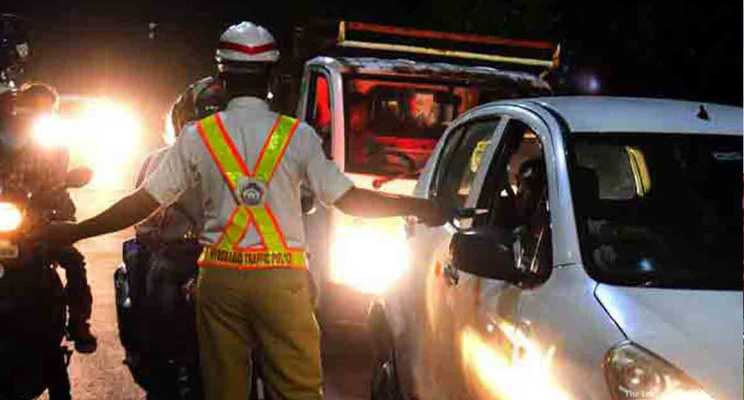
The Telangana High Court, in Jangati Vijay v. State of Telangana & Ors., revisited and reaffirmed an important principle governing police powers in cases of drunk driving—namely, that law enforcement authorities do not possess unfettered authority to detain or seize vehicles merely because the driver is found intoxicated. The case arose from a writ petition filed by Jangati Vijay, the owner of a Mahindra XUV 500, seeking release of his vehicle which had been seized by the Alwal Traffic Police after an individual driving it was allegedly found under the influence of alcohol.
The matter came before Justice E.V. Venugopal, who relied on an earlier detailed judgment delivered by a coordinate bench in 2021 (W.P. No. 1647 of 2021 and batch), which had laid down comprehensive guidelines regarding the handling of vehicles involved in drunk driving incidents. The Court was thus called upon to determine whether the continued detention of the petitioner’s vehicle was lawful in light of these established principles.
This case highlights the delicate balance between enforcing road safety laws and safeguarding the property rights of citizens. While drunk driving is undoubtedly a serious offence with potentially fatal consequences, the Court emphasized that enforcement measures must remain within the bounds of law and cannot result in arbitrary deprivation of property.
Arguments by the Petitioner:
The petitioner, Jangati Vijay, approached the High Court seeking the release of his vehicle, contending that its seizure by the police was illegal and contrary to binding judicial precedent.
The petitioner argued that the issue at hand was no longer res integra, as the High Court had already settled the legal position in the 2021 batch of cases. In those cases, the Court had clearly held that police officers do not have the authority to detain or seize vehicles solely on the ground that the driver was found to be intoxicated.
It was submitted that the petitioner was the lawful owner of the vehicle and that the alleged offence, if any, was committed by the person driving it at the relevant time. The petitioner contended that penal consequences for drunk driving are provided under the Motor Vehicles Act, including fines and possible prosecution, but these do not extend to seizure of the vehicle in the absence of specific statutory authority.
The petitioner further emphasized that the continued detention of the vehicle amounted to an arbitrary infringement of his property rights. He argued that the police had acted beyond their jurisdiction and in violation of the guidelines laid down by the High Court.
Relying on the 2021 judgment, the petitioner pointed out that the Court had provided a clear mechanism for dealing with such situations. If a driver is found to be intoxicated, he should not be allowed to continue driving. However, if another person present is sober and possesses a valid driving licence, that person should be permitted to take custody of the vehicle and drive it away.
In cases where no such person is available, the petitioner submitted, the police may temporarily keep the vehicle in safe custody, but they are under an obligation to release it to the owner or an authorized person upon verification of documents such as the registration certificate (RC), proof of identity, and a valid driving licence.
The petitioner argued that in the present case, these guidelines were not followed, and the vehicle was unlawfully detained. He therefore sought a direction from the Court for its immediate release.
Arguments by the Respondents:
The State, represented by the Assistant Government Pleader, opposed the petition and sought to justify the actions of the police.
The respondents submitted that the individual driving the vehicle, Sai Ram Rao, had been found in an intoxicated condition and was involved in multiple instances of drunk driving. It was pointed out that he had been implicated in four such cases, and in three of those cases, challans had been generated against the subject vehicle.
The State argued that the repeated involvement of the vehicle in drunk driving offences indicated a pattern of misuse and justified the police action. It was further contended that the petitioner, as the owner of the vehicle, had knowingly allowed the said individual to use the vehicle and had thereby “encouraged the crime.”
The respondents also highlighted that neither the petitioner nor the driver had approached the police with the necessary documents to claim custody of the vehicle after it was seized. This, according to the State, demonstrated a lack of diligence on their part and justified the continued detention of the vehicle.
The State attempted to distinguish the present case from the 2021 judgment by emphasizing the repeated nature of the offence and the involvement of the same vehicle in multiple incidents. It was argued that in such circumstances, stricter measures were warranted to prevent further violations and ensure public safety.
Additionally, the respondents contended that the police had acted in good faith and in the interest of preventing further offences. They maintained that the seizure of the vehicle was a reasonable and proportionate response to the situation.
Court’s Judgment:
The Telangana High Court, after hearing both sides, reaffirmed the legal principles laid down in the 2021 batch of cases and applied them to the facts of the present case.
Justice E.V. Venugopal observed that the issue was squarely covered by the earlier judgment, which had comprehensively addressed the scope of police powers in cases of drunk driving. The Court reiterated that police officers do not have the authority to detain or seize vehicles solely on the ground that the driver is found to be intoxicated.
The Court emphasized that the relevant legal provisions are enabling in nature and must be exercised in a manner consistent with the rights of citizens. While the police are empowered to prevent an intoxicated person from driving, this does not automatically confer the power to seize the vehicle.
Referring to the 2021 guidelines, the Court noted that if a driver is found to be intoxicated, the police must ensure that he does not continue driving. However, if another person accompanying the driver is sober and holds a valid driving licence, such person should be permitted to take control of the vehicle.
In situations where no such person is available, the Court acknowledged that the police may take the vehicle into temporary custody for safety reasons. However, this custody is not meant to be punitive or indefinite. The police are required to release the vehicle to the owner or an authorized person upon verification of relevant documents.
The Court also reiterated the requirement that, in the absence of a sober accompanying person, the police or the driver must inform a relative or friend who can take custody of the vehicle. This ensures that the vehicle is not left unattended while also safeguarding the owner’s rights.
Applying these principles to the present case, the Court found that the continued detention of the petitioner’s vehicle was not justified. The fact that the driver had been involved in multiple offences did not alter the legal position regarding the limits of police authority.
The Court did not accept the State’s argument that repeated offences could justify deviation from established legal principles. It held that any such deviation must be supported by statutory authority, which was absent in the present case.
Accordingly, the Court disposed of the writ petition in terms of the 2021 judgment, effectively directing the release of the vehicle in accordance with the guidelines laid down therein.
The Court made it clear that while enforcement of traffic laws is essential for public safety, such enforcement must be carried out within the framework of law and cannot result in arbitrary exercise of power.