


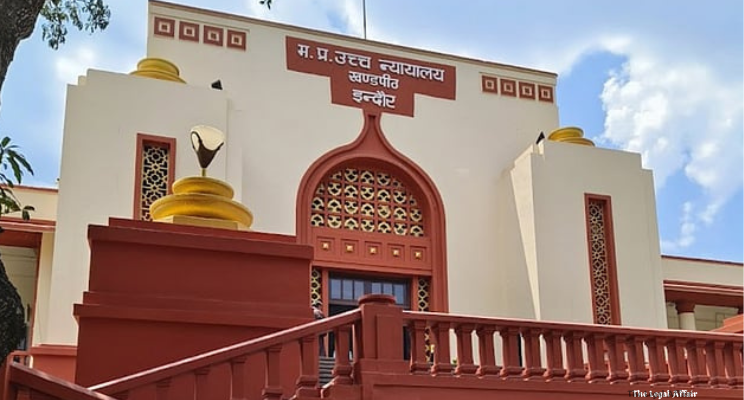
Introduction:
In the matter of M/s Tricon Energy UK Limited Through Its Authorized Signatory Mr. Santosh Koli v. M/s Kriti Industries (India) Limited, AC No. 60 of 2024, decided on June 16, 2025, by the Madhya Pradesh High Court at Indore, Justice Subodh Abhyankar addressed a significant legal question concerning recall of an ex parte order passed under Sections 47 to 49 of the Arbitration and Conciliation Act, 1996, in the context of the enforceability of a foreign arbitral award. The ex parte order dated July 15, 2024, had held that a foreign award was executable in India. The non-applicant later filed an application seeking recall of this order, arguing lack of proper service, procedural oversight, and the existence of complex legal objections that required fair adjudication. The High Court ruled in favor of recalling the ex parte aspect of the order, subject to costs, and emphasized that when intricate legal issues arise, courts must lean toward affording a full hearing to both parties to secure substantive justice.
Arguments by the Non-Applicant (Kriti Industries):
Represented by Senior Advocate Shri Manoj Munshi, assisted by Shri Vikram Malviya and Shri Lucky Jain, the non-applicant sought recall of the ex parte order on several procedural and substantive grounds. It was contended that the notice of the proceedings was never duly served upon them, as the service was attempted at their old address. The company had since changed its registered office, as updated in the Registrar of Companies (ROC) records. A screenshot evidencing the “unserved” status of notice from the High Court’s website was submitted to corroborate the claim. The non-applicant highlighted that the first date after notice was July 15, 2024, which fell immediately after the summer vacation, and due to counsel’s unavailability, they could not enter appearance. The Court, on that very day, proceeded ex parte and upheld enforceability of a significant foreign arbitral award amounting to ₹1,30,87,670. The non-applicant emphasized that upon learning about the order, they acted promptly by filing I.A. No. 7505/2024 on August 6, 2024, under Section 48 of the Arbitration Act to challenge the award, followed by I.A. No. 8151/2024 on August 27, 2024, elaborating on their objections. It was stressed that there existed no plausible motive for intentional absence before the Court, especially when the award involved such a huge monetary liability. Furthermore, they had complied with the Court’s interim direction to deposit an amount of USD 1,53,972.58 and had furnished the required security. Hence, in the interest of justice and effective adjudication of serious legal objections, it was urged that the ex parte aspect of the earlier order be recalled to allow a hearing on merits.
Arguments by the Applicant (Tricon Energy):
On the contrary, Advocate Shri Ashwin Shanker, assisted by Shri Madhav Lahoti, appeared for the applicant and contested the recall request. It was contended that notice had been duly served upon the non-applicant at their correct address. A screenshot confirming service was also placed on record. The applicant stressed that service had been effected through official court process, and the non-applicant could not be permitted to rely on mere screenshots from the High Court’s portal to counter formal service. The applicant argued that permitting recall based on flimsy grounds would defeat the object of speedy enforcement of foreign arbitral awards as contemplated under the Arbitration and Conciliation Act, which endorses minimal judicial intervention in enforcement matters. Moreover, the applicant pointed out that post the ex parte order dated July 15, 2024, the Court had further directed the non-applicant on August 6, 2024, to deposit the USD equivalent within one week. Instead of complying directly, the non-applicant approached the Supreme Court via SLP No. 19247 of 2024, which was summarily dismissed on August 27, 2024. This, they argued, signified an attempt to delay proceedings and cast doubt on the bona fides of the non-applicant. As such, it was prayed that the recall application be dismissed as devoid of merit and that the enforcement process be allowed to proceed unhindered.
Court’s Judgment:
Justice Subodh Abhyankar carefully weighed the rival contentions and placed strong emphasis on the principles of natural justice and effective adjudication, particularly when complex legal objections are involved. The Court took note that although the non-applicant was initially proceeded ex parte, it had thereafter promptly appeared before the Court, filed detailed objections under Section 48 challenging the maintainability of the foreign award, and complied with interim monetary directions of the Court. While acknowledging that the Court had issued directions to deposit USD 1,53,972.58 based on the exchange rate prevailing at the time, it was also acknowledged that the non-applicant had followed these directions in good faith. The Court was of the view that in a matter involving a foreign award of over ₹1.3 crore, enforcement without hearing the objector on serious legal grounds would cause grave prejudice and injustice. It reiterated that even where a party was absent earlier, the subsequent appearance and participation in the proceedings—especially after compliance with court orders—justified recall of the ex parte order, at least to the extent that declared the party ex parte.
Justice Abhyankar also addressed the conflicting service claims. While the applicant had produced screenshots indicating service, the Court recognized that the service report on record still reflected the notice as “unserved”. More importantly, the fact that the non-applicant had not gained knowledge of the proceedings before July 15, 2024, could not be dismissed outright, especially in light of their swift subsequent action. Accordingly, the Court ruled that the principle of fairness dictated an opportunity of hearing be granted to the non-applicant. However, in view of the non-applicant’s initial negligence in failing to update address records and their absence on the hearing date, the Court imposed costs of ₹25,000 payable to the applicant. Thus, I.A. No. 8276/2024 was allowed, and the ex parte order dated July 15, 2024, was recalled only to the extent that the non-applicant was declared ex parte. The rest of the order remained intact, and the objections filed by the non-applicant would now be considered on merits before passing final directions on the enforcement of the award.