


Background:
The Rajya Sabha recently passed two pivotal bills, the Jammu and Kashmir Reservation (Amendment) Bill, 2023, and the Jammu and Kashmir Reorganisation (Amendment) Bill, 2023. Introduced in July 2023, these bills aim to modify essential laws governing reservations and reorganising the region following significant political changes in Jammu and Kashmir.
The Jammu and Kashmir Reservation (Amendment) Bill, 2023, seeks to amend the Jammu and Kashmir Reservation Act, 2004, altering the framework of reservations in jobs and educational institutions for scheduled castes, scheduled tribes, and socially and educationally backward classes. The bill replaces the term “weak and under-privileged classes” with “other backward classes” as declared by the Union Territory of Jammu and Kashmir, thereby eliminating the former definition.
Conversely, the Jammu and Kashmir Reorganisation (Amendment) Bill, 2023, proposes amendments to the Jammu and Kashmir Reorganisation Act, 2019, responsible for the region’s transformation into the union territories of Jammu and Kashmir and Ladakh. The bill aims to increase the number of seats in the Jammu and Kashmir legislative assembly from 107 to 114, with specific reservations for scheduled castes and scheduled tribes. Furthermore, it outlines provisions regarding the nomination of members from the Kashmiri migrant community and displaced persons from Pakistan-occupied Jammu and Kashmir.
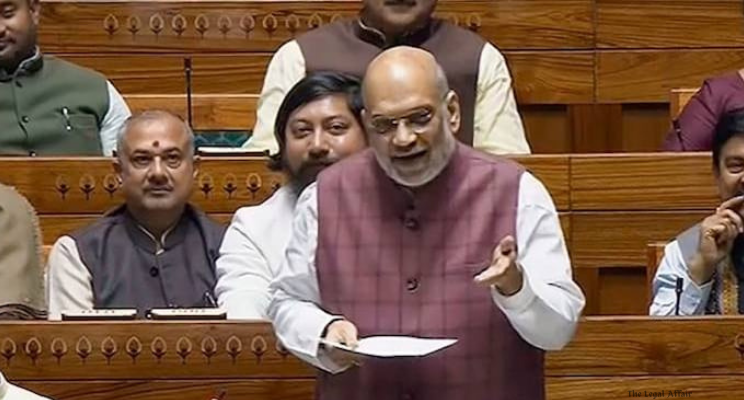
The bills’ passage in both the Lok Sabha and the Rajya Sabha witnessed a walkout by the opposition during Home Minister Amit Shah’s speech. Chairman Jagdeep Dhankar noted the unanimous passage of these bills in the Rajya Sabha, indicating a lack of dissent among the members.
During the parliamentary debates, Amit Shah defended the bills, underscoring their role in ushering in a ‘Naya Kashmir’ (New Kashmir) and ensuring justice for those deprived of their rights over the last seven decades. He reiterated India’s assertion of sovereignty over Pakistan-occupied Kashmir (PoK) and emphasized the significance of abrogating Article 370 to combat separatism and terrorism in the valley.
Simultaneously, the Indian Supreme Court upheld the decision to revoke Jammu and Kashmir’s special status under Article 370 of the Constitution. The court affirmed that the state lacked internal sovereignty and that the president’s power to abrogate Article 370(3) persisted beyond the Jammu and Kashmir Constituent Assembly’s dissolution. Notably, the court refrained from adjudicating the reorganisation’s validity into union territory, following the assurance of Jammu and Kashmir’s statehood restoration by the central government. Additionally, the court directed the Election Commission of India to conduct J&K assembly elections by September 30, 2024.