


Introduction:
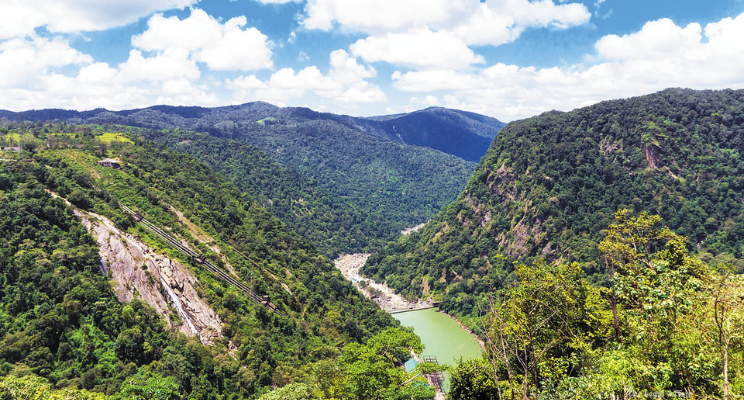
The Karnataka High Court recently addressed significant environmental concerns in a Public Interest Litigation (PIL) relating to the proposed Sharavathi Pumped Storage Project (Sharavathi PSP) and the construction of the Kalkatte Bridge in the ecologically sensitive region of the Sharawathi Wildlife Sanctuary. The case titled Akhilesh Chipli v. Union of India (WP No. 6090/2026) raised serious questions about whether the proposed developmental activities would adversely affect the fragile ecosystem of the sanctuary, which is known to be an important habitat for the endangered lion-tailed macaque. The matter came before the Principal Bench consisting of Chief Justice Vibhu Bakru and Justice C.M. Poonacha. During the proceedings, the High Court expressed preliminary concerns regarding the possible destruction and fragmentation of wildlife habitats due to the proposed project. The Court noted that the Sharawathi region is a preserved habitat for the lion-tailed macaque, a rare primate species that inhabits the dense forest canopy of the Western Ghats. The Bench observed that any activity which could potentially damage the canopy or disturb the ecological balance of the sanctuary must be examined carefully through a detailed environmental impact assessment before being permitted. The Court emphasized that the matter raised important environmental questions and therefore refused to dismiss the PIL at the preliminary stage. While clarifying that the Court was not shutting down the project permanently, it issued interim directions prohibiting any on-ground activities related to the project within the eco-sensitive zone of the sanctuary until necessary statutory approvals are obtained. The Court specifically directed that no preliminary activities should be undertaken inside the wildlife sanctuary pending approval from the Wildlife Board. The case highlights the ongoing tension between developmental projects and environmental protection, particularly in ecologically fragile regions like the Western Ghats, which are globally recognized as biodiversity hotspots.
Arguments on Behalf of the Petitioner:
The petitioner, Akhilesh Chipli, approached the Karnataka High Court by filing a Public Interest Litigation challenging the legality and environmental impact of the proposed Sharavathi Pumped Storage Project and related infrastructure developments such as the Kalkatte Bridge. The petitioner argued that the proposed project posed a significant threat to the ecological balance of the Sharawathi Wildlife Sanctuary and could cause irreversible damage to wildlife habitats in the region. According to the petitioner, the sanctuary is a critical habitat for several endangered species, particularly the lion-tailed macaque, which is listed as an endangered species and is known to inhabit dense forest canopies in the Western Ghats. The petitioner emphasized that any disruption of the forest canopy could lead to fragmentation of the habitat and threaten the survival of these species. The petition relied heavily on Section 29 of the Wildlife (Protection) Act, 1972, which imposes strict restrictions on activities within wildlife sanctuaries. The provision prohibits any person from destroying, exploiting, or removing wildlife from a sanctuary or damaging the habitat of wild animals without prior permission from the Chief Wildlife Warden. Even such permission can only be granted after the State Government is satisfied, in consultation with the National Board for Wildlife, that the proposed activity is necessary for the improvement and better management of wildlife in the sanctuary. The petitioner argued that the proposed pumped storage project clearly involved activities that would alter the ecosystem of the sanctuary, including changes in water flow and potential destruction of forest canopy. Such activities, the petitioner contended, could not legally proceed without prior statutory approvals and environmental impact assessments. The petitioner further argued that allowing preliminary construction activities before obtaining these approvals would defeat the very purpose of environmental safeguards provided under the Wildlife Protection Act. It was also contended that the project could disrupt the delicate balance of the forest ecosystem and lead to long-term ecological consequences, including displacement of wildlife and degradation of biodiversity. The petitioner therefore sought a writ of certiorari from the High Court to restrain the authorities from proceeding with the project until all statutory requirements and environmental safeguards had been properly complied with.
Arguments on Behalf of the Respondents:
The respondents in the case included the Union of India, the State authorities, and the Karnataka Power Corporation Limited (KPCL), which is responsible for implementing the Sharavathi Pumped Storage Project. The respondents opposed the PIL and argued that the petition was premature because the project had not yet received final statutory approvals. According to the State authorities, several clearances required for the project were still pending, and therefore it was inappropriate for the Court to intervene at such an early stage. The respondents submitted that the feasibility studies conducted for the project indicated that the construction would take place in an area located outside the natural habitat of the lion-tailed macaques. Therefore, they argued that the project would not have any direct impact on the species or its habitat. The State authorities further emphasized that the project was an important infrastructure initiative intended to enhance electricity generation capacity and contribute to the energy needs of the State. The Karnataka Power Corporation Limited also argued that there was no absolute prohibition under Section 29 of the Wildlife (Protection) Act against developmental activities within or near wildlife sanctuaries. In support of this argument, the Corporation relied on the Supreme Court’s decision in Essar Oil Ltd. v. Halar Utkarsh Samiti & Others. According to the respondents, the Supreme Court in that case clarified that Section 29 does not impose a blanket ban on all development projects in protected areas. Instead, it allows such activities to be undertaken provided they receive the necessary statutory approvals and comply with environmental safeguards. The respondents also maintained that the project had been designed with environmental considerations in mind and that necessary feasibility and impact studies had already been conducted. They argued that the petitioner’s concerns were speculative and premature, as the project had not yet reached the stage where any irreversible environmental impact could occur. The respondents therefore requested the Court to dismiss the PIL or allow the project authorities to proceed with preliminary activities pending the completion of the approval process.
Court’s Analysis:
After hearing the arguments presented by both sides, the Karnataka High Court carefully examined the legal and environmental issues raised in the case. The Court recognized that the Sharawathi Wildlife Sanctuary is an ecologically sensitive region and an important habitat for the endangered lion-tailed macaque. The Bench observed that the protection of wildlife and preservation of biodiversity are matters of constitutional importance, particularly in light of Articles 48A and 51A(g) of the Constitution, which impose duties on the State and citizens to protect the environment. The Court noted that while developmental projects are important for economic growth and infrastructure development, such projects must be undertaken in a manner that does not compromise environmental sustainability. The Court also acknowledged that the issue raised in the PIL was not merely about a single project but about the broader question of balancing development with ecological conservation. One of the key concerns expressed by the Court was the potential fragmentation of wildlife habitats caused by activities such as destruction of forest canopy. The Bench observed that even seemingly minor disturbances to the forest canopy could have significant consequences for species like the lion-tailed macaque, which depend on dense canopy cover for movement and survival. The Court emphasized that habitat fragmentation can isolate animal populations, disrupt breeding patterns, and ultimately threaten the survival of endangered species. The Bench also considered the arguments relating to Section 29 of the Wildlife Protection Act. While acknowledging that the provision does not impose an absolute ban on development activities, the Court noted that it places strict conditions on any activity that could affect wildlife or their habitat within a sanctuary. Such activities require prior approval from the Chief Wildlife Warden and consultation with the National Board for Wildlife. The Court observed that these safeguards are intended to ensure that wildlife conservation is given priority in decision-making processes. The Bench also took note of the State’s argument that the project was located outside the natural habitat of lion-tailed macaques. However, the Court observed that ecological systems are interconnected and that even activities outside the immediate habitat of a species can have indirect impacts on the ecosystem. For instance, the destruction of forest canopy or changes in water flow could disrupt the broader ecological balance of the sanctuary.
Court’s Interim Order and Observations:
In light of these concerns, the Karnataka High Court decided that the matter required further examination and could not be dismissed at the preliminary stage. The Court therefore refused to close the PIL and directed that the case should continue to be heard. At the same time, the Court issued interim directions to ensure that no irreversible damage occurs to the sanctuary while the legal issues are being examined. The Court orally remarked that no activities should be undertaken on the ground in furtherance of the project within the boundaries of the eco-sensitive zone without further orders from the Court. The Bench specifically directed that no preliminary activities should be carried out inside the wildlife sanctuary until approval is obtained from the relevant wildlife authorities, including the Wildlife Board. The Court clarified that the interim order was necessary because it had serious concerns regarding the potential impact of the project on the wildlife habitat in the region. The Bench also emphasized that all stakeholders involved in the project must be aware of the Court’s concerns and must act responsibly to ensure compliance with environmental laws. Importantly, the Court clarified that its order did not permanently halt the project. Instead, the purpose of the interim order was to ensure that no activities are undertaken that could potentially damage the ecosystem before the legal and environmental issues are properly examined. The Court indicated that a detailed assessment of the project’s environmental impact would be necessary before any final decision could be made.