


Introduction:
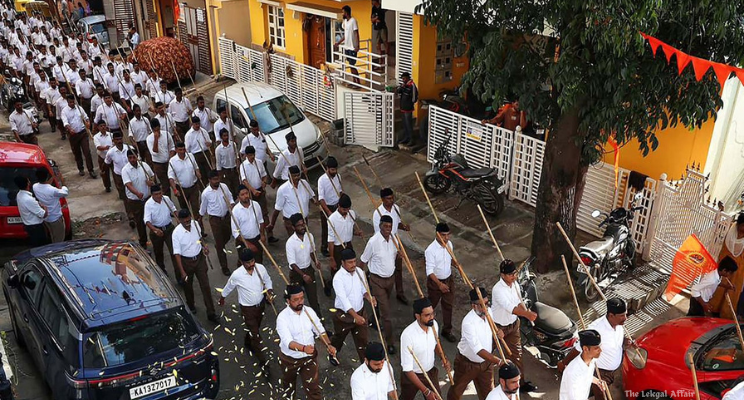
In the case of Ashok Patil v. The Deputy Commissioner & Others (WP 203166 of 2025), the Karnataka High Court, presided over by Justice M.G.S. Kamal, intervened to mediate between the Convenor of the Rashtriya Swayamsevak Sangh (RSS) Kalaburagi unit, Ashok Patil, and the State authorities concerning the proposed “Pathasanchalana” (route march) scheduled to take place in Chittapur town. The matter arose after the petitioner approached the High Court challenging the administrative inaction and restrictions imposed by the district authorities regarding the march. The Court noted that the area was sensitive due to existing communal tensions, which warranted a cautious approach from both the organizers and the authorities. Earlier, the Court had directed a peace committee meeting to be held on October 28, 2025, to ensure mutual understanding and coordination between the parties. However, due to the petitioner’s non-attendance citing personal reasons, the Court directed a second meeting to be conducted on November 5, 2025, at 5 PM in the Advocate General’s office in Bengaluru, emphasizing the importance of dialogue, cooperation, and mediation in resolving such disputes peacefully.
Arguments:
The petitioner, represented by Senior Advocate Aruna Shyam, argued that responsible members of the RSS organization had attended the earlier peace committee meeting on October 28 as per the Court’s directions and had expressed their full willingness to comply with lawful conditions for conducting the Pathasanchalana. Shyam contended that the organization’s members had already informed the authorities regarding the number of participants and the scope of the proposed march. He further asserted that the petitioner could not personally attend the meeting due to a bereavement in the family but had duly authorized other representatives to attend on his behalf. He maintained that the purpose of the event was purely cultural and not intended to provoke or disturb public peace. The petitioner’s counsel reiterated their readiness to appear before the district authorities at any time convenient to them and even offered to participate virtually through video conferencing if required. The petitioner emphasized that the RSS, being a lawful organization, had the constitutional right to hold peaceful processions and assemblies, provided such gatherings adhere to reasonable restrictions under Article 19(2) of the Constitution of India. It was argued that the State’s refusal to permit the event or delay in decision-making amounted to an infringement on the petitioner’s fundamental right to freedom of assembly and expression.
On the other hand, the State, represented by Advocate General Shashikiran Shetty, took a strong stance, asserting that the petitioner’s conduct reflected a lack of cooperation and bona fide intent. The Advocate General submitted that despite clear directions from the High Court in its order dated October 24, 2025, the petitioner did not personally attend the peace committee meeting on October 28, nor did he formally communicate his inability to appear. The AG stated that while notices were duly served and all arrangements were made to facilitate the meeting, the petitioner’s absence undermined the purpose of the Court’s directive. The State contended that the district administration was working in good faith to maintain law and order in Chittapur, a region that had witnessed communal sensitivity in the recent past. The Advocate General further remarked that the petitioner seemed to be evading procedural cooperation and, instead of constructively engaging with the authorities, had now sought to implead the Union of India, an act which, according to the AG, reflected a political motive rather than a genuine concern for public harmony. The State submitted that its only aim was to ensure that any public gathering or procession did not disrupt peace, and hence the authorities’ cautious stance was justified in the interest of public order.
Judgement:
During the hearing, Justice M.G.S. Kamal observed that the primary objective of the Court was to facilitate an amicable resolution through mediation rather than judicial confrontation. The Court noted that both sides had valid concerns—the petitioner’s right to conduct peaceful marches being constitutionally protected, and the State’s duty to maintain law and order being a paramount obligation. The Court emphasized that in a democratic society, such differences should be resolved through consultation and dialogue rather than through rigid posturing. Addressing the petitioner’s counsel, Justice Kamal remarked that “those on the ground know how to play, not those outside who merely comment,” implying that the petitioner’s personal participation in the meeting was essential for meaningful engagement. The Court observed that mediation was always the best possible way to address such issues, especially when they involve community sensitivities and public sentiment.
While acknowledging the petitioner’s submission regarding the family bereavement, the Court expressed that genuine reasons could be accommodated but active cooperation from both sides was necessary for the resolution of such matters. Consequently, the Court proposed a second meeting to be held on November 5, 2025, at 5 PM in the Advocate General’s office in Bengaluru, directing both the petitioner and senior State officials to attend. The Court specifically instructed that the meeting be attended by the petitioner, Senior Advocate Aruna Shyam, Advocate General Shashikiran Shetty, and other concerned officers, to guide the modalities of conducting the Pathasanchalana peacefully and within lawful limits. The Court also clarified that it was not setting the order of priority or dominance among various organizations seeking permissions for similar events, stating that “who will be given precedence is to be decided amicably by the authorities.”
The Court reiterated that mediation and constructive dialogue were essential tools for resolving social and administrative issues that touch upon constitutional freedoms and public order. It reminded both parties that the judiciary’s role was not to micromanage administrative decisions but to ensure that constitutional values of fairness, reasonableness, and equality before the law were upheld. Justice Kamal also made it clear that the meeting should not be viewed as a mere procedural formality but as an opportunity to set the right precedent for handling similar matters in the future. The Court stated, “This meeting should set the right path for things in the future,” underlining its expectation that both the petitioner and the authorities act in a spirit of mutual respect and responsibility.
The Court further observed that while citizens and organizations have the fundamental right to assemble peacefully, the same is subject to reasonable restrictions in the interest of public order, morality, and the sovereignty and integrity of India. Thus, the authorities were within their rights to regulate or postpone public gatherings in areas prone to communal tension, provided such actions were proportionate and non-discriminatory. The petitioner, in turn, was expected to respect the authority of law and comply with directions designed to preserve peace and public safety. Justice Kamal highlighted that such matters must be addressed with sensitivity and mutual understanding rather than adversarial litigation, as the ultimate goal of the Court and the administration is to ensure harmony and coexistence in society.
The High Court concluded by directing that the matter be listed again on November 7, 2025, to report the outcome of the meeting scheduled for November 5. The Court expressed optimism that the meeting would yield a positive resolution and serve as a model for future interactions between organizations and State authorities in similar circumstances. The Court’s approach reflected its consistent emphasis on mediation, dialogue, and cooperative governance as tools for maintaining public order while respecting individual and collective rights.
In essence, this judgment underscores the balance between the right to peaceful assembly and the State’s duty to prevent public disorder. It also illustrates the judiciary’s pragmatic approach to resolving conflicts through guided mediation rather than rigid judicial intervention. Justice M.G.S. Kamal’s remarks and directions signal a judicial philosophy rooted in participatory governance, where courts act as facilitators of consensus rather than mere arbiters of legality.
The case also holds broader significance as it demonstrates the Karnataka High Court’s sensitivity towards maintaining peace in communally delicate regions like Chittapur while upholding democratic freedoms. The Court’s emphasis on personal participation, sincerity in dialogue, and mutual cooperation between the petitioner and the authorities serves as a reminder that in a pluralistic democracy, harmony can only be preserved through understanding, patience, and respect for the rule of law. By ensuring that both sides meet under judicial guidance, the Court not only seeks to resolve the immediate dispute but also to prevent potential escalation of tensions that could arise from miscommunication or mistrust.
Through this order, the High Court reaffirmed that rights, even when constitutionally protected, come with corresponding duties to act responsibly and within the confines of law. It also highlighted the judiciary’s evolving role in steering sensitive matters towards mediation and collaborative solutions, reflecting a mature and nuanced understanding of constitutional governance. The matter now awaits the outcome of the November 5 meeting, which will determine whether the proposed Pathasanchalana march can proceed peacefully under agreed terms or will require further judicial consideration.