


Introduction:
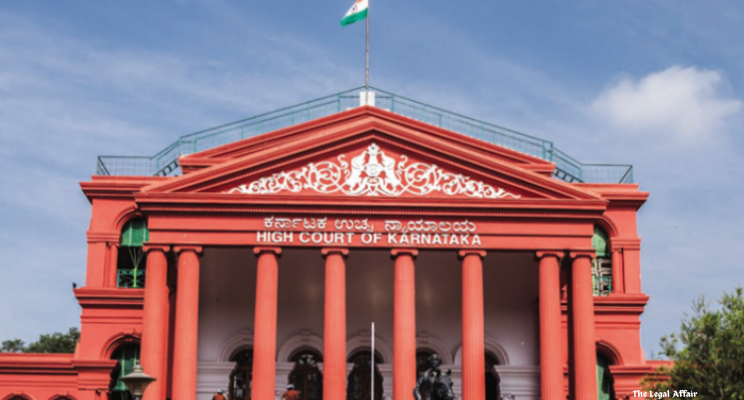
In the landmark judgment of The Mysore Education Society & Anr v. Babu P & Anr, WRIT PETITION NO. 17808 OF 2024, the Karnataka High Court, presided over by Justice M. Nagaprasanna, dealt with a significant constitutional issue involving the jurisdiction of the National Commission for Scheduled Castes (NCSC). The case arose from a complaint filed by P. Babu, a computer technician employed with the Mysore Education Society (MES), who alleged that he was subjected to harassment and discrimination based on his Scheduled Caste status. The MES, which runs the MES College at Malleswaram, Bengaluru, was dragged into proceedings initiated by the Commission. However, the Court found these proceedings to be an overreach of the Commission’s jurisdiction, ultimately quashing them as unauthorized and disruptive.
Arguments of both sides:
The controversy began when P. Babu, a computer technician at MES College, claimed that he faced caste-based discrimination and harassment upon returning from a two-year leave of absence. Though he had accepted a transfer in 2023 to another MES institution located just four kilometers away and expressed gratitude for being reinstated, he later approached the NCSC in 2024 alleging caste-based atrocity by the petitioners. Taking cognizance of this complaint, the Commission directed the Commissioner of Police to investigate the matter, who then issued communications to staff and faculty members seeking their statements and rejoinders. MES and its Secretary approached the Karnataka High Court challenging the Commission’s jurisdiction to entertain and act upon what was essentially an employment-related service dispute. The petitioners argued that Babu had willfully agreed to the terms of his employment which explicitly allowed inter-institutional transfers within the MES network. They also contended that the belated complaint raised grievances dating back over a decade, many of which had never been raised earlier and lacked any reference to caste-based abuse. They further submitted that the Commission’s intervention had created unnecessary disruption within the institution, despite there being no prima facie case of atrocity or abuse as per the Scheduled Castes and Scheduled Tribes (Prevention of Atrocities) Act. The respondents, on the other hand, maintained that the Commission did have jurisdiction, claiming that Babu had been subjected to caste-based slurs and that his complaint merited thorough investigation. They insisted that MES had invoked his caste status in derogatory ways upon his return to duty and that the NCSC was empowered under Article 338 of the Constitution to investigate such grievances. In evaluating these claims, the Karnataka High Court took note of the employment agreement signed by Babu, which clearly stated that transfers within the MES group were permissible and binding. The Court also observed that the grievances raised by Babu were conveniently packaged into a narrative of caste discrimination, despite being classic service-related issues. Referring to Article 338 of the Constitution, the bench emphasized that the NCSC is empowered to investigate and monitor safeguards for Scheduled Castes and Tribes and may inquire into specific complaints concerning the deprivation of such rights. However, it unequivocally held that the Commission does not have adjudicatory powers akin to civil courts or tribunals.
Judgement:
The Court noted that the Commission may investigate and recommend, but it cannot act as a quasi-judicial body to resolve service disputes between employers and employees. Citing past judgments, the bench reiterated that such jurisdictional overreach not only violates constitutional limits but also undermines the sanctity and role of civil courts. In this case, there was no specific or credible allegation that Babu was abused or subjected to any atrocity based on his caste. Instead, what was evident was a disgruntled employee raising old service grievances under the garb of caste-based discrimination. The High Court found the Commission’s proceedings to be devoid of legal authority, stressing that such misapplication of statutory provisions distorts the intended safeguards meant for Scheduled Castes. The bench further highlighted that although no formal order was issued by the Commission, its continued proceedings and the involvement of the police created ripples within the institution, damaging its reputation and internal discipline. By falsely projecting a service matter as an atrocity dispute, the complaint weaponized the provisions of the law, resulting in a classic misuse of constitutional protections. As a result, the Karnataka High Court allowed the writ petition, quashing all proceedings initiated by the NCSC against the Secretary and Chief Executive of MES. The court categorically held that the Commission lacked jurisdiction in the matter and that its actions were liable to be annulled for being ultra vires and disruptive. In a strong concluding note, the bench termed the entire proceeding as a “canard” launched by the employee against the institution and declared that such abuse must not be tolerated under the guise of statutory protections. Advocates appearing in the matter included Pradeep S. Sawkar for the petitioners, Nagendra B for respondent no. 1, and B.S. Venkatanarayana for respondent no. 2. The decision in 2025 LiveLaw (Kar) 141 thus reaffirms the limits of administrative bodies like the NCSC and protects employers from being entangled in unjustified proceedings masquerading as civil rights violations.