


Introduction:
The High Court of Jammu & Kashmir and Ladakh has revived a Public Interest Litigation concerning the construction of the proposed ₹922 crore High Court Complex at Raika, Jammu, after finding that assurances of “substantial progress” made earlier had not translated into any visible development on the ground. A Division Bench comprising Justice Rajnesh Oswal and Justice Mohd Yousuf Wani recalled its earlier order disposing of the petition and directed the respondents to file a detailed status report explaining the steps taken towards the construction of the long-awaited judicial complex.
The proceedings arose in the matter of Arjun Gandotra v. Union Territory of Jammu & Kashmir and Others, a Public Interest Litigation instituted by Advocate Arjun Gandotra seeking judicial intervention to ensure timely release and allocation of the full amount of ₹922 crore required for the establishment of a modern High Court Complex at Raika. The petitioner also sought a comprehensive action-taken report setting out the administrative, financial and infrastructural steps undertaken by the authorities for implementation of the project.
The case raises important issues concerning judicial infrastructure, public accountability and the role of constitutional courts in monitoring implementation of projects that are intrinsically linked to the administration of justice. Unlike ordinary infrastructure projects, court complexes serve as institutions essential to the functioning of democracy and the rule of law. Their adequacy directly affects judges, lawyers, litigants, court staff and citizens who depend upon timely and effective access to justice.
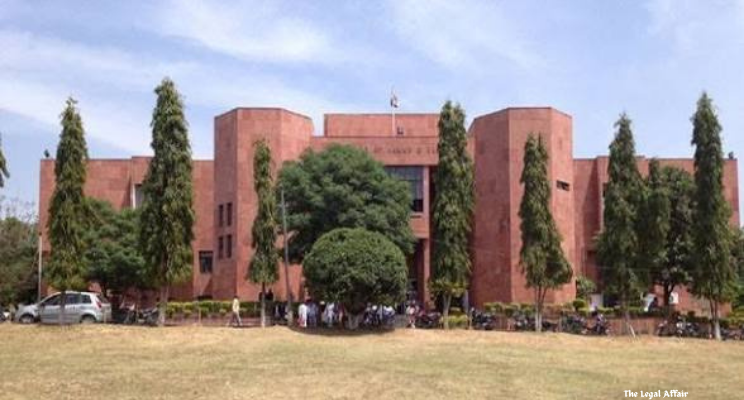
The proposed High Court Complex at Raika is envisioned as a large, eco-friendly judicial campus spread over approximately 40 hectares of land in the Raika-Bahu area. The project was conceptualised to address longstanding infrastructural deficiencies at the existing High Court complex situated at Janipur, Jammu. According to the petition, the present complex suffers from several constraints, including traffic congestion, inadequate parking, limited accessibility, concerns regarding fire safety, security challenges and restricted scope for future expansion.
The petition highlighted that the Jammu Wing of the High Court and the District Court presently operate from the same campus, placing additional pressure on already limited infrastructure. The increasing volume of litigation and the need for technologically advanced and environmentally sustainable judicial facilities have made the construction of a new complex a matter of institutional necessity rather than administrative convenience.
The Detailed Project Report (DPR) for the proposed judicial complex was prepared and forwarded on November 18, 2022, estimating the total project cost at approximately ₹922 crore. Subsequently, on March 1, 2023, a meeting between the then Chief Justice of the High Court and the Chief Secretary of the Union Territory of Jammu & Kashmir reportedly resulted in a decision to expedite administrative approval and release of funds.
The project also received symbolic importance when the foundation stone for the new complex was laid on June 28, 2023, by the then Chief Justice of India, Dr. D.Y. Chandrachud, in the presence of Lieutenant Governors, judges of the Supreme Court and judges of the High Court.
Despite these developments, the petitioner alleged that no actual progress had occurred on the ground. Earlier, the PIL had been disposed of by the High Court on February 6, 2026, after government counsel informed the Bench that substantial progress had been made in formulating the proposal and that discussions between the Union Territories of Jammu & Kashmir and Ladakh were ongoing.
At that stage, the Court had accepted the assurance and observed that no useful purpose would be served by keeping the petition pending. However, liberty had been granted to the petitioner to seek revival of the proceedings if tangible progress did not materialise.
It was in exercise of that liberty that the petitioner approached the Court once again, contending that more than six months had elapsed since the assurances were made, but neither construction activity nor even preliminary preparatory work had commenced at the project site.
The High Court found sufficient merit in these submissions to revive the PIL and call upon the authorities to explain the actual status of the project.
Arguments of the Parties:
The petitioner, Advocate Arjun Gandotra, argued that the matter involved not merely delay in execution of a public project but also the larger issue of judicial infrastructure and access to justice. According to the petitioner, despite repeated assurances and ceremonial announcements, the project had not moved beyond the stage of deliberations.
Senior Advocate Sunil Sethi, appearing on behalf of the petitioner, submitted that when the PIL was earlier disposed of, the Court had done so on the basis of statements made by the respondents that substantial progress had already been achieved in the formulation of the proposal for construction of the High Court complex.
The petitioner argued that the Court had accepted those statements in good faith and had expected that the administrative process would culminate in visible and concrete action within a reasonable period. However, despite the passage of more than six months, there was no evidence of construction activity, no visible site development and no indication that the project had entered the execution stage.
The petitioner emphasised that the issue was not merely financial. The project had already been approved conceptually, a Detailed Project Report had been prepared, consultations had taken place at the highest levels of government and the foundation stone had been formally laid in a public ceremony.
Under such circumstances, continued delay raised serious concerns regarding administrative inefficiency and lack of accountability.
The petitioner also drew attention to the infrastructural limitations of the existing High Court complex at Janipur. It was submitted that the current facilities are inadequate for the growing needs of the judiciary and legal community.
The present campus reportedly suffers from traffic congestion, insufficient parking facilities, limited accessibility and security concerns. Additionally, the coexistence of the High Court and District Court within the same premises creates pressure on space and leaves little possibility for future expansion.
The petitioner argued that the proposed Raika complex was intended to address all these issues by creating a modern, sustainable and technologically advanced judicial campus capable of meeting future requirements.
The respondents, represented by government counsel, had earlier informed the Court that substantial progress had been made and that discussions between the Union Territories of Jammu & Kashmir and Ladakh were underway regarding the project.
The authorities had taken the position that the matter involved inter-governmental coordination, financial approvals and administrative procedures, and that such processes required time.
It was also submitted previously that keeping the PIL pending would not serve any useful purpose because the concerned authorities were actively deliberating over the implementation of the project.
However, in the revival proceedings, the respondents had not yet placed any detailed status report before the Court explaining the exact steps taken after the earlier disposal of the PIL.
This absence of specific information appears to have influenced the Court in concluding that a prima facie case existed for seeking a detailed explanation from the authorities.
The issue before the Court therefore was not whether the project should be undertaken, since that aspect was already accepted, but whether the assurances previously given had been translated into concrete administrative action.
The petitioner effectively argued that public announcements and ceremonial events cannot substitute actual implementation, particularly where judicial infrastructure is concerned.
The respondents are now required to place before the Court a detailed account of the steps taken, financial allocations made, approvals obtained and timelines contemplated for execution of the project.
Court’s Judgment:
The Division Bench of Justice Rajnesh Oswal and Justice Mohd Yousuf Wani allowed the application seeking recall of the earlier order and revived the Public Interest Litigation to its original number.
The Court observed that the reasons set out in the application, supported by an affidavit and supplemented by the submissions of Senior Advocate Sunil Sethi, disclosed a prima facie case warranting further examination.
The Bench noted that the earlier order disposing of the PIL had been passed in the expectation that deliberations between the authorities would produce meaningful progress within a few months.
The Court had not dismissed the petition on merits. Rather, it had accepted the assurances made on behalf of the respondents and had kept open the possibility of revival if concrete results did not emerge.
The petitioner’s contention that more than six months had elapsed without any visible progress persuaded the Court that judicial scrutiny was once again necessary.
Consequently, the Bench recalled its earlier order dated February 6, 2026, and restored the PIL to its original file.
An important aspect of the judgment is the Court’s emphasis on accountability in matters concerning public infrastructure, particularly infrastructure relating to the justice delivery system.
Large-scale public projects often involve multiple stages of approval, funding and execution. Courts generally avoid interfering with policy decisions or administrative processes. However, where specific assurances are given before a constitutional court, and those assurances do not translate into action, judicial review may become necessary.
The Court did not issue any immediate direction compelling release of funds or commencement of construction. Instead, it adopted a measured approach by calling upon the respondents to place factual information on record.
The respondents were directed to file a status report detailing the steps actually taken towards construction of the High Court Complex at Raika.
This direction reflects an important principle of judicial review: before issuing coercive directions, the Court must ascertain the factual position and determine whether delay is attributable to genuine administrative difficulties or to inaction.
The requirement of a status report also serves a larger constitutional purpose. It ensures transparency in governmental decision-making and allows the Court to assess whether public resources, approvals and institutional commitments are being effectively utilised.
The Court’s intervention also highlights the significance of judicial infrastructure in the administration of justice.
Court buildings are not merely physical structures. They are institutions through which constitutional rights are enforced and legal disputes are resolved. Inadequate infrastructure can affect efficiency, accessibility, security and public confidence in the justice system.
The proposed Raika complex appears intended to meet these challenges by creating a modern judicial campus capable of accommodating future growth.
The Court’s observations indicate that the issue is not confined to construction of a building but concerns strengthening the institutional framework through which justice is administered.
The order also underscores the importance of balancing judicial restraint with judicial accountability.
The Court did not substitute itself for the executive by dictating how funds should be allocated or how the project should be designed. Instead, it required the executive authorities to explain the actual status of implementation.
Such an approach respects the separation of powers while ensuring that commitments made before the Court are not reduced to mere assurances without practical consequences.
The revival of the PIL therefore serves two functions. First, it seeks accountability regarding the delay in implementation of an important public project. Second, it provides a mechanism through which the Court can monitor whether institutional infrastructure necessary for effective administration of justice is being developed within a reasonable timeframe.
The matter has now been listed for further consideration, and the respondents have been directed to file a detailed status report before the next date of hearing.
The subsequent proceedings are likely to focus on the financial, administrative and practical steps taken for the project, the reasons for delay, and the timeline within which construction is expected to commence.
The decision reflects an evolving understanding of access to justice. Courts today recognise that effective justice delivery requires not only sound legal principles and competent judges but also adequate infrastructure.
In reviving the PIL, the High Court of Jammu & Kashmir and Ladakh has reaffirmed that judicial institutions require corresponding infrastructural support and that promises made regarding such projects must ultimately translate into visible progress.
The case will now proceed with the benefit of a status report from the authorities, enabling the Court to determine whether further directions are required to ensure implementation of the proposed ₹922 crore High Court Complex at Raika.