


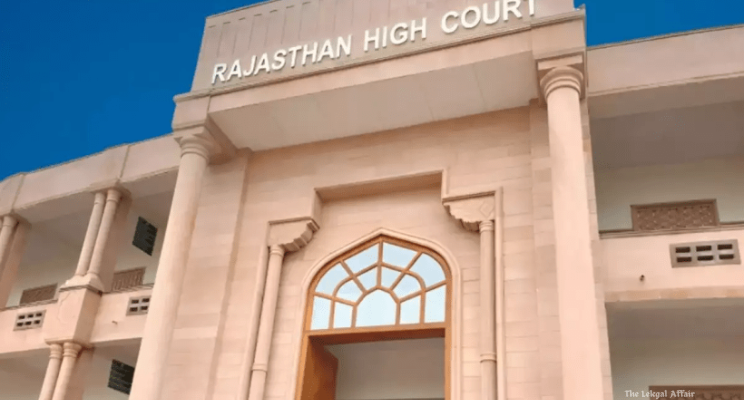
Introduction:
The Rajasthan High Court, while taking suo motu cognizance of a news report, registered a public interest litigation titled In Re: Protection and Preservation of the Historic Sites of Haldighati and Rakht Talai, District Udaipur, reported as 2026 LiveLaw (Raj) 22, and examined the alarming state of neglect and degradation affecting two of Rajasthan’s most historically and culturally significant locations associated with Maharana Pratap and the Battle of Haldighati. The Division Bench comprising Dr. Justice Pushpendra Singh Bhati and Justice Sanjeet Purohit expressed serious concern over the deteriorating physical, ecological, and archaeological condition of these heritage sites, noting that they were no longer being preserved as national monuments but were instead being subjected to unchecked tourism, vehicular congestion, illegal construction, sewage discharge, and vandalism. The news report that triggered the proceedings highlighted how the widening of Haldighati Pass had resulted in the felling of nearly 200 trees, flattening of hill slopes, and burial of potential archaeological remains, while Rakht Talai was found to be overrun by weeds, broken liquor bottles, and obstructed pathways, with memorial structures being misused by visitors for inappropriate activities. The report further exposed the existence of unauthorized encroachments, including residential structures and even public institutions such as a government school and hospital, which were contributing to open sewage flow and waterlogging near the monuments. The Court noted that despite being notified heritage zones and despite the existence of constitutional and statutory mandates requiring protection of monuments and environment, there appeared to be an institutional collapse in governance involving the Archaeological Survey of India, the State archaeology authorities, local administration, and tourism departments. The Bench also took note of the fact that the Rajasthan government had announced a ₹100 crore Maharana Pratap Tourist Circuit in the 2024 budget, but no tangible progress was visible on the ground, leading the Court to question whether heritage protection was being reduced to symbolic budgetary statements rather than actual conservation action. Considering the gravity of the revelations, the Court held that the issues raised went far beyond local mismanagement and disclosed a broader constitutional failure affecting cultural identity, environmental sustainability, and public trust in governance, thereby justifying judicial intervention in the form of a suo motu public interest litigation to safeguard heritage that forms part of the collective memory and dignity of the nation.
Arguments:
Since the matter arose from suo motu action by the Court, the arguments largely emerged through judicial observations, reliance on the investigative news report, and the Court’s interpretation of constitutional and statutory obligations, rather than adversarial pleadings at this preliminary stage; however, the Court effectively framed the issues that the Central and State governments would be required to address through affidavits. The Bench highlighted that under Article 49 of the Constitution, the State has a mandatory duty to protect monuments and places of national importance from spoliation, disfigurement, destruction, and removal, while Article 51A(g) imposes a fundamental duty upon citizens to protect the natural environment, forests, lakes, rivers, and wildlife, and to have compassion for living creatures, thereby creating a complementary framework where both State and citizens share responsibility for conservation. Further, the Court linked environmental degradation at the sites to Article 21, which has been judicially expanded to include the right to a clean and healthy environment, cultural well-being, and preservation of heritage as part of dignified life. The Court also referred to multiple statutory regimes such as the Ancient Monuments and Archaeological Sites and Remains Act, environmental protection laws, pollution control regulations, wildlife protection statutes, and municipal laws governing sanitation and encroachment, all of which appeared to have been ignored or inadequately enforced. The Bench observed that if government agencies were granting approvals for road widening, allowing construction of public institutions, and failing to regulate tourism without ecological safeguards, then the violation was not accidental but systemic. The Court further emphasized that heritage tourism cannot be promoted at the cost of destroying the very heritage that attracts visitors, and that uncontrolled vehicular traffic, plastic waste, sewage discharge, and commercial exploitation convert sacred historical landscapes into degraded recreational zones devoid of dignity. The judges also pointed out that the failure to implement previously announced development and conservation schemes, such as the Maharana Pratap Tourist Circuit, raised questions about governance transparency and accountability, especially when public funds were allocated but not reflected in on-ground conservation. By comparing administrative conduct to traffic authorities who deliberately remove warning signs to trap motorists, the Court indicated that authorities appeared to be facilitating harmful activities rather than preventing them, thereby creating conditions that allow misuse while absolving themselves of responsibility. Through these observations, the Court effectively placed the burden on both Central and State governments to justify how such extensive degradation was allowed to occur, what monitoring mechanisms existed, and why corrective action had not been initiated despite obvious environmental and archaeological damage visible to any observer.
Judgment:
After assessing the material placed before it and considering the constitutional magnitude of the issues involved, the Rajasthan High Court held that the continuing neglect of the Haldighati Pass and Rakht Talai heritage zones constituted a violation of Articles 21, 49, and 51A(g) of the Constitution and reflected a systemic governance failure by both Central and State authorities. The Court declared that when constitutionally protected heritage sites are reduced to polluted tourist picnic zones plagued by encroachments and sewage, it is not merely an administrative lapse but an erosion of constitutional values, cultural identity, and intergenerational equity. Accordingly, the Court issued notices to the Central Government, the State Government of Rajasthan, and relevant departments including archaeological, tourism, local administration, and environmental authorities, directing them to file detailed affidavits explaining what steps had been taken to preserve the sites, what measures existed to prevent encroachments and pollution, and what restoration plans were currently in operation or proposed. The Court also directed that the affidavits must specifically respond to the factual issues highlighted in the news report, including road widening, deforestation, misuse of memorial areas, sewage discharge, unauthorized construction, and non-implementation of budgeted conservation projects. Pending final adjudication, and recognizing that further damage could occur if immediate action was not taken, the Court issued several interim directions, including a complete prohibition on any further construction or expansion activities at the heritage sites without prior court approval, initiation of a comprehensive clean-up drive within fifteen days to remove garbage, weeds, and debris, imposition of a temporary ban on vehicular parking on sensitive slopes, strict enforcement of fines for littering and vandalism, diversion of sewage flows and remediation of waterlogging, and appointment of caretakers for round-the-clock monitoring to prevent misuse of the premises. The Court clarified that these interim measures were not optional recommendations but binding directives intended to halt ongoing degradation while long-term restoration plans were being examined. Emphasizing that judicial restraint cannot justify silence in the face of constitutional breakdown, the Court asserted that preservation of heritage and environment is not a matter of policy discretion but of constitutional obligation, and when executive agencies fail to discharge that duty, judicial oversight becomes not only justified but necessary. The Bench therefore listed the matter for further consideration on February 28, 2026, making it clear that continued monitoring would follow and that accountability would be fixed if dereliction of duty was established. Through this order, the High Court reaffirmed that heritage protection is inseparable from environmental justice and human dignity, and that historical landscapes are not expendable commodities in the pursuit of short-term tourism or infrastructure development.