


Introduction:
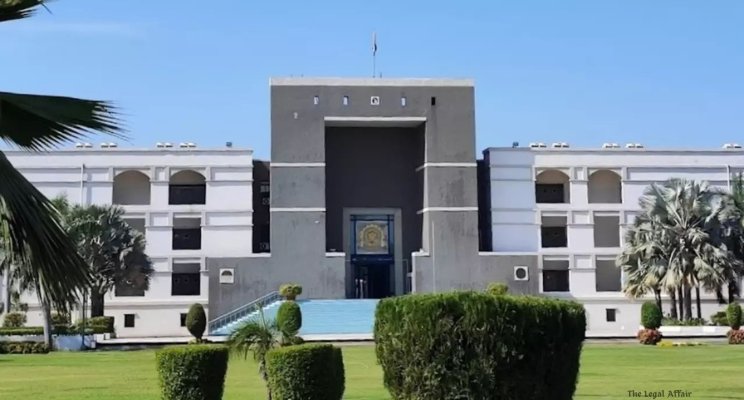
The Gujarat High Court, in Koli Parshottambhai Narsinhbhai & Anr. v. State of Gujarat Through Secretary (Appeals) & Ors., set aside orders passed by revenue authorities which had declared an agricultural land transaction illegal and directed that the land vest in the State Government. The Court held that the initiation of suo motu proceedings after an unexplained delay of 11 years was arbitrary and contrary to settled legal principles governing the exercise of revisional powers under the Bombay Land Revenue Code. Justice Divyesh A. Joshi observed that even when statutes do not prescribe a specific limitation period for exercising revisional jurisdiction, such powers must still be exercised within a reasonable time. A delayed intervention by authorities, particularly after several years of administrative silence, risks disturbing settled rights and undermining legal certainty.
The dispute revolved around agricultural land situated at Village Ghanshyampur in Surendranagar district, originally recorded in the name of one Raja Bechar. In 1990, the petitioners purchased the land through a registered sale deed executed by the legal heirs of Raja Bechar. Following the sale, the revenue records were updated and a mutation entry was made on 21 September 1991. This entry was subsequently certified on 24 May 1992, thereby officially recognizing the petitioners as the lawful occupants of the land in the revenue records.
For more than a decade after the certification of the mutation entry, no objections were raised by the revenue authorities. However, in January 2003—almost eleven years later—the Assistant Collector issued a notice to the petitioners alleging that the transfer violated certain conditions because the land was “new tenure land” and had been transferred without prior government permission. Acting on this premise, the Assistant Collector concluded that the transaction amounted to a breach of tenure conditions and ordered the land to vest in the State Government.
The petitioners challenged this order before the Collector, Surendranagar, but their appeal was dismissed. They then filed a revision before the Special Secretary (Appeals), Revenue Department (SSRD), which was also rejected by an order dated 30 May 2012. Aggrieved by these decisions, the petitioners approached the Gujarat High Court through a writ petition challenging the legality of the entire proceedings.
At the heart of the controversy was whether revenue authorities could reopen and invalidate a long-standing mutation entry and registered land transaction after a lapse of more than a decade. The High Court examined the scope of powers under the Bombay Land Revenue Code, the legal implications of prolonged administrative delay, and the limits of revenue authorities in interfering with registered sale deeds. Relying on established legal principles and precedents, including the Supreme Court’s ruling in Dehri Rohtas Light Railway Co. Ltd. v. District Board, Bhojpur (1992), the Court emphasized that delayed exercise of revisional jurisdiction is strongly discouraged because it introduces uncertainty into settled property rights and disrupts the stability of human affairs.
Arguments by the Petitioners:
The petitioners, represented by Advocate Pitambar Abhichandani, advanced several arguments challenging the legality of the revenue authorities’ actions. Their primary contention was that the suo motu proceedings were initiated after an inordinate and unexplained delay of nearly eleven years, which itself rendered the action arbitrary and legally unsustainable. According to the petitioners, once the mutation entry had been certified in 1992 and remained unchallenged for over a decade, the authorities could not suddenly reopen the matter without any convincing explanation for the delay.
The petitioners argued that the long lapse of time had created legitimate expectations and vested rights in their favour. During this period, they had been in possession of the land and had relied upon the authenticity of the revenue records and the validity of the registered sale deed. Allowing authorities to reopen such transactions after many years would create uncertainty in property relations and undermine the reliability of official records.
Another important argument raised by the petitioners related to the nature of the land. They contended that the land originally belonged to Raja Bechar and was classified as old tenure land, which could be freely transferred without requiring prior permission from the government. The petitioners emphasized that the revenue records—including the Form 7/12 extracts—did not contain any indication that the land was of new tenure or subject to restrictions on transfer.
The petitioners also argued that the revenue authorities had exceeded their jurisdiction by ordering the land to vest in the State Government. According to them, the relevant provision invoked by the authorities—Section 79A of the Bombay Land Revenue Code—does not grant the power to confiscate land or annul registered transactions. Instead, the provision only permits summary eviction of unauthorized occupants under certain circumstances.
In support of this argument, the petitioners relied on earlier judicial decisions of the High Court which had clarified that Section 79A does not authorize authorities to forfeit land or declare ownership in favour of the State. Therefore, the order directing vesting of the land in the State Government was beyond the statutory powers of the Assistant Collector.
The petitioners further argued that they were bona fide purchasers who had acquired the land through a valid and registered sale deed after verifying the revenue records. Since the transaction had been formally registered and reflected in official records, the revenue authorities could not unilaterally declare the petitioners to be unauthorized occupants.
They emphasized that if the State believed that the sale deed was invalid or obtained through fraud, the proper remedy would be to approach a competent civil court seeking cancellation of the sale deed. Revenue authorities, being administrative bodies, do not have the jurisdiction to invalidate registered documents or determine questions of title.
Thus, according to the petitioners, the entire action of the revenue authorities was illegal for three primary reasons: the unexplained delay of eleven years, the incorrect classification of the land as new tenure, and the lack of jurisdiction to annul a registered sale deed or vest the land in the State.
Arguments by the State:
Opposing the writ petition, Assistant Government Pleader Surbhi Bhati defended the actions of the revenue authorities and contended that the proceedings were justified under the law. The State argued that the land in question was originally Government waste land which had been granted to Raja Bechar on a “Santhni” basis. According to the State, land granted under this category is typically classified as new tenure land, meaning that it is subject to certain conditions and restrictions on transfer.
The State maintained that such land cannot be transferred to third parties without prior permission from the government. Since the petitioners had purchased the land from the heirs of Raja Bechar without obtaining such permission, the transfer was in violation of the tenure conditions attached to the original grant.
To support its position, the State relied on precedents which recognized that Santhani land owned by the Government cannot be freely transferred. Based on this reasoning, the State argued that the authorities were justified in treating the sale transaction as a breach of the conditions of tenure.
The State further submitted that once a breach of tenure conditions was detected, the authorities were empowered to initiate proceedings and take corrective action, including declaring the transaction invalid and restoring the land to the State. According to the government, the objective of such action was to protect public land and prevent illegal transfers of government property.
While the petitioners had emphasized the delay in initiating proceedings, the State argued that the absence of a statutory limitation period meant that the authorities retained the power to examine the legality of the transaction whenever irregularities came to light.
Thus, the State urged the High Court to uphold the orders of the Assistant Collector, Collector, and the Special Secretary (Appeals), arguing that the authorities had acted within their jurisdiction to prevent violation of tenure conditions attached to government-granted land.
Court’s Judgment:
After hearing both sides and examining the record, the Gujarat High Court allowed the writ petition and set aside the orders passed by the revenue authorities. Justice Divyesh A. Joshi held that the initiation of suo motu proceedings after a delay of eleven years was arbitrary and contrary to established legal principles governing revisional jurisdiction.
The Court emphasized that even when statutes do not prescribe a specific limitation period, authorities exercising revisional or supervisory powers must do so within a reasonable time. Excessive delay in initiating proceedings is viewed with disapproval because it disrupts settled rights and introduces uncertainty in property transactions.
In this regard, the Court relied on the Supreme Court’s decision in Dehri Rohtas Light Railway Co. Ltd. v. District Board, Bhojpur (1992), which had held that delayed exercise of revisional powers is undesirable because it allows actions or transactions to remain perpetually open to challenge. The Supreme Court had warned that such uncertainty is contrary to the policy of law and may prejudice third-party rights that have arisen in the meantime.
Applying this principle to the present case, the High Court noted that the mutation entry in favour of the petitioners had been certified in 1992, and the authorities had taken no action until 2003. During this entire period, the petitioners’ ownership and possession remained reflected in the revenue records without any objection from the authorities.
The Court observed that the authorities were fully aware of the mutation entry and could have examined its legality earlier if they had any doubts. Their failure to act for over a decade indicated administrative inaction, which could not later be corrected by reopening the matter after such a long delay.
The Court therefore held that the eleven-year delay was fatal to the proceedings, rendering the entire exercise of power arbitrary and illegal.
The High Court also examined the scope of powers under the Bombay Land Revenue Code. It noted that the Assistant Collector had ordered the land to vest in the State Government, effectively nullifying the registered sale deed executed in favour of the petitioners.
The Court clarified that revenue authorities do not possess the power to annul registered sale deeds, even if allegations of irregularity or fraud are raised. Such matters fall within the jurisdiction of civil courts, which alone can determine the validity of property transactions and grant relief such as cancellation of deeds.
The Court observed that directing the land purchased through a registered sale deed to vest in the State would effectively amount to annulling the transaction, which is beyond the competence of revenue authorities.
Justice Joshi further noted that the revenue records did not indicate that the land was new tenure land. The petitioners had relied on these official records while purchasing the property, and there was nothing to suggest that they were aware of any restrictions on transfer.
Given these circumstances, the Court concluded that the petitioners had acted as bona fide purchasers and could not be penalized for alleged defects in the original grant, particularly when such defects were not reflected in the revenue records.
In view of these findings, the High Court held that the orders passed by the Assistant Collector, Collector, and Special Secretary (Appeals) were unsustainable in law. The Court therefore quashed and set aside the order dated 30 May 2012 passed by the Special Secretary (Appeals), which had confirmed the earlier orders directing vesting of the land in the State.