


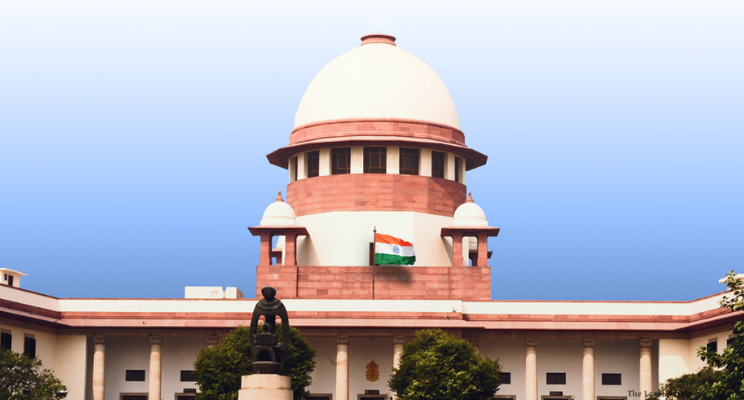
Introduction:
The case of United India Insurance Co. Ltd. v. Sayona Colors Pvt. Ltd. (Civil Appeal No. 6100 of 2024; 2026 LiveLaw (SC) 303) presented the Supreme Court with a significant question concerning the integrity of insurance claims and the legal consequences of fraud. The dispute arose from a fire incident that occurred on March 25, 2011, at a godown owned by Sayona Colors Pvt. Ltd., a chemical company. The company claimed that the fire was accidental, allegedly caused by a short circuit, and sought compensation amounting to ₹28.20 crores under multiple insurance policies obtained shortly before the incident.
The insurer, United India Insurance Co. Ltd., contested the claim, alleging that the fire was not accidental but a premeditated act of arson orchestrated to fraudulently extract insurance money. The matter eventually reached the National Consumer Disputes Redressal Commission (NCDRC), which partly allowed the claim and directed payment of ₹3.33 crores with interest and costs. However, the Supreme Court, upon appeal, undertook a detailed examination of the evidence and findings, ultimately overturning the NCDRC’s order.
In a strongly worded judgment dated March 17, 2026, the Bench comprising Justice Ahsanuddin Amanullah and Justice R. Mahadevan held that the claim was tainted by fraud and therefore entirely unsustainable. The Court not only rejected the claim in full but also directed the constitution of a Special Investigation Team (SIT) to probe the matter, emphasizing the broader implications of fraudulent insurance claims on public confidence and the financial system.
Arguments of the Insurance Company:
The insurer advanced a comprehensive case built on circumstantial evidence, forensic reports, and discrepancies in documentation, arguing that the claim was fraudulent and engineered through deliberate manipulation.
At the outset, the insurer highlighted the suspicious timing and pattern of insurance coverage obtained by the claimant. It pointed out that the company initially secured a policy for ₹15 crores, which was enhanced to ₹19 crores on March 7, 2011—merely weeks before the fire. Additionally, another policy for ₹17 crores had been procured earlier, covering the same period. This sudden and substantial increase in coverage raised serious doubts about the bona fides of the insured.
The insurer relied heavily on expert findings to challenge the claim of accidental fire. It referred to a report from Truth Labs, which detected hydrocarbon residues consistent with kerosene at the seat of the fire. Crucially, these residues were localized and not found elsewhere, suggesting deliberate ignition rather than an accidental short circuit. Further, forensic examination of the electrical systems revealed no signs of malfunction or short circuit, thereby directly contradicting the claimant’s version of events.
The insurer also questioned the authenticity of the stock allegedly destroyed in the fire. It contended that the invoices produced by the claimant were fabricated and that the suppliers named in those documents were either non-existent or not engaged in the relevant trade. Supporting this assertion, the surveyor’s report indicated discrepancies between the VAT returns submitted by these suppliers and those recorded with the Commercial Taxes Department.
Another key argument concerned procedural irregularities and attempts to mislead the investigation. The insurer pointed to delays in furnishing samples for forensic examination and reliance on questionable analytical reports. It also challenged the credibility of the Gujarat Forensic Science Laboratory (GFSL) report, arguing that the samples analyzed had already been burnt and were therefore unreliable.
The insurer concluded that the cumulative effect of these factors—suspicious insurance enhancements, forensic evidence of accelerants, absence of electrical faults, fabricated invoices, and non-existent suppliers—clearly established that the fire was a deliberate act of arson intended to fraudulently claim insurance benefits. It urged the Court to reject the claim entirely, emphasizing that permitting such claims would undermine the integrity of the insurance system.
Arguments of the Claimant Company:
Sayona Colors Pvt. Ltd., on the other hand, maintained that the fire was accidental and occurred within the coverage period of valid insurance policies, thereby entitling it to compensation.
The company asserted that the fire was caused by a short circuit and emphasized that the incident had been promptly reported to both the insurer and the police on the same day. It relied on the GFSL report, which indicated the presence of ethyl alcohol—an inflammable substance—suggesting that the fire could have been accidental in nature.
In response to allegations regarding the stock and suppliers, the claimant stated that it had relied on affidavits provided by suppliers and had not independently verified their credentials. It argued that such reliance was reasonable in the course of business and should not be construed as evidence of fraud.
The claimant also sought to downplay the significance of the timing of insurance enhancements, contending that businesses often revise coverage based on operational needs and risk assessments. It argued that the mere proximity of policy enhancements to the incident did not, by itself, establish fraudulent intent.
Further, the claimant defended the validity of its documentation and contended that the discrepancies pointed out by the insurer were either minor or explainable. It urged the Court to consider that some loss had undeniably occurred due to the fire and that denying compensation entirely would result in unjust hardship.
Finally, the claimant relied on the NCDRC’s decision, which had granted partial relief, as evidence that its claim had merit. It argued that even if certain aspects of the claim were disputed, the existence of loss should entitle it to equitable compensation.
Court’s Judgment:
The Supreme Court undertook a meticulous analysis of the evidence and firmly rejected the claimant’s case, holding that the claim was vitiated by fraud and therefore wholly untenable.
At the heart of the judgment was the principle that fraud vitiates all solemn acts. The Court categorically held that once a claim is found to be fraudulent, no relief—partial or otherwise—can be granted. It rejected the notion of equitable compensation in such cases, observing that courts and adjudicatory bodies cannot legitimize fraudulent conduct by awarding compensation merely because some loss is shown.
The Court found the timing and pattern of insurance coverage highly suspicious. The enhancement of policy limits and procurement of additional coverage shortly before the incident were seen as indicative of premeditation rather than coincidence.
The forensic evidence played a निर्णायक role in the Court’s findings. The presence of kerosene residues at the origin of the fire, coupled with the absence of any electrical malfunction, led the Court to conclude that the fire was deliberately set. It rejected the claimant’s reliance on the GFSL report, noting its limitations and the questionable nature of the samples analyzed.
The Court also placed significant weight on the discrepancies in the claimant’s documentation. It found that the invoices produced to substantiate the stock were fabricated and that the suppliers were either non-existent or unrelated to the transactions claimed. The mismatch between VAT returns and official records further reinforced the conclusion that the claim was built on falsified data.
Additionally, the Court noted attempts to mislead the investigation, including delays in providing samples and reliance on dubious analytical reports. These actions were interpreted as indicative of a deliberate effort to conceal the truth.
In light of these findings, the Court held that the fire was an act of arson carried out for unlawful gain. It set aside the NCDRC’s order in its entirety, rejected the insurance claim, and absolved the insurer of any liability.
Importantly, the Court went a step further by directing the Commissioner of Police, Ahmedabad, to constitute a Special Investigation Team (SIT) headed by an officer not below the rank of Deputy Commissioner of Police. The SIT was tasked with conducting a thorough investigation within three months. The matter was listed for further hearing on July 21, 2026.
The Court also made broader observations about the impact of fraudulent insurance claims. It noted that such practices are not uncommon and have serious ramifications for the integrity of the insurance system and public confidence. By ordering an SIT probe, the Court signaled its intent to address not only the individual case but also the systemic issue of insurance fraud.