


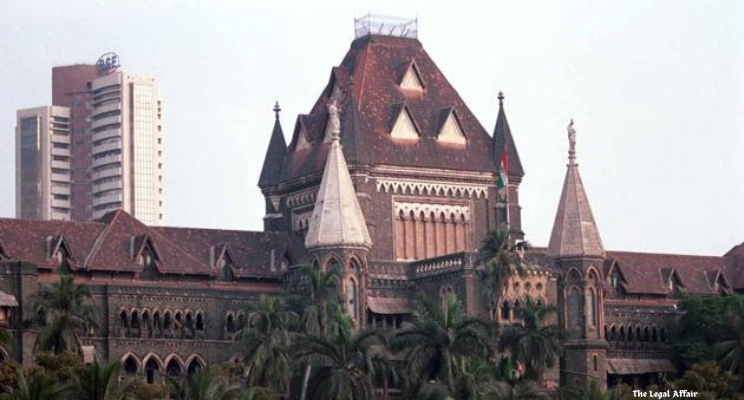
Introduction:
The Bombay High Court recently delivered an important judgment highlighting the indispensable role of forensic experts in criminal trials and the duty of courts to ensure that scientific evidence is properly examined before being relied upon to determine guilt. The case arose out of a confirmation proceeding and connected criminal appeals challenging a judgment dated 22 March 2024 delivered by an Additional Sessions Judge, wherein Tejas @ Dada Mahipati Dalvi (Accused No.1) was convicted for grave offences under Sections 363, 302, 376(2), 376A, 376AB and 201 of the Indian Penal Code along with Sections 4 and 6 of the Protection of Children from Sexual Offences Act, 2012. The trial court had imposed the death penalty on the first accused for certain offences. In the same judgment, Accused No.2, the mother of Accused No.1, was convicted under Section 201 of the IPC and Section 21 of the POCSO Act and sentenced to seven years of imprisonment.
The prosecution case was heavily dependent on scientific evidence, including chemical analysis and DNA reports prepared by the Regional Forensic Science Laboratory. However, during the trial proceedings, the forensic experts who prepared these reports were not summoned or examined as witnesses, and their reports were admitted in evidence directly. When the matter reached the High Court in confirmation proceedings, a Division Bench comprising Justice Manish Pitale and Justice Shreeram V. Shirsat closely examined whether such reliance on untested forensic reports could be legally sustained.
The High Court ultimately held that failure to summon and examine forensic experts whose reports form the basis of conviction amounts to a serious procedural error that vitiates the trial and leads to failure of justice. The Court emphasized that the central objective of criminal trials is the discovery of truth, and courts cannot rely on scientific reports without giving the accused an opportunity to question the experts who prepared them. The judgment therefore set aside the trial court’s decision and remanded the matter for further proceedings limited to examining the concerned forensic experts and allowing cross-examination. The ruling reiterates the judiciary’s commitment to ensuring fairness, transparency, and procedural integrity in criminal trials, especially in cases involving severe punishments such as the death penalty.
Arguments Presented by the Prosecution:
The prosecution sought to defend the judgment delivered by the Sessions Court and argued that the conviction of the accused was supported by strong material evidence, including forensic reports that scientifically linked the accused to the crime. According to the State, the trial court had correctly considered the chemical analysis and DNA reports while arriving at its conclusions regarding the guilt of the accused persons.
The prosecution submitted that these forensic reports were prepared by competent experts from the Regional Forensic Science Laboratory and formed an important part of the evidence collected during the investigation. These reports, according to the prosecution, demonstrated crucial aspects of the case and corroborated the overall chain of circumstances pointing toward the involvement of Accused No.1 in the crime.
It was also argued that the defence had not raised any objection during the trial regarding the admissibility of the reports or sought the summoning of the forensic experts for examination. The prosecution therefore contended that the Sessions Court was justified in admitting the reports in evidence without examining the experts because the defence had not made any formal request to call them as witnesses.
Another argument advanced by the State was that the trial court had relied upon a comprehensive body of evidence, including witness testimonies, documentary material, and forensic findings, which together established the guilt of the accused beyond reasonable doubt. The prosecution maintained that the scientific reports were only one part of the evidentiary framework and that the conviction should not be disturbed merely because the experts were not examined during the trial.
The State also emphasized the gravity of the offences involved, pointing out that the case concerned heinous crimes including kidnapping, sexual assault, and murder of a minor. In such serious cases, the prosecution argued, the courts must carefully examine all available evidence to ensure that justice is delivered.
Furthermore, the prosecution urged the High Court not to overturn the trial court’s decision on technical grounds. According to the State, the absence of examination of forensic experts should not automatically invalidate the trial when the defence itself had not insisted on their presence during the proceedings.
In essence, the prosecution requested the High Court to uphold the conviction and sentence awarded by the Sessions Court, arguing that the findings were based on substantial evidence and that the procedural aspect relating to forensic witnesses should not overshadow the overall merits of the case.
Arguments Presented by the Defence:
The defence strongly challenged the trial court’s approach, arguing that the conviction was fundamentally flawed due to serious procedural irregularities. The primary contention raised by the defence was that the Sessions Court had relied heavily on forensic reports without examining the experts who prepared them, thereby denying the accused the opportunity to cross-examine those experts.
The defence emphasized that forensic evidence, particularly DNA analysis and chemical examination, often plays a decisive role in criminal trials. Because such reports involve complex scientific methodologies, it is essential for the experts who prepared them to appear before the court and explain the procedures followed, the tests conducted, and the conclusions drawn.
Without such examination, the defence argued, the accused is deprived of the right to challenge the reliability and accuracy of the scientific findings. Cross-examination of experts allows the defence to question the chain of custody of samples, the possibility of contamination, the methodology used during analysis, and the interpretation of results. In the absence of such scrutiny, the reports remain untested and cannot safely form the basis of a conviction.
The defence further argued that the Sessions Court had wrongly shifted the responsibility onto the accused by stating that since the defence had not requested the summoning of the chemical analysts, the reports could be admitted directly. According to the defence, this reasoning was legally unsustainable because the burden of proving the prosecution’s case lies on the prosecution itself, and it cannot rely on crucial evidence without producing the witnesses responsible for it.
The defence also highlighted that the case involved the death penalty, which requires the highest standard of fairness and procedural compliance. In capital punishment cases, courts must exercise extreme caution and ensure that every piece of evidence is tested thoroughly before a conviction is confirmed.
Another argument raised by the defence related to the manner in which the statements of the accused were recorded under Section 313 of the Code of Criminal Procedure. The defence pointed out that the Sessions Court had put questions to the accused persons jointly, instead of addressing them individually regarding the circumstances appearing against each of them. This, according to the defence, violated the procedural safeguards designed to ensure that each accused has a fair opportunity to explain the evidence against them.
The defence therefore requested the High Court to set aside the conviction and remand the case for a proper trial in which the forensic experts would be examined and the accused would be allowed to cross-examine them.
Observations and Judgment of the Court:
After examining the submissions of both sides and reviewing the trial court record, the Bombay High Court delivered a detailed judgment emphasizing the fundamental principles governing criminal trials.
The Court began by reiterating that the ultimate purpose of a criminal trial is to discover the truth. Every procedural step taken during a trial must therefore be directed toward ensuring that the facts are properly established and that justice is done both to the victim and the accused.
The High Court noted that the Sessions Court had relied extensively on chemical analysis and DNA reports while recording findings against the accused persons. However, the experts who prepared these reports had not been summoned or examined during the trial.
The Court found that the Sessions Court had committed a grave error in directly admitting these reports into evidence simply because the defence had not requested the examination of the chemical analysts. According to the High Court, this approach was fundamentally flawed.
The bench observed that when scientific reports constitute significant incriminating evidence, it becomes necessary for the experts responsible for those reports to appear before the court as witnesses. This allows both the prosecution and the defence to examine and cross-examine them regarding the scientific findings.
The Court clarified that even if the prosecution fails to summon such witnesses, the trial court has the authority and responsibility to call them as court witnesses if their testimony is necessary for a just decision. The High Court emphasized that courts cannot remain passive when crucial evidence remains untested.
In the present case, the High Court concluded that the trial court should have summoned the forensic experts and allowed the accused an opportunity to question them. By failing to do so, the trial court had undermined the fairness of the proceedings.
The Court also addressed the issue concerning the recording of statements under Section 313 of the CrPC. It held that the Sessions Court had erred in putting questions to the accused jointly rather than individually. Each accused must be confronted separately with the circumstances appearing against them so that they can provide their explanations effectively.
Given these procedural deficiencies, the High Court concluded that the trial had been vitiated and that the conviction could not be sustained in its existing form.
Accordingly, the Court set aside the judgment of the Sessions Court and remanded the matter for limited reconsideration. The trial court was directed to summon the concerned forensic experts, record their evidence, and permit the accused to cross-examine them.
The High Court further directed that after the examination of these experts, fresh statements of the accused must be recorded under Section 313 of the CrPC.
Considering that the case was being remanded and that Accused No.2 had already undergone substantial imprisonment, the Court ordered her release on bail pending further proceedings.
Through this decision, the High Court reaffirmed the principle that scientific evidence must be tested through proper judicial scrutiny before it can be relied upon to convict an accused, particularly in cases involving severe punishments.