


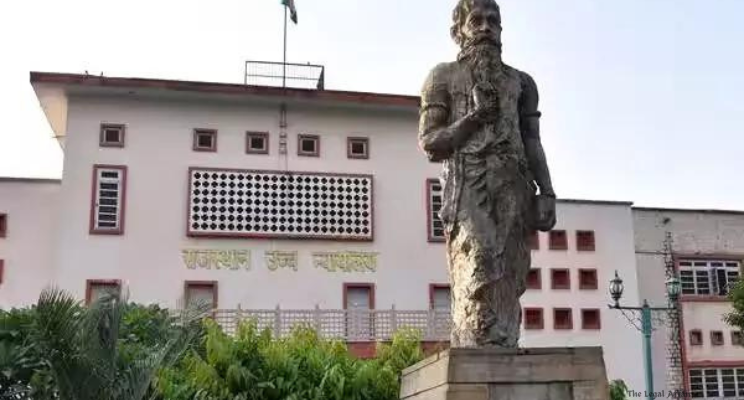
Introduction:
In a significant legal development, the Rajasthan High Court, through a writ of mandamus, has directed the state to honor its commitment under the ‘Jyoti Yojna’ Scheme. The scheme, introduced in 2011, aimed to provide benefits to women voluntarily undergoing sterilization after having one or two children. The court, led by Justice Anoop Kumar Dhand, emphasized the principles of legitimate expectation and promissory estoppel, asserting that the government’s promises under the scheme must be upheld for accountability in governance.
Arguments:
The petitioner, represented by Advocate Intjar Ali, highlighted the government’s cancellation of the scheme in 2016, despite assurances of free education, medical facilities, and employment preferences for beneficiaries. The state, represented by Additional Government Counsel Bharat Saini, contended that the petitioner was informed about the scheme’s cancellation and issued a U.T.I Bond for her daughter. The court scrutinized the case through the lens of legitimate expectation and promissory estoppel.
Court’s Judgment:
Justice Dhand, after analyzing relevant case law, found that the Department of Medical, Health & Family Welfare acted against public interest by arbitrarily revoking benefits under the ‘Jyoti Yojna’ Scheme. The court, in a direction specific to the petitioner, ordered the state to apply the scheme and reimburse educational fees incurred from Class X to the GNM Course with 9% interest per annum. Additionally, a general mandamus was issued to constitute a committee to review pending claims of eligible women under the scheme within three months.