


Introduction:
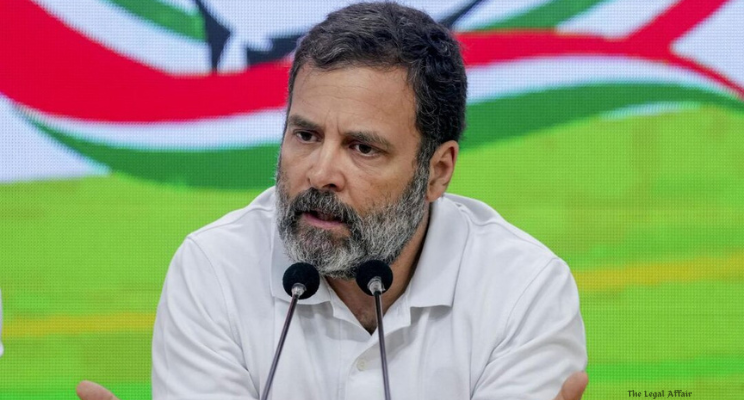
In a recent legal confrontation, S. Vignesh Shishir, a Karnataka BJP worker, initiated a Public Interest Litigation (PIL) against Congress leader Rahul Gandhi, challenging his election as a Member of Parliament from the Rae Bareli Lok Sabha seat. The PIL, filed under the representation of advocate Ashok Pandey, alleged that Rahul Gandhi was not an Indian citizen but a British citizen, thereby making him ineligible to contest the Lok Sabha elections. The case unfolded in the Allahabad High Court before a bench comprising Justice Rajan Roy and Justice Om Prakash Shukla.
Arguments:
S. Vignesh Shishir and his advocate Ashok Pandey contended that Rahul Gandhi was not a bona fide Indian citizen but held British citizenship. According to them, this disqualified Gandhi from participating in the Indian parliamentary elections, as the Indian Constitution mandates that only Indian citizens can contest in such elections. Advocate Pandey highlighted the necessity of addressing this issue to maintain the sanctity of Indian electoral laws and to prevent non-citizens from holding significant political positions. The PIL emphasized the need for the court to intervene and annul Rahul Gandhi’s election as an MP on these grounds.
The respondents, including Rahul Gandhi and associated legal representatives, dismissed the allegations as baseless and politically motivated. They argued that Rahul Gandhi has consistently maintained his Indian citizenship and has never sought or accepted British citizenship. They asserted that the PIL was an attempt to malign Gandhi’s political career and disrupt the electoral process. The defense stressed that all necessary documentation proving Gandhi’s Indian citizenship was in order, and no credible evidence supported the claim of his British citizenship. Furthermore, they argued that such matters fall under the jurisdiction of the competent authority under the Citizenship Act, 1955, and not a PIL in the High Court.
Court’s Judgment:
The courtroom witnessed dramatic scenes as the hearing progressed. After an extensive 90-minute session where the petitioner’s advocate, Ashok Pandey, was repeatedly asked to conclude his arguments, tensions escalated. The bench expressed frustration with the prolonged and repetitive nature of the arguments, emphasizing that all points had been duly noted and considered. Despite this, Advocate Pandey insisted on continuing, leading to a heated exchange where the court had to rise midway. The bench remarked on the need to maintain decorum and efficiency in court proceedings, highlighting that arguments deserving of lengthy hearings are substantial and merit-based.
Ultimately, the bench allowed the petitioner to withdraw the PIL with the liberty to approach the competent authority under Section 9(2) of the Citizenship Act, 1955. This move came after the petitioner, S. Vignesh Shishir, sought to withdraw the plea during the hearing. The court’s decision underscored the importance of addressing citizenship-related grievances through the appropriate legal channels as stipulated by law, rather than via a PIL.