


Introduction:
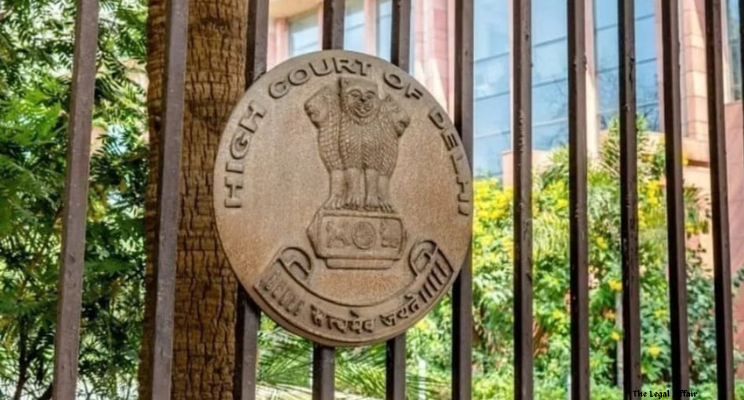
In the case of Manorama Sakkerwal v. Municipal Corporation of Delhi & Ors., the Delhi High Court, in a firm and principled ruling delivered by Justice Mini Pushkarna, dismissed a writ petition filed by a woman alleging unauthorized construction in Karol Bagh, imposing a cost of ₹1,00,000 for suppression of material facts, misleading statements, and abuse of judicial process. The petitioner had approached the Court alleging that one of the respondents had carried out illegal construction on a property located in Karol Bagh, New Delhi. However, upon deeper scrutiny, the Court found that the petitioner had deliberately suppressed the fact that a civil suit had already been filed before the trial court on the same cause of action. Moreover, she had misled the Court by concealing that she did not even reside in the property and that it had remained vacant for over two decades. The Court also noted that the petitioner was using the judicial machinery as a tool for extortion, approaching the respondents repeatedly with the intent to extract money under the guise of opposing unauthorized construction. Expressing serious concern over such misuse, the Bench held that courts of law exist to serve justice, not to facilitate malicious motives, and therefore dismissed the petition with heavy costs payable to the Delhi High Court Advocates’ Welfare Trust.
Arguments of the Petitioner:
The petitioner, Manorama Sakkerwal, through her writ petition, alleged that the respondents had undertaken unauthorized construction activities at the property situated in Karol Bagh, New Delhi. She argued that despite several representations made to the Municipal Corporation of Delhi (MCD), no effective action had been taken to stop or demolish the construction, which, according to her, was in violation of municipal building bye-laws and zoning regulations. The petitioner contended that the inaction of the authorities amounted to a failure of statutory duty, warranting judicial intervention under Article 226 of the Constitution of India.
She submitted that the illegal construction posed serious safety hazards to the surrounding buildings and violated the rights of other property owners in the vicinity. The petitioner argued that she had a legitimate concern as the property in question originally belonged to her family, and that the unauthorized acts of the respondents were carried out without requisite approvals from the competent authorities. She prayed for a direction to the MCD to demolish the illegal structure and to initiate penal action against the persons responsible.
The petitioner also asserted that she had no personal interest in the matter other than seeking compliance with the law and the protection of urban order. Her counsel urged that the High Court, being the guardian of the rule of law, must not turn a blind eye to blatant violations of municipal laws. The petitioner claimed that the case involved a larger public interest since unauthorized constructions are a menace that jeopardize urban planning and citizen safety.
However, during the course of the hearing, the Court observed glaring omissions and inconsistencies in the petitioner’s submissions. It was brought to the notice of the Court that she had failed to mention the existence of a pending civil suit before the trial court regarding the same property and the same cause of action. Moreover, she had concealed material information about her own relationship with the property, including the fact that it had remained unoccupied for over twenty years. The Municipal Corporation contended that the petitioner had not approached the Court with clean hands, a fundamental prerequisite in writ proceedings.
Arguments of the Respondents:
The respondents, including the Municipal Corporation of Delhi and the private party alleged to have carried out unauthorized construction, opposed the petition vehemently, asserting that it was a clear case of abuse of process of law. They argued that the petitioner had filed the present writ petition with ulterior motives, primarily to harass and extort money from the respondents under the pretext of litigation. The MCD submitted that appropriate inspections had already been carried out in accordance with municipal procedure, and wherever necessary, action had been taken. It was further argued that the petitioner’s allegations were exaggerated and aimed at maligning the respondents.
The respondents’ counsel contended that the petitioner’s conduct was not that of a bona fide litigant. She had not only suppressed vital information regarding the pending civil proceedings on the same issue but also misrepresented facts about her ownership and possession. It was revealed that the property in question had remained vacant for over two decades, undermining her claim of personal stake or injury. The respondents alleged that the petitioner’s repeated attempts to file complaints and initiate proceedings were part of a pattern of harassment and blackmail.
The private respondent, who was accused of raising unauthorized construction, asserted that the petitioner had personally approached him multiple times with veiled demands for monetary settlement. The counsel submitted that such behavior amounted to an attempt to misuse judicial processes for personal gain. The respondent highlighted that while unauthorized construction is indeed a serious concern, it cannot be used as a shield for extortion or personal vendetta.
The respondents further argued that the writ jurisdiction of the High Court under Article 226 cannot be invoked for private disputes, especially when an alternative civil remedy is already being pursued. They pointed out that the existence of the civil suit, which the petitioner deliberately concealed, rendered the writ petition not only non-maintainable but also dishonest. Citing precedents, they reminded the Court that suppression of material facts alone is sufficient ground for dismissal of a writ petition, as honesty and transparency form the bedrock of equitable relief. They urged the Court to impose exemplary costs to deter such misuse of judicial resources and to send a clear message that the sanctity of the judicial process cannot be compromised for personal or vindictive motives.
Court’s Judgment:
After hearing both sides and perusing the record, Justice Mini Pushkarna delivered a strong and unambiguous judgment dismissing the writ petition with costs of ₹1,00,000, to be deposited with the Delhi High Court Advocates’ Welfare Trust. The Court began by emphasizing a cardinal principle of law — that any litigant who approaches the Court must do so with clean hands, full disclosure, and bona fide intentions. Suppression of material facts, making false statements, or misleading the Court strikes at the very root of the administration of justice.
Justice Pushkarna observed that the petitioner had grossly misused the judicial process by concealing the fact that a civil suit had already been filed before the trial court on the same cause of action. The writ petition was thus not only redundant but also deceptive. The Court noted that the petitioner was not even residing at the property in question, which had been lying vacant for more than twenty years. This fact, coupled with the existence of prior litigation, should have been candidly disclosed but was deliberately withheld to create a false narrative.
The judgment further pointed out that the petitioner’s actions were not motivated by a genuine desire for justice or public interest but were tainted by malice and ulterior motives. The Court referred to material placed before it showing that the petitioner had been repeatedly approaching one of the respondents, seeking financial settlement. Justice Pushkarna stated, “No party can be allowed to use judicial process for ulterior motives and with a view to extort money from another party on the basis that such party is carrying out unauthorized construction.”
The Court acknowledged that it takes serious note of cases involving unauthorized construction, recognizing them as a significant civic issue. However, it cautioned that the judiciary’s sensitivity to such matters cannot be exploited as a tool for blackmail or personal gain. The Court remarked, “There is no doubt that this Court takes very serious note of cases wherever unauthorized construction is carried out; however, the same does not give any leeway to any party to blackmail such persons who are raising such construction. This is clearly a gross abuse of the process of law.”
The Bench emphasized that the petitioner’s misuse of judicial process was an attack on the integrity of the legal system. By suppressing facts and misrepresenting circumstances, she had sought to manipulate the Court’s conscience — a conduct deserving of strong judicial censure. The Court cited several precedents where petitions were dismissed with costs for suppression of facts, including K.D. Sharma v. Steel Authority of India Ltd. (2008) 12 SCC 481, where the Supreme Court held that “a litigant who approaches the Court must come with clean hands, clean mind, and clean objective.”
Applying this principle, Justice Pushkarna held that the writ petition was an attempt to misuse the court process and had been filed not for justice but for oblique motives. The judgment underscored that the High Court’s writ jurisdiction cannot be converted into an instrument for harassment or coercion. Courts must act as guardians of justice, not facilitators of deceit.
The Court concluded that the petitioner’s conduct was reprehensible enough to warrant imposition of exemplary costs. Accordingly, it directed her to pay ₹1,00,000 to the Delhi High Court Advocates’ Welfare Trust within a stipulated period. The judgment served as a stern warning to litigants attempting to misuse judicial forums for personal or monetary gain.
Justice Pushkarna’s ruling reaffirmed the judiciary’s intolerance toward perjury, concealment, and malicious litigation. It highlighted the broader ethical dimension of litigation — that judicial time and process are public resources that must be respected, not manipulated. The Court’s approach combined firmness with fairness, sending a message that while the judiciary remains vigilant against illegality such as unauthorized construction, it will not tolerate litigants who attempt to exploit this vigilance for selfish ends. The judgment thus preserved both the integrity of the judicial system and the sancti
ty of the rule of law.