


Introduction:
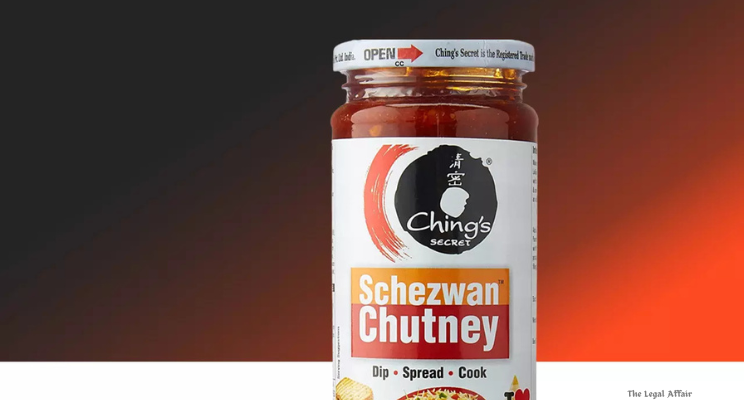
In the case of Capital Foods Private Limited v. Pitambari Products Private Limited, the Delhi High Court recently stepped in to protect intellectual property rights and the sanctity of registered trademarks, granting interim relief to Capital Foods, popularly known by its brand name “Ching’s.” The plaintiff, Capital Foods Private Limited, approached the Court seeking urgent protection against what it described as unauthorized use of its registered trademark “Schezwan Chutney” by the defendant, Pitambari Products Private Limited. Capital Foods, a well-known manufacturer and seller of a variety of food products, particularly Chinese-style instant food items, alleged that Pitambari had been marketing, manufacturing, and distributing products bearing the mark “Schezwan Chutney”—a mark which Capital Foods claims to have exclusive rights over. It further argued that this usage infringes not only its trademark rights but also amounts to copyright violation given that the artistic packaging used by Pitambari was confusingly similar to that of Ching’s.
Arguments:
The plaintiff submitted that it is the registered proprietor of the word mark “Schezwan Chutney” under the Trade Marks Act and holds copyright protection for the design and packaging of the said product. Asserting that the use of the same mark by Pitambari was not just a deceptive imitation but also caused irreparable loss to the goodwill and brand value built over years, the plaintiff argued that such acts not only dilute its exclusive rights but also create confusion among the public. It was also submitted that the impugned product had been widely promoted by Pitambari through social media platforms, particularly Instagram and Facebook, and that this marketing blitz posed an immediate threat to Capital Foods’ commercial interests. In light of these submissions, the plaintiff sought an ad interim injunction against Pitambari Products, praying that the defendant be restrained from manufacturing, marketing, or selling any product bearing the mark “Schezwan Chutney.”
The defendant, Pitambari Products Private Limited, was not present at this early stage of the litigation, and hence the proceedings were conducted ex parte. Nonetheless, the Court scrutinized the documents and arguments presented by the plaintiff to determine whether a prima facie case had been made out. Justice Manmeet Pritam Singh Arora observed that Capital Foods had substantiated its claim through valid trademark registration certificates for the mark “Schezwan Chutney”. Additionally, copyright registration for the packaging’s artistic work further bolstered the legitimacy of the claim. The Court noted that a product’s brand name plays a vital role in consumer recall and market standing, and a brand like Ching’s, which had established significant goodwill through consistent use and marketing, was entitled to seek protection under the trademark law. It further stated that prima facie evidence supported the plaintiff’s claim that the defendant’s use of the mark was likely to cause confusion in the market, mislead consumers, and erode the brand identity of Ching’s.
Judgement:
Granting interim relief, the Delhi High Court restrained Pitambari Products from using the mark “Schezwan Chutney” in any form—be it on packaging, marketing materials, or digital platforms. The Court emphasized that the injunction order is specifically limited to the use of the word mark “Schezwan Chutney” and does not cover or pass judgment on the trade dress or design aspects of Pitambari’s products at this stage. This nuanced clarification is significant, as it shows the Court’s intention to balance trademark enforcement with fair competitive practices, without prematurely deciding on the packaging similarities, which could be considered during the full trial. The Court issued summons in the main suit and also sent notice on the application for interim relief, seeking a reply from the defendant. The next date of hearing was set for December 16, signaling the continuation of judicial scrutiny on the matter. The decision is indicative of the judiciary’s growing sensitivity toward the protection of intellectual property rights, especially in the fast-moving consumer goods (FMCG) segment where brand identity and trademark recognition are paramount. Justice Arora’s order, although interim in nature, has sent a clear signal that Courts are willing to act swiftly to prevent any unauthorized commercial exploitation of registered marks, especially when there is a strong prima facie case and risk of irreparable damage. It also reinforces the principle that a registered trademark, even for a seemingly generic phrase like “Schezwan Chutney,” commands legal protection if it has acquired distinctiveness through use and registration.