


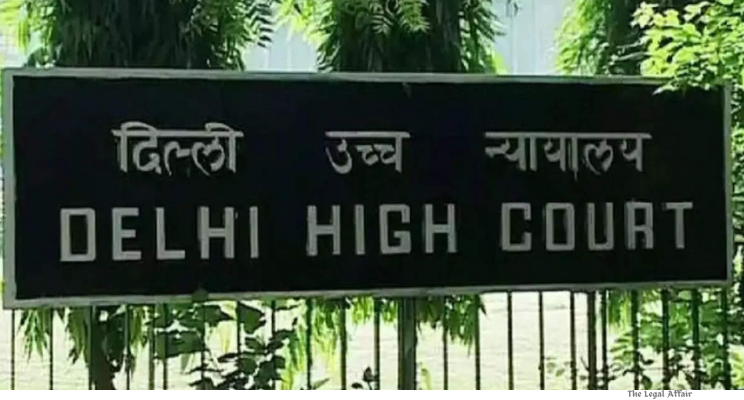
Introduction:
In a recent landmark judgment, the Delhi High Court addressed critical issues surrounding the repatriation of mortal remains. Justice Sanjeev Narula ruled in favor of transferring the remains of a Hyderabad resident who passed away in Chertsey, United Kingdom. The court directed the Union Government to issue a No Objection Certificate (NOC) to facilitate the transfer, overturning the previous refusal by the Consular section of the High Commission of India in London. This case sheds light on broader concerns about the consistency and fairness of consular services provided by Indian diplomatic posts worldwide.
Background:
The case began when the deceased’s father challenged the Indian High Commission in London for refusing to issue an NOC required for repatriating his son’s mortal remains. The refusal was based on the High Commission’s insistence on an Overseas Citizen of India (OCI) card, a condition not uniformly applied by other Indian diplomatic missions.
The petitioner, representing the deceased’s family, argued that the guidelines for repatriation were inconsistently applied across different Indian consulates, leading to arbitrary and unfair treatment. He highlighted the disparity between the requirements of the High Commission in London and those of Indian diplomatic posts in countries like Singapore and the USA.
Arguments:
Arguments by the Petitioner:
The petitioner’s counsel presented several key arguments:
- Inconsistency in Guidelines: The petitioner argued that the repatriation guidelines were not uniformly applied. He contended that while the Indian High Commission in London required an OCI card, other Indian missions, such as those in Singapore and the USA, did not impose such conditions, making the policy arbitrary and unjust.
- Rigidity and Humanitarian Concerns: The petitioner highlighted the rigid application of the policy by the London High Commission, arguing that it did not consider the individual circumstances of the deceased or the family’s wishes. He called for a more humanitarian approach that respects the deceased’s heritage and familial ties.
- Violation of Constitutional Rights: The petitioner claimed that the stringent requirements imposed by the London High Commission violated Article 14 of the Constitution of India, which guarantees equality before the law. He argued that the unequal application of repatriation guidelines discriminated against Indian citizens based on their location of death.
- Precedents from Other Countries: The petitioner pointed out that repatriation guidelines in Singapore and the USA allowed for the transfer of mortal remains without the OCI card requirement, further highlighting the arbitrary nature of the London High Commission’s stance.
Arguments by the Respondents:
The Union Government, represented by the respondents, argued:
- Adherence to Procedural Requirements: The respondents contended that the requirements set by the London High Commission were in line with established procedural guidelines for repatriation, aimed at ensuring proper documentation and verification.
- Consistency with Policy: The respondents maintained that the London High Commission’s policy was consistent with the broader framework of consular services. They argued that while there might be variations in procedural requirements, these were necessary to maintain the integrity of the repatriation process.
- No Discrimination: The respondents denied allegations of discrimination, asserting that the OCI card requirement was a standard protocol and not intended to discriminate based on geographical location.
- Procedural Fairness: The respondents emphasized that the procedural requirements were designed to ensure that all necessary documentation was in place before repatriation, arguing that this process was crucial for smooth handling and did not reflect arbitrary practices.
Court’s Judgment:
Justice Sanjeev Narula’s judgment addressed the critical issues raised in the case:
- Inconsistent Application of Guidelines: The court found that the requirements imposed by the London High Commission were inconsistent with those of other Indian diplomatic missions. The insistence on an OCI card, not uniformly required elsewhere, was deemed arbitrary and discriminatory.
- Need for Humanitarian Approach: The court observed that the rigid application of the policy by the London High Commission failed to consider the humanitarian aspects of repatriation. The judgment emphasized the need for a more compassionate and flexible approach that acknowledges the individual circumstances of the deceased and the family’s wishes.
- Violation of Constitutional Rights: The court held that the unequal application of repatriation guidelines violated Article 14 of the Constitution of India, mandating equality before the law. The judgment underscored that repatriation criteria should be uniformly applied to ensure fairness and prevent discrimination.
- Direction to Issue NOC: The court directed the Union Government to issue a No Objection Certificate to facilitate the transfer of the deceased’s mortal remains from the UK to Hyderabad, aiming to rectify procedural errors and respect the deceased’s familial and cultural ties.
- Broader Implications: The judgment also highlighted the need for uniformity in consular services and questioned the broader policy framework governing repatriation. The court’s observations pointed to the necessity of revising guidelines to ensure consistency and equity in handling similar cases across different diplomatic posts.
Conclusion:
The Delhi High Court’s decision brings to light important issues regarding consular services and repatriation policies. By addressing the inconsistencies and rigidity in applying repatriation guidelines, the court emphasized the need for a more uniform and humanitarian approach. The ruling not only rectifies the immediate issue of repatriating the deceased’s remains but also raises broader questions about the fairness and consistency of consular practices, ensuring that all individuals receive equitable treatment regardless of their geographical location.