


Introduction:
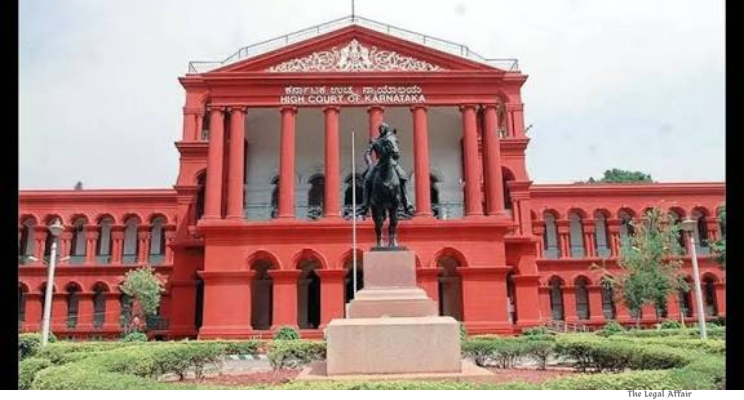
In MANJAPPA v. STATE OF KARNATAKA, Criminal Appeal No. 968 of 2021, the Karnataka High Court reaffirmed a significant principle in criminal jurisprudence: mere delay in lodging a complaint cannot by itself be a ground to acquit an accused in a murder case, particularly when the delay is reasonably explained by the circumstances.
The Division Bench comprising Justice H.P. Sandesh and Justice Venkatesh Naik T dismissed the appeal filed by the accused, who had been convicted by the trial court for the offence of murder and sentenced to imprisonment for life. The accused was the father-in-law of the deceased, and the tragic incident arose from ongoing domestic discord following a love marriage between the deceased and the accused’s daughter.
The Court carefully examined the factual matrix, the ocular testimony of family members, the medical evidence, and the explanation offered for the delay in filing the complaint. It ultimately concluded that the prosecution had established the case beyond reasonable doubt and that the trial court’s findings required no interference.
Factual Background:
The case arose from an unfortunate and deeply disturbing domestic incident that occurred on 06 August 2017 at around 10:00 p.m. The deceased, who had entered into a love marriage with the daughter of the accused, was residing with his wife and children. The prosecution alleged that the accused was unhappy with the marriage and frequently quarrelled with the deceased, allegedly demanding money from him on a regular basis.
On the night of the incident, when the deceased and his wife were asleep in their house, the accused allegedly entered the premises and assaulted the deceased with a wooden log. The blow was directed at the abdomen, resulting in a severe blunt injury.
Immediately after the assault, the wife of the deceased, who was an eye-witness to the incident, rushed her injured husband to Mc.Gann Hospital, Shivamogga. Given the seriousness of his condition, he was later shifted to Wenlock Hospital, Mangaluru, for advanced treatment. Despite undergoing surgery and medical intervention, the injured succumbed to his injuries.
The complaint was lodged after the death of the deceased.
Arguments on Behalf of the Appellant-Accused:
The Amicus Curiae representing the appellant-convict primarily attacked the prosecution case on procedural and evidentiary grounds.
1. Delay in Lodging the Complaint
The principal argument advanced was that the complaint was not lodged immediately after the incident. It was contended that:
- The alleged assault occurred on 06 August 2017.
- The complaint was lodged only after the death of the deceased.
- The delay was not satisfactorily explained.
- Such delay created serious doubts regarding the genuineness of the prosecution case.
The defence argued that unexplained delay in filing an FIR is fatal to the prosecution’s case as it opens the possibility of deliberation, embellishment, and false implication.
2. Interested Witnesses
It was further contended that the material witnesses examined by the prosecution were closely related to the deceased. These included:
- PW3 – daughter of the accused and wife of the deceased.
- PW7 – wife of the accused.
- PW1 – brother of the deceased.
The defence submitted that the testimony of related witnesses must be scrutinised with caution, especially when the accused is a family member. It was argued that in the absence of independent corroboration, reliance on such testimony would be unsafe.
3. Hearsay Evidence
The defence also pointed out that PW1’s testimony was hearsay in nature, as he came to know of the incident only after being informed by PW3. It was argued that such evidence could not form the basis for conviction.
4. Benefit of Doubt
The appellant urged that the prosecution had failed to establish the case beyond reasonable doubt and that the accused was entitled to the benefit of doubt. The appeal thus sought reversal of the conviction and sentence imposed by the trial court.
Arguments on Behalf of the Prosecution:
The State, supporting the trial court’s judgment, contended that the conviction was well-founded and based on credible and cogent evidence.
1. Explanation for Delay
The prosecution emphasized that the delay in lodging the complaint was fully explained. The immediate priority of the family members was to save the life of the injured person. The sequence of events clearly showed that:
- The injured was first taken to Mc.Gann Hospital.
- He was then shifted to Wenlock Hospital for further treatment.
- The complaint was lodged immediately after his death.
It was submitted that in cases involving serious injuries within the family, it is natural for relatives to prioritize medical treatment over approaching the police station.
2. Natural and Trustworthy Witnesses
The prosecution argued that PW3 (wife of the deceased) was an eye-witness whose presence at the scene was natural and unquestionable. Her testimony was consistent and remained unshaken in cross-examination.
Similarly, PW7 (wife of the accused) deposed that upon hearing screams, she rushed to the spot and saw the accused moving away from the place of occurrence. On inquiry, she learned from the deceased that he had been assaulted by the accused.
The prosecution emphasized that both PW3 and PW7 were closely related to the accused, and there was no material to suggest that they had any motive to falsely implicate him.
3. Corroboration by Medical Evidence
The medical evidence established that the death was homicidal in nature and caused by blunt force trauma to the abdomen. The injuries were consistent with the use of a wooden log as alleged.
4. Independent Witness
PW2, an independent witness, was a signatory to the inquest proceedings, further lending support to the prosecution case.
The State submitted that the trial court had meticulously evaluated the evidence and rightly convicted the accused.
Court’s Analysis and Observations:
The Division Bench undertook a comprehensive evaluation of the evidence on record and addressed each contention raised by the appellant.
1. On Delay in Lodging the Complaint
The Court categorically rejected the argument that delay in filing the complaint was fatal to the prosecution case.
It observed:
“The Court has to take note of the fact that the accused is none other than the father of PW3 and the husband of PW7. The first priority of the family members was to shift the injured to the hospital. Immediately after the incident, the injured was taken to Mc.Gann Hospital, Shivamogga, and thereafter shifted to Wenlock Hospital, Mangaluru. The complaint was lodged immediately after the death of Shivakumar. The mere delay in lodging the complaint, in the facts and circumstances of the present case, cannot be a ground to acquit the accused. Normally, when an incident takes place among family members, the immediate concern would be to save the injured rather than to approach the police station.”
The Court emphasized that delay must be examined in light of the surrounding circumstances. Where the delay is satisfactorily explained, it does not weaken the prosecution case.
2. Credibility of Related Witnesses
The Bench noted that PW3 was the daughter of the accused and PW7 was his wife. The Court reasoned that it would be improbable for close family members to falsely implicate the accused in a grave offence such as murder without any compelling reason.
Importantly, the defence had failed to elicit anything in cross-examination to suggest enmity or ulterior motive.
The Court held that:
- The evidence of PW3 was natural and trustworthy.
- The evidence of PW7 was circumstantial but credible.
- Their testimonies were consistent and mutually corroborative.
3. Hearsay Evidence of PW1
The Court acknowledged that PW1’s evidence was hearsay. However, it clarified that the conviction was not based solely on his testimony. The primary reliance was on the eye-witness and circumstantial evidence of PW3 and PW7, supported by medical findings.
4. Medical Evidence
The Court observed that the medical evidence clearly established homicidal death. The injury pattern matched the prosecution version of assault with a wooden log. There was no material contradiction between ocular and medical evidence.
5. Standard for Appellate Interference
The Bench reiterated that an appellate court will not interfere with findings of the trial court unless there is perversity or glaring error.
It observed:
“Even to reverse such findings, there must be cogent evidence to arrive at a different conclusion, which is absent in the present case.”
Since the trial court had properly appreciated the evidence, there was no justification to disturb the conviction.
Judgment:
The Karnataka High Court dismissed the criminal appeal and affirmed:
The conviction of the accused for murder.
The sentence of life imprisonment imposed by the trial court.
The Court concluded that the prosecution had established the guilt of the accused beyond reasonable doubt and that none of the witnesses had any animosity against him so as to falsely implicate him.