


Introduction:
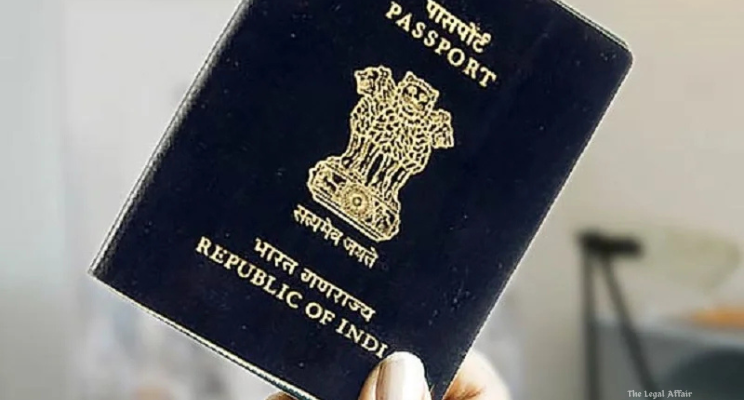
The Indore Bench of the Madhya Pradesh High Court recently addressed a pivotal legal question: whether the criminal antecedents of an applicant’s family members can affect the applicant’s eligibility for a passport. In this case, the petitioner, Farzana Bano, challenged the rejection of her passport application on grounds that her husband and father-in-law were implicated in criminal cases, including serious offences under the Narcotic Drugs and Psychotropic Substances Act, 1985. Despite no allegations against her, the Regional Passport Authority cited her familial connections as a basis for denial. The court, in a significant judgment, ruled that an individual’s character assessment for a passport must be based solely on their own conduct, not that of their family members.
Arguments of the Petitioner:
The petitioner contended that she is entitled to a passport like any other citizen, as no criminal charges have ever been filed against her. She emphasized that her fundamental rights, guaranteed by the Constitution of India, cannot be curtailed due to the criminal history of her husband and father-in-law. Her counsel highlighted a previous High Court order in her favor, which directed the respondents to reconsider her application without factoring in the criminal background of her family members. However, the authorities once again rejected her application, citing non-recommendatory police verification due to her association with individuals involved in criminal activities.
The petitioner argued that this repeated rejection amounted to a violation of her fundamental rights, particularly her right to equality and the right to travel. She submitted that the respondents’ reliance on the family’s criminal antecedents, despite clear judicial directions to the contrary, demonstrated a lack of adherence to the rule of law.
Arguments of the Respondents:
The Additional Solicitor General, appearing for the Regional Passport Authority, defended the rejection, arguing that the criminal history of the petitioner’s husband and father-in-law raised legitimate concerns about granting her a passport. He asserted that these familial ties to offenders involved in serious narcotics cases could pose a risk to national security. However, he conceded that no criminal cases or allegations were directly registered against the petitioner herself.
Despite this concession, the respondents maintained that the petitioner’s association with individuals accused of grave crimes justified heightened scrutiny and, consequently, the denial of her passport application. They also claimed that the rejection was consistent with the recommendations from the pre-issuance police verification.
Court’s Judgment:
Justice Subodh Abhyankar delivered a scathing critique of the respondents’ approach. The court observed that the petitioner enjoyed the same fundamental rights as any other citizen and emphasized that the issuance of a passport must be determined solely based on her own character and conduct. Relying on established constitutional principles, the court held that criminal antecedents of family members could not be used as a basis to deny the petitioner’s rights.
The court noted that its previous order in W.P. No. 10154/2021 had explicitly directed the respondents to reconsider the petitioner’s application without taking her family’s criminal background into account. Despite this, the respondents reiterated their earlier stance, demonstrating a “cavalier manner” in executing the court’s directions. Such non-compliance, the bench emphasized, not only undermined the judicial process but also violated the petitioner’s fundamental rights.
The judgment relied on constitutional guarantees, particularly Articles 14 and 21, which ensure equality before the law and the right to personal liberty. Justice Abhyankar highlighted that fundamental rights cannot be diluted by associating an individual with their relatives’ alleged misconduct. The court underscored that no criminal charges or cases were pending against the petitioner, and the respondents’ actions were arbitrary and unsustainable in law.
The court set aside the impugned order, directing the respondents to reassess the petitioner’s application strictly based on her own character and conduct. It instructed the authorities to pass an appropriate order within four weeks, ensuring compliance with constitutional and legal principles.
Conclusion:
In this landmark judgment, the Madhya Pradesh High Court reinforced the inviolability of an individual’s fundamental rights, holding that the criminal history of family members cannot determine a person’s eligibility for a passport. By affirming the petitioner’s right to equality and freedom of travel, the court not only vindicated her claims but also set an important precedent safeguarding the rights of individuals against arbitrary state actions. This ruling reaffirms that in a democracy governed by the rule of law, every citizen is entitled to justice and fair treatment, free from discrimination based on familial associations.