


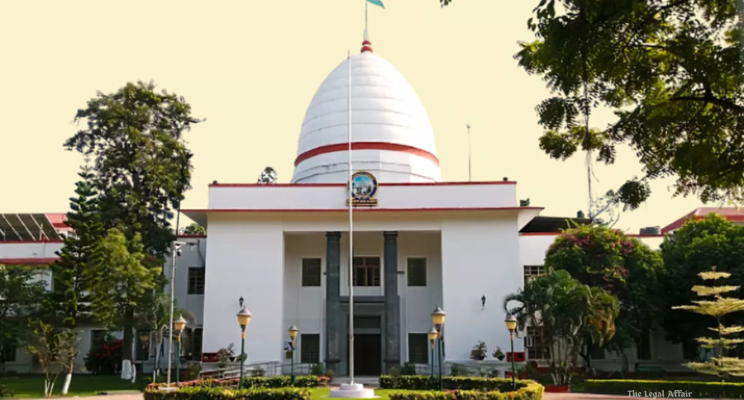
Introduction:
The Gauhati High Court, in Udit Narayan Purkayastha v State of Assam and Others, WP(C) No 1790 of 2022, delivered a nuanced judgment addressing the limits of compassionate appointment and the consequences of administrative arbitrariness. The writ petition was filed by the petitioner seeking a direction to the State authorities for fresh consideration of his claim for compassionate appointment arising out of the death of his father, who was serving as a Jugali in the Information and Public Relations Department and died in harness on 14 May 2012. Justice N Unni Krishnan Nair, while deciding the matter, examined whether a claim for compassionate appointment could be revived and reconsidered after a lapse of nearly thirteen years from the date of death. The petitioner had applied for compassionate appointment in the same year as the death, and his claim was recommended by the District Level Committee in 2014. The case, along with that of another candidate respondent no 7, was placed before the State Level Committee in 2019. While the petitioner’s claim was rejected on the ground that the application had spent its force and no vacancy was available, respondent no 7’s claim was approved in the very same meeting by recording that vacancies were available and the application had not lost its force. The petitioner challenged this decision as arbitrary and discriminatory, seeking reconsideration of his case. The High Court was thus called upon to balance two competing considerations, namely the settled principle that compassionate appointment is intended to provide immediate relief to a bereaved family and cannot be claimed as a vested right after long delay, and the equally important constitutional mandate of fairness and non discrimination in administrative decision making.
Arguments:
On behalf of the petitioner, it was contended that his application for compassionate appointment was submitted promptly in 2012 following the death of his father and that the delay in consideration was entirely attributable to the authorities. It was argued that the District Level Committee had recommended his case in 2014 and that there was no lapse or inaction on his part which could justify rejection of his claim on the ground of staleness. The petitioner further contended that the State Level Committee acted in a manifestly arbitrary and discriminatory manner by rejecting his claim on the ground that it had spent its force and that no vacancy was available, while simultaneously recommending the case of respondent no 7 in the same meeting by holding that vacancies existed and the application had not become stale. It was submitted that such differential treatment between similarly situated candidates violated Articles 14 and 16 of the Constitution and vitiated the entire decision making process. The petitioner prayed that since his case was not considered in the manner required by the State Level Committee, a direction ought to be issued for fresh consideration of his claim for compassionate appointment.
On the other hand, the State authorities contended that compassionate appointment is an exception to the general rule of public employment and is intended only to provide immediate financial relief to the family of a deceased government servant. It was argued that nearly thirteen years had elapsed since the death of the petitioner’s father and that the very object of compassionate appointment stood frustrated by such long passage of time. The respondents submitted that compassionate appointment cannot be claimed as a matter of right and that courts should not issue directions for appointment or reconsideration once the immediacy and proximity to the death is lost. While attempting to justify the decision of the State Level Committee, the respondents contended that the petitioner’s application had remained pending for a considerable period and had therefore spent its force. They further submitted that interference at this stage would open the floodgates for stale claims and unsettle settled appointments, including that of respondent no 7 who had already been appointed and had served for several years.
Judgment:
The Gauhati High Court dismissed the prayer for fresh consideration of compassionate appointment while granting limited relief by way of compensation. Justice N Unni Krishnan Nair reiterated the settled legal position that compassionate appointment is not a form of deferred employment or a vested right but a welfare measure intended to provide immediate succour to the family of a deceased employee facing sudden financial crisis. The Court observed that such appointment must necessarily be proximate to the date of death and that long delay defeats the very purpose of the scheme. Referring to the facts of the case, the Court noted that the father of the petitioner had died in harness on 14 May 2012 and that around thirteen years had elapsed by the time the Court was examining the claim. The Court categorically held that the immediacy required for extending compassionate appointment was lost and that the claim had become stale, making it impermissible for the Court to issue a direction for fresh consideration or appointment at this belated stage. At the same time, the Court critically examined the conduct of the State Level Committee and found that the explanation offered by the authorities was unsatisfactory. The Court observed that if the petitioner’s claim was rejected on the ground that the application had spent its force and no vacancies were available, the same reasoning ought to have applied to respondent no 7 whose case was considered and recommended in the very same meeting. The Court held that the petitioner was clearly discriminated against and that the decision of the State Level Committee suffered from arbitrariness. However, the Court consciously restrained itself from interfering with the appointment of respondent no 7, noting that the said respondent had been appointed on compassionate ground on 18 November 2021 and had completed about four years of service. Interfering with such appointment at this stage was found to be neither equitable nor appropriate. Balancing the equities, the Court concluded that while the petitioner could not be granted compassionate appointment due to the long lapse of time, he was entitled to compensation for the deprivation caused by the arbitrary manner in which his claim was considered. Accordingly, the Court directed the respondent authorities to pay a sum of Rupees One Lakh to the petitioner as compensation, thereby recognising the wrong done without unsettling settled service positions.