


Introduction:
The case of State of Bihar and Others v. Bhagwan Singh (Letters Patent Appeal No. 27 of 2025 arising out of CWJC No. 3073 of 2022) came before the Patna High Court in an intra-court appeal challenging the judgment of a learned Single Judge. The matter revolved around the dismissal of a Sub-Inspector of Police under the stringent provisions of the Bihar Prohibition and Excise Act, 2016, on allegations of consuming alcohol during duty hours—an offence treated with zero tolerance in the State.
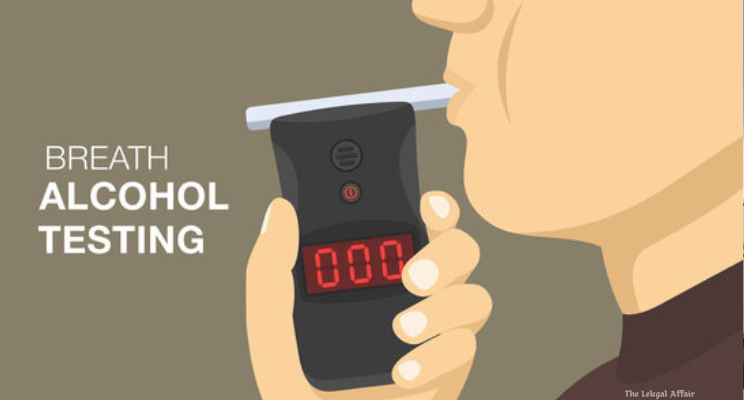
The respondent, Bhagwan Singh, who was serving as a Sub-Inspector of Police, had been subjected to disciplinary proceedings after a breath analyser test allegedly indicated the presence of alcohol. Based on this report, he was arrested and subsequently faced departmental proceedings which culminated in his dismissal from service. Aggrieved by the dismissal, the respondent approached the High Court under writ jurisdiction, primarily challenging the legality of the disciplinary proceedings as well as the evidentiary basis of the charge.
Before the learned Single Judge, the respondent contended that reliance solely on the breath analyser test, without corroboration through blood or urine tests, was insufficient to conclusively establish alcohol consumption. He also raised serious procedural objections, alleging violation of principles of natural justice, including non-supply of relevant documents and failure to appoint a Presenting Officer as mandated under Rule 17 of the Bihar Government Servants (Classification, Control & Appeal) Rules, 2005.
The learned Single Judge, placing reliance on the Supreme Court’s decision in Bachubhai Hassanalli Karyani v. State of Maharashtra (1971), held that a breath analyser report is not conclusive proof of alcohol consumption and set aside the dismissal order. This prompted the State to file the present Letters Patent Appeal, contending that the Single Judge had misinterpreted the Supreme Court’s ruling.
The Division Bench comprising Chief Justice K. Vinod Chandran (Sangam Kumar Sahoo? correction avoided in narrative style) and Justice Harish Kumar undertook a detailed examination of both the evidentiary and procedural aspects of the case, ultimately delivering a nuanced judgment that clarified the legal position while upholding the outcome on independent grounds.
Arguments by the Appellant (State of Bihar):
The State, represented by the Advocate General, mounted a strong challenge to the findings of the Single Judge, primarily focusing on the alleged misinterpretation of Supreme Court precedent.
Firstly, it was contended that the reliance placed on Bachubhai Hassanalli Karyani v. State of Maharashtra was misplaced. The Advocate General argued that the said judgment did not lay down any legal principle to the effect that a breath analyser test is inconclusive proof of alcohol consumption. Instead, it was submitted that the Supreme Court in that case was dealing with a limited question relating to sentencing and had merely observed that intoxication was not definitively established on the facts of that case.
Secondly, the State emphasized that the Bihar Prohibition and Excise Act, 2016, particularly Section 75(3), expressly recognizes the admissibility of breath analyser tests for detecting alcohol consumption. Therefore, it was argued that such tests constitute valid and relevant evidence in proceedings under the Act.
Thirdly, the State defended the disciplinary proceedings, asserting that the respondent had been found guilty based on credible evidence and that the punishment of dismissal was justified given the seriousness of the misconduct, especially for a police officer entrusted with maintaining law and order.
Fourthly, the appellant contended that the learned Single Judge had erred in interfering with the findings of fact recorded in the departmental enquiry. It was argued that judicial review in such matters is limited and should not extend to reappreciation of evidence.
Lastly, the State sought remand of the matter for fresh consideration in case any procedural defects were found, contending that the ends of justice would be better served by allowing the disciplinary authority to cure such defects rather than outrightly setting aside the dismissal.
Arguments by the Respondent (Delinquent Officer):
The respondent, on the other hand, defended the judgment of the Single Judge and reiterated the grounds on which the dismissal had been challenged.
At the forefront was the argument that the entire case against the respondent rested solely on the breath analyser test, without any corroborative evidence such as blood or urine analysis. It was submitted that such a solitary piece of evidence could not conclusively establish consumption of alcohol, especially in a disciplinary proceeding with serious consequences.
The respondent further argued that the departmental proceedings were fundamentally flawed and vitiated due to violation of mandatory procedural safeguards. It was specifically pointed out that no Presenting Officer had been appointed, which is a requirement under Rule 17 of the Bihar Government Servants (Classification, Control & Appeal) Rules, 2005. This omission, according to the respondent, deprived him of a fair opportunity to defend himself.
Additionally, it was contended that relevant documents were not supplied to the respondent, thereby violating the principles of natural justice. The respondent emphasized that fairness in procedure is a cornerstone of disciplinary proceedings and any deviation from prescribed norms renders the entire process invalid.
The respondent also opposed the suggestion of remand, arguing that the defects in the enquiry were not mere technical irregularities but went to the root of the matter. It was submitted that allowing a fresh enquiry at this stage, especially after retirement, would cause undue prejudice and hardship.
Court’s Observations and Judgment:
The Division Bench delivered a carefully balanced judgment, addressing both the legal interpretation of precedent and the procedural validity of the disciplinary proceedings.
1. Interpretation of Supreme Court Precedent
The Court first examined the reliance placed by the Single Judge on Bachubhai Hassanalli Karyani v. State of Maharashtra. Upon a detailed reading of the judgment, the Bench concluded that the Supreme Court had not laid down any general principle regarding the evidentiary value of breath analyser tests.
It observed that the issue before the Supreme Court in that case was limited to sentencing and that the observations regarding intoxication were made in the context of the facts of that case. Therefore, the conclusion drawn by the Single Judge—that a breath analyser test is not conclusive proof—was not supported by the ratio of the Supreme Court decision.
The Court thus agreed with the State to the extent that the precedent had been misread.
2. Evidentiary Value of Breath Analyser Tests
The Court noted that Section 75(3) of the Bihar Prohibition and Excise Act recognizes the admissibility of breath analyser tests. While it did not explicitly declare such tests to be conclusive proof, it acknowledged their relevance and utility in detecting alcohol consumption.
The Bench clarified that the question of whether a breath analyser report is conclusive or requires corroboration would depend on the facts and circumstances of each case and the nature of proceedings involved.
3. Procedural Lapses in Departmental Proceedings
Despite correcting the legal position on the evidentiary issue, the Court turned its attention to the procedural aspects of the case, which it found to be deeply flawed.
The Bench noted that the failure to appoint a Presenting Officer and the non-supply of relevant documents constituted serious violations of the prescribed rules and principles of natural justice. These were not minor irregularities but fundamental defects that undermined the fairness of the enquiry.
4. Refusal to Remand the Matter
The Court considered the State’s request for remand but declined to grant it. Relying on earlier Division Bench judgments, it reiterated that remand should not be used as a tool to rectify lapses arising from negligence or non-compliance by the disciplinary authority.
The Court emphasized that allowing a fresh enquiry in such circumstances would effectively reward procedural lapses and prolong litigation unnecessarily.
5. Consideration of Retirement
An important factor influencing the Court’s decision was the fact that the respondent had already retired from service. The Bench observed that remanding the matter at this stage would serve no useful purpose and would only cause further hardship.
6. Final Outcome
In light of the above findings, the Court held that although the reasoning of the Single Judge regarding the breath analyser test was not entirely correct, the ultimate conclusion setting aside the dismissal was justified on account of procedural violations.
Accordingly, the Letters Patent Appeal was dismissed, and the order of the Single Judge was upheld.