


Introduction:
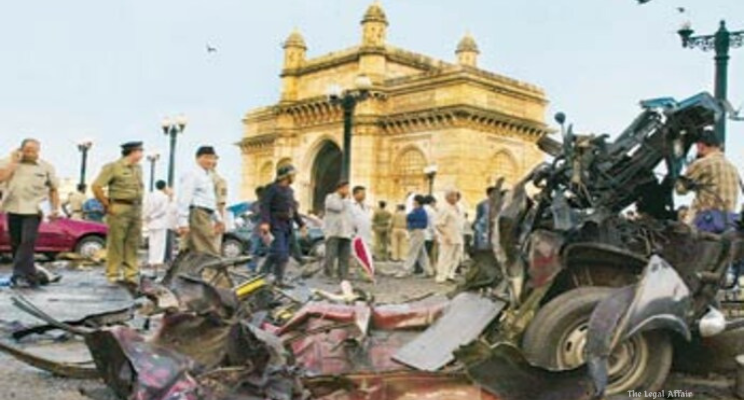
In a significant ruling reaffirming the constitutional principles of personal liberty and the right to a speedy trial, the Bombay High Court on Tuesday granted bail to Kafeel Ahmad Mohammad Ayub, one of the primary accused in the 2011 Mumbai Triple Bomb Blast case that claimed the lives of at least 21 people and left over a hundred others severely injured. The case, one of the most devastating terror attacks in Mumbai’s post-2008 history, involved explosions at Dadar Kabutarkhana, Opera House, and Zaveri Bazaar on July 13, 2011. The division bench of Justices Ajay Gadkari and Ranjitsinha Bhonsale delivered the verdict, observing that the trial in the case had not yet commenced even after 13 long years and that the accused had been incarcerated throughout as an undertrial. The bench, while granting bail, relied on the landmark judgment of the Supreme Court in Union of India v. K.A. Najeeb, wherein the apex court held that continued incarceration of an accused without commencement of trial for an inordinate period violates Article 21 of the Constitution. The High Court’s decision, though awaiting a detailed order, reflects the growing judicial concern over prolonged pre-trial detention, especially under stringent laws like the Unlawful Activities (Prevention) Act (UAPA) and the Maharashtra Control of Organised Crime Act (MCOCA).
Arguments of the Petitioner (Accused):
Advocate Mobin Solkar, appearing for the accused Kafeel Ahmad Mohammad Ayub, argued that his client had been languishing in jail since 2011 without trial, a situation that directly infringed upon his fundamental right to personal liberty and speedy trial under Article 21 of the Constitution of India. He contended that despite the gravity of allegations, the prosecution had failed to begin the trial even after 13 years, and that there was no indication of when the proceedings might commence. Relying on the precedent set in Union of India v. K.A. Najeeb (2021) 3 SCC 713, Solkar argued that the Supreme Court had categorically held that even under special legislations like the UAPA, prolonged incarceration of undertrials without trial constitutes a violation of constitutional safeguards and necessitates the grant of bail.
The defense maintained that Kafeel’s continued detention was unjustified, especially when co-accused in similar cases had already been granted bail after long periods of imprisonment. It was emphasized that the presumption of innocence, though not absolute, remains a cardinal principle of criminal jurisprudence and must not be sacrificed in the name of preventive detention. Solkar also pointed out that the investigative agencies had already completed their probe and filed a charge sheet long ago, which meant that the accused’s custody was no longer necessary for the purpose of investigation.
Kafeel, a resident of Bihar, was accused by the prosecution of associating with alleged masterminds and radicalizing young men under the guise of religious indoctrination. However, the defense countered these claims by asserting that there was no direct evidence linking him to the execution of the blasts or to any material act of terrorism. The allegations, according to the defense, were based largely on conjecture, statements of co-accused, and circumstantial inferences drawn during the investigation. The defense urged the Court to consider the humanitarian aspect of the case, emphasizing that Kafeel had already spent the equivalent of a life sentence in custody without conviction, which rendered continued imprisonment not only oppressive but contrary to the very ethos of justice.
The counsel further reminded the Court that undertrials are not convicts and that the object of bail is not to acquit but to ensure appearance during trial. The defense also stressed that stringent bail conditions could ensure that the accused does not misuse liberty or influence witnesses. Therefore, continued incarceration in the absence of progress in trial would amount to a travesty of justice.
Arguments of the Respondent (Prosecution):
The prosecution, opposing the bail plea, argued that the charges against the accused were of a grave and heinous nature involving a terror conspiracy that resulted in the loss of 21 innocent lives and injuries to over a hundred others. The prosecution contended that the 2011 triple bomb blasts were meticulously planned acts of terrorism, aimed at spreading fear, destabilizing public peace, and attacking the economic hub of India. It was alleged that Kafeel was not merely a passive participant but an active conspirator who facilitated the logistics and harboring of the perpetrators.
According to the prosecution, Kafeel played a key role in radicalizing young individuals and connecting them with extremist networks, thereby directly contributing to the execution of the terror plan. The investigating agencies claimed that he had provided shelter and arranged accommodations for the main conspirators in Mumbai, assisted in reconnaissance of target locations, and helped the co-accused in evading detection. The prosecution emphasized that his acts fell squarely under Sections 16, 18, and 20 of the Unlawful Activities (Prevention) Act, 1967, as well as provisions of the Maharashtra Control of Organised Crime Act (MCOCA) and the Indian Penal Code.
The State argued that granting bail in such a case would send a wrong message and might jeopardize national security. It was also contended that under Section 43D(5) of the UAPA, bail should not be granted if the Court finds that the accusations are prima facie true. The prosecution insisted that the delay in commencement of trial was not deliberate but due to the complexity of the case, the number of accused involved, and the voluminous evidence that needed to be examined. Further, it was argued that the accused’s release could pose a flight risk and potentially lead to tampering with evidence or influencing witnesses.
Nevertheless, the prosecution acknowledged the judicial precedent in K.A. Najeeb but argued that the ratio must be applied cautiously, keeping in mind the exceptional nature of terrorism cases. The State requested the Court to consider the seriousness of the crime and the potential ramifications of releasing a person accused of conspiring in a terror attack on bail. It concluded by urging the bench to balance individual liberty with collective security, emphasizing that justice must not only protect the accused but also uphold the rights of victims and the larger society.
Court’s Judgment:
After hearing both sides, the division bench of Justices Ajay Gadkari and Ranjitsinha Bhonsale delivered its verdict in open court, granting bail to the accused Kafeel Ahmad Mohammad Ayub. The bench observed that the accused had been in custody for nearly 13 years, and the trial in the 2011 triple bomb blast case had not even commenced. Relying heavily on the Supreme Court’s judgment in Union of India v. K.A. Najeeb, the bench held that the constitutional guarantee under Article 21 of the right to a speedy trial cannot be rendered illusory merely because the charges fall under stringent special legislations like UAPA or MCOCA.
The Court noted that the object of such special laws is not to detain individuals indefinitely without trial but to ensure effective prosecution and punishment of those found guilty through due process of law. When trial fails to progress for over a decade, the principle of liberty must prevail over the apprehension of misuse. The bench observed that “continued incarceration of an undertrial for 13 years without commencement of trial is violative of the constitutional mandate under Article 21. Liberty cannot be denied indefinitely merely because the allegations are grave, especially when the process of adjudication itself remains incomplete.”
While granting bail, the Court made it clear that the release of the accused does not amount to an expression of opinion on his guilt or innocence. The bench directed that the accused furnish adequate sureties and comply with stringent conditions to ensure that he remains available for trial and does not tamper with evidence or contact witnesses. The order stated that if the accused violates any of the imposed conditions, the prosecution will be at liberty to seek cancellation of bail.
The Court also echoed the sentiments expressed in K.A. Najeeb, where the Supreme Court had observed that “once it is obvious that a timely trial will not be possible, and the accused has suffered incarceration for a significant period, the courts must enlarge him on bail.” The Bombay High Court thus reaffirmed that the pendency of a case for over a decade without trial undermines the entire justice delivery system and renders imprisonment punitive rather than preventive.
This ruling reflects the judiciary’s growing recognition that prolonged undertrial detention is an affront to human dignity and violates the presumption of innocence. The Court’s decision is not a dilution of the seriousness of terrorism but a reaffirmation that justice cannot be selective—it must be just as fair to the accused as it is firm against crime.