


Introduction:
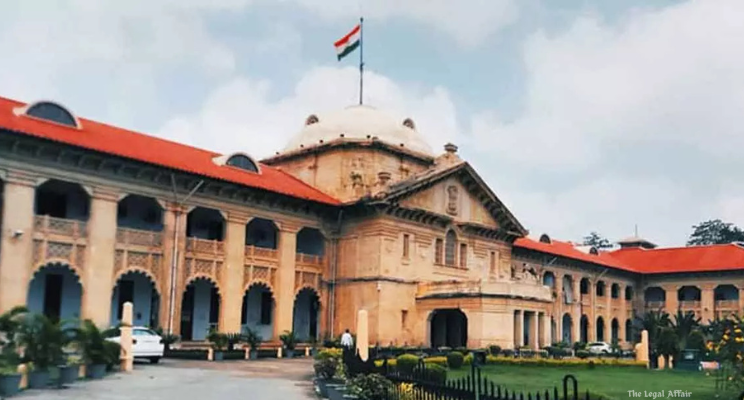
In a landmark and far-reaching judgment, the Allahabad High Court, through Justice Praveen Kumar Giri, has issued a sweeping directive to eradicate encroachments on public lands across Uttar Pradesh, holding that negligence or inaction by Pradhans, Lekhpal, and Revenue Officers in protecting Gram Sabha property constitutes a criminal breach of trust under Section 316 of the Bharatiya Nyay Sanhita (BNS), 2023. The ruling came in response to a petition highlighting rampant illegal occupation of a village pond in Mirzapur, where local authorities failed to act under Section 67 of the U.P. Revenue Code, 2006. In a 24-page decision, the Court delivered a resounding message that Gram Sabha land, ponds, and grazing fields are sacred community assets, not private estates, and must be restored to their original purpose within 90 days. It further directed that departmental and criminal proceedings be initiated against officials who neglect their duties, describing their inaction as both abetment and conspiracy in land encroachment.
The case arose when the petitioner approached the High Court after witnessing illegal construction and encroachment upon a public pond (babali) in Mirzapur district. Despite the villagers’ continuous occupation and visible transformation of the water body into private plots, the Pradhan and Lekhpal had failed to initiate proceedings for eviction or even report the encroachment to the Tahsildar, as required by law. Frustrated by this apathy, the petitioner sought judicial intervention to restore the pond to its public use. The respondents, primarily comprising local administrative officials, argued that necessary action was underway and that the process under Section 67 of the U.P. Revenue Code was being followed, albeit delayed due to “administrative hurdles.” The State’s counsel further contended that not all encroachments could be removed instantly, as some were under pending appeals and required procedural compliance before eviction.
Judgement:
However, Justice Giri found these explanations deeply unsatisfactory. The Court held that Pradhans and Lekhpal are trustees and custodians of Gram Sabha property under the U.P. Panchayat Raj Act, 1947 and that their failure to act on encroachments cannot be treated as mere negligence but as dishonest dereliction of public trust. The judgment observed that Sections 28-A and 28-B of the Panchayat Raj Act constitute the Bhumi Prabandhak Samiti (BPS), which collectively holds public property in trust for the villagers. Therefore, when its key members—the Pradhan (Chairman) and Lekhpal (Secretary)—fail to discharge their obligations, they commit not just administrative misconduct but also criminal breach of trust, attracting penal liability under the BNS.
The Court underscored the legislative framework under Section 67 of the U.P. Revenue Code, 2006 read with Rules 66 and 67 of the U.P. Revenue Code Rules, 2016, which mandate immediate reporting, eviction, and restoration of possession of Gram Sabha property wrongfully occupied. It held that any delay in providing such information to the Tahsildar within 60 days or failure to act within 90 days of issuing a show-cause notice (R.C. Form 20) would amount to conspiracy and abetment of encroachment. Justice Giri observed that such inaction corrodes the moral fabric of rural governance and leads to systematic loss of communal property.
In an emphatic passage, the Court declared that the encroachment upon ponds, grazing lands, lakes, and other public utility areas is not a trivial administrative issue but a grave ecological and constitutional wrong. “The encroachment upon water bodies such as ponds, lakes, and other natural reservoirs leads to grave ecological imbalance and environmental degradation,” Justice Giri observed. “These water bodies are essential for maintaining groundwater levels, supporting biodiversity, and ensuring a sustainable ecosystem. Their illegal occupation or conversion for private or commercial use disrupts the natural water cycle, causes depletion of groundwater, pollution, and loss of aquatic habitats, thereby affecting the right of the public to a clean and healthy environment under Article 21 of the Constitution.” The Court also invoked Article 14, stating that selective or arbitrary tolerance of encroachments constitutes discrimination in the administration of public resources.
The Court’s order was remarkable not only for its strong environmental rhetoric but also for its systemic reforms. It mandated that District Magistrates, Sub-Divisional Magistrates, Tahsildars, and Tahsildars (Judicial) across the State must ensure complete removal of encroachments from ponds, grazing lands, and Gram Sabha plots within 90 days. To ensure accountability, the Court laid down a timeline: the Pradhan and Lekhpal must submit reports of any encroachments within 60 days through R.C. Form 19 to the Tahsildar, who must then complete eviction and restoration proceedings under Section 67 within 90 days. If the proceedings are delayed without written justification, such delay would be treated as misconduct under Rule 195 of the U.P. Revenue Code Rules, 2016, inviting disciplinary action under the U.P. Government Servant (Discipline and Appeal) Rules, 1999.
Significantly, the Court clarified a recurring legal misconception—that mere pendency of an appeal against an order under Section 67 does not automatically operate as a stay on eviction. Unless a specific stay order is passed under Order XLI Rule 5 of the Civil Procedure Code, the authorities must proceed with eviction and restoration. This clarification is expected to prevent misuse of appellate delays by encroachers to indefinitely occupy public land.
Justice Giri further directed that departmental and criminal proceedings be mandatorily initiated in cases of official inaction. Under the order: (1) District Magistrates and Sub-Divisional Magistrates must initiate departmental action treating such failure as misconduct under Rule 195 and Section 233(ix) of the U.P. Revenue Code; (2) Criminal prosecution must be launched under Section 316 of the BNS for criminal breach of trust, conspiracy, and abetment; and (3) Pradhans failing to act are liable to be removed under Section 95(1)(g)(iii) of the U.P. Panchayat Raj Act. Additionally, any Tahsildar or Tahsildar (Judicial) failing to conclude eviction within 90 days without valid reasons would also face disciplinary action.
The Court emphasized the principle that “Jal Hi Jeevan Hai” (Water is Life)—a phrase used symbolically to underline the sacred nature of water bodies and the existential threat posed by their destruction. Justice Giri warned that the continued encroachment and filling of ponds for private construction or commercial purposes not only devastates the rural ecosystem but also aggravates water scarcity, erodes soil fertility, and undermines public health. The Court thus directed that no encroachment, however minor, is permissible on water reservoirs, and their removal must be ensured “as early as possible with heavy penalty, cost, and punishment.”
In further directions, the Court ordered that all District Magistrates and departmental heads must submit annual reports to the State Government, detailing the number of encroachments identified, removed, and the status of proceedings. It also required the Additional Chief Secretary (Revenue) and Principal Secretaries of all relevant departments to circulate the judgment to every district and revenue office. In a significant move towards transparency, the Court held that the informant or complainant who reports the encroachment must be granted an opportunity of hearing at every stage of the process to ensure fairness. Failure to comply with these directions or willful disobedience by any official would invite civil contempt proceedings before the High Court.
The judgment thus serves as both a judicial manifesto and enforcement blueprint, combining environmental protection, administrative accountability, and public trust doctrine into a unified framework. It transforms the age-old notion of Gram Sabha property from being neglected land to being a constitutional trust, guarded by law and overseen by the community. The invocation of criminal breach of trust under the BNS marks a paradigm shift in the treatment of public land misappropriation—not as a civil lapse, but as a crime against society.
The ruling also reflects an expanding judicial vision where environmental preservation, local governance, and constitutional morality intersect. By linking encroachment removal to Article 21 (Right to Life) and Article 14 (Equality before Law), the Court elevated the protection of public lands to a fundamental right dimension. It recognized that degradation of commons—ponds, grazing fields, and water bodies—translates directly into social inequality, water insecurity, and ecological collapse, impacting the poorest sections most severely.
This verdict, therefore, not only directs a massive administrative cleanup across Uttar Pradesh but also symbolizes a return to the doctrine of public trust, whereby the State and its officers hold natural resources in fiduciary capacity for citizens. By criminalizing official inaction, the Allahabad High Court has effectively warned all custodians of rural property that apathy is not an option and that the “inaction is itself a crime.” The decision reaffirms the judiciary’s role as the sentinel on the qui vive in ensuring that governance serves the people and the planet.