


Introduction:
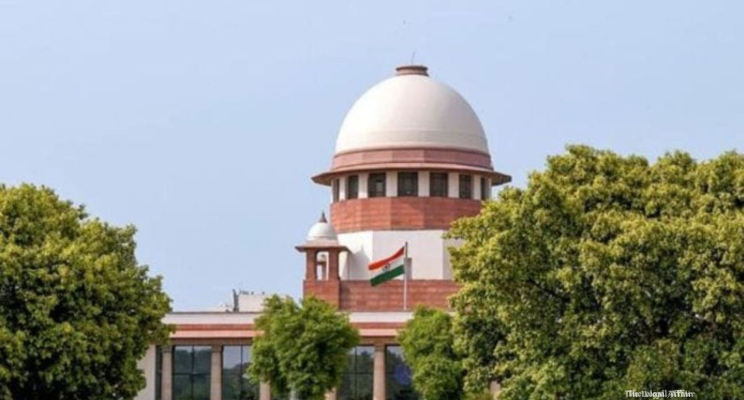
The Supreme Court of India in Dablu & Others v. State of Madhya Pradesh reaffirmed an important principle of criminal jurisprudence relating to the doctrine of unlawful assembly and vicarious liability under Section 149 of the Indian Penal Code, 1860. The case arose from appeals filed by several convicts who challenged their conviction for murder and the life sentences imposed upon them by the trial court and affirmed by the High Court. The appellants argued that the prosecution had failed to establish their individual roles in the commission of the crime because the independent eyewitness did not specifically state that each of them fired at or directly assaulted the deceased. According to the defence, the absence of a specific overt act attributed to each accused created serious doubt about their involvement and therefore their conviction was unsustainable. The Supreme Court, however, rejected these arguments and upheld the conviction, emphasizing that when individuals act together as members of an unlawful assembly with a shared common object, every member becomes vicariously liable for the acts committed by any one of them in pursuit of that object. The bench comprising Justice Pankaj Mithal and Justice S. V. N. Bhatti examined the evidence and circumstances surrounding the crime and concluded that the prosecution had successfully demonstrated the existence of an unlawful assembly and a common object to commit the offence. The Court observed that the absence of a specific eyewitness account of each accused firing at the deceased does not weaken the prosecution’s case when the collective conduct of the accused clearly establishes their participation in the unlawful assembly. The judgment provides a detailed explanation of the scope and application of Section 149 IPC and reiterates that the law does not require proof of individual overt acts when the accused are shown to be part of a group acting with a common object. By dismissing the appeals and directing the accused to surrender and serve the remaining sentence, the Supreme Court reinforced the principle that collective criminal liability is a vital tool for addressing offences committed by groups acting with shared intent.
Arguments of the Appellants:
The appellants, represented by their respective counsel including Advocate S. Mahendran and Advocate Prafulla Kumar Behera along with other members of the legal team, raised several arguments challenging their conviction. Their primary contention was that the prosecution had failed to prove their individual involvement in the act of murder. The defence emphasized that criminal liability must ordinarily be based on clear evidence linking each accused person to the commission of the offence. According to the appellants, the prosecution’s case relied heavily on circumstantial evidence and failed to demonstrate that each of them actively participated in causing the death of the victim. The defence particularly relied upon the testimony of an independent witness identified as PW-6, who owned the house where the deceased had taken shelter while trying to escape the attackers. According to the defence, this witness had clearly stated that he had not seen most of the accused firing at the deceased or fleeing from the scene. Instead, the witness had only identified one accused person, Vikram, as having fired at the victim. The defence argued that this omission was crucial because it created a significant gap in the prosecution’s narrative. If the independent witness could only identify one accused as the shooter, then it could not be assumed that the remaining accused had participated in the act of murder. The appellants further contended that the prosecution had failed to establish any overt act on the part of the remaining accused persons. In criminal trials, the defence argued, it is essential for the prosecution to demonstrate the specific role played by each accused in the commission of the offence. Without such evidence, the conviction of the remaining accused would amount to speculation rather than proof beyond reasonable doubt. The defence also questioned the application of Section 149 of the IPC, which deals with offences committed by members of an unlawful assembly. According to the appellants, the prosecution had not successfully established that the group shared a common object to kill the deceased. The defence suggested that the alleged incident might have occurred spontaneously and that there was insufficient evidence to prove that all the accused had assembled with a pre-determined intention to commit murder. The appellants further argued that merely being present at the scene of the crime does not automatically make a person liable for the actions of others. They submitted that the prosecution had failed to demonstrate that each accused shared the intention or common object required under Section 149 IPC. The defence therefore urged the Court to set aside the conviction and acquit the appellants, emphasizing that the criminal justice system must err on the side of caution when the evidence against an accused person is uncertain or incomplete.
Arguments of the Prosecution:
The State of Madhya Pradesh, represented by Advocate Shreeyash U. Lalit along with other members of the prosecution team, strongly defended the conviction and argued that the evidence on record clearly established the guilt of the accused persons. The prosecution maintained that the case was not based solely on the testimony of the independent witness but also on the broader chain of events and the conduct of the accused before, during, and after the incident. According to the prosecution, the evidence demonstrated that the accused had arrived together at the bus stand armed with firearms and other deadly weapons. Their coordinated actions, the prosecution argued, indicated that they had assembled with a common object and were acting in furtherance of that shared intention. The prosecution explained that the incident began when the accused persons stepped down from a bus at the bus stand. Soon thereafter, one of the accused fired a gunshot at the deceased, which struck his left hand. Terrified for his life, the victim attempted to escape by running away from the attackers. The prosecution stated that the accused persons collectively chased the victim from the bus stand to a nearby house belonging to the independent witness. The deceased entered the house in an attempt to hide and save himself from the attackers. However, the accused persons continued their pursuit and eventually found him inside the house. According to the prosecution, the attackers dragged the victim out of the house and fired multiple shots, resulting in his death. The prosecution emphasized that the sequence of events clearly demonstrated coordinated action by the accused persons. Even if only one accused had fired the fatal shot, the others had actively participated in chasing the victim, surrounding him, and facilitating the murder. Such collective conduct, the prosecution argued, brought the case squarely within the scope of Section 149 IPC. The prosecution also addressed the defence’s reliance on the testimony of the independent witness. It argued that the witness had merely stated that he did not personally see each accused firing at the victim. However, this did not mean that the other accused were not present or involved in the incident. The prosecution pointed out that the witness had confirmed hearing gunshots and had observed the accused chasing the victim. This testimony, combined with other evidence on record, was sufficient to establish that the accused had acted together as members of an unlawful assembly. The prosecution therefore urged the Supreme Court to uphold the conviction, arguing that the law recognizes the concept of collective liability precisely in situations where crimes are committed by groups acting in concert. According to the State, allowing the appeals would undermine the purpose of Section 149 IPC and enable offenders to escape liability simply because the prosecution could not attribute the final act of violence to each individual member of the group.
Court’s Judgment:
After carefully considering the arguments presented by both sides and examining the evidence on record, the Supreme Court dismissed the appeals and upheld the conviction and life sentences of the accused persons. The judgment, authored by Justice Pankaj Mithal and concurred with by Justice S. V. N. Bhatti, provided a detailed explanation of the principles governing unlawful assembly and vicarious liability under Section 149 IPC. The Court observed that the defence had placed considerable emphasis on the testimony of the independent witness who had stated that he did not see most of the accused firing at the victim. However, the Court clarified that such an omission does not necessarily undermine the prosecution’s case. The Court explained that the central question in cases involving unlawful assembly is not whether each accused personally committed a specific act of violence but whether they were members of an assembly sharing a common object to commit the offence. Once these elements are established, every member of the assembly becomes liable for the acts committed by any one of them in furtherance of that common object. The Court noted that the evidence clearly established that the accused persons had arrived together at the bus stand armed with firearms and other weapons. This fact alone indicated that they had assembled with a shared purpose. The Court further observed that the accused persons collectively chased the deceased from the bus stand to the house where he attempted to hide. Their coordinated pursuit of the victim demonstrated that they were acting together and supporting the actions of the person who fired the gunshot. The Court held that the presence of the accused persons as part of the unlawful assembly was sufficient to attract the application of Section 149 IPC. The law does not require the prosecution to prove a separate overt act by each individual member of the assembly. Instead, the focus is on the common object of the group and the participation of the accused in furthering that object. The Court emphasized that the evidence showed that the accused persons had collectively surrounded and attacked the victim, leading to his death. This conduct clearly established the existence of an unlawful assembly and a common object to commit the crime. Addressing the defence argument regarding the independent witness, the Court stated that the witness’s inability to identify each accused firing at the victim did not contradict the prosecution’s version of events. The witness had confirmed hearing gunshots and had observed the accused chasing the victim. This testimony was consistent with the prosecution’s case and did not create any reasonable doubt about the involvement of the accused persons. The Court reiterated that Section 149 IPC embodies the principle of vicarious liability, which means that every member of an unlawful assembly can be held responsible for offences committed by any member of the group in pursuit of their shared objective. The Court concluded that the evidence on record was sufficient to establish that the accused persons were members of an unlawful assembly and that the murder of the deceased was committed in furtherance of their common object. Consequently, the conviction and life sentences imposed by the lower courts were affirmed. The Court also directed the accused persons, who had been released on bail during the pendency of the appeals, to surrender and serve the remaining portion of their sentences. Through this judgment, the Supreme Court reinforced the principle that collective criminal liability plays a crucial role in ensuring accountability for crimes committed by groups acting with shared intent.