


Introduction:
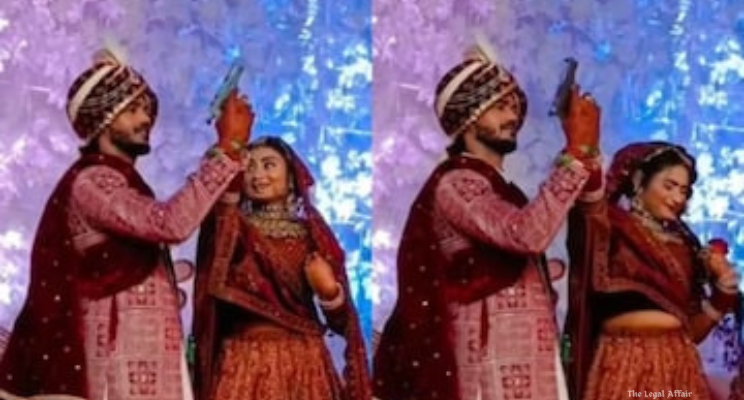
In a sobering case of celebratory firing during a marriage ceremony leading to a fatal outcome, the Supreme Court reflects on the unfortunate prevalence of such practices in the nation. Justices Vikram Nath and Satish Chandra Sharma express dismay at the uncontrolled nature of celebratory firing, leading to the death of an individual. The accused, present in this unfortunate incident, faced murder charges for opening fire without taking reasonable safety measures. The legal journey unfolds as the Trial Court and High Court convict the accused, prompting the Supreme Court to reconsider the nature of the offense and evaluate whether culpable homicide would be a more fitting charge.
Arguments:
The central question before the Apex Court revolves around the intention and degree of danger associated with celebratory firing during a marriage ceremony. The accused contends that there was no known prior enmity with the deceased, raising doubts about the intent to cause harm. The Court refers to Kunwar Pal Singh v. State of Uttarakhand, emphasizing the need for responsibility when carrying firearms and acknowledging the likelihood of death in such scenarios. The defense argues for a reduction in charges, considering the absence of clear intention and previous enmity.
Judgement:
The Supreme Court delves into the legal nuances of the case, questioning whether celebratory firing could be inherently dangerous to the extent of causing death. In alignment with the principles from Kunwar Pal Singh, the Court recognizes the accused’s failure to ensure safety during the celebratory firing. However, it acknowledges the lack of clear intention and prior enmity, leading to the reduction of the conviction from murder to culpable homicide. Noting the accused’s eight years in custody, the Court directs the release of the appellant. The judgment not only underscores legal intricacies but also emphasizes the need for responsible firearm use, particularly in celebratory contexts.