


Background:
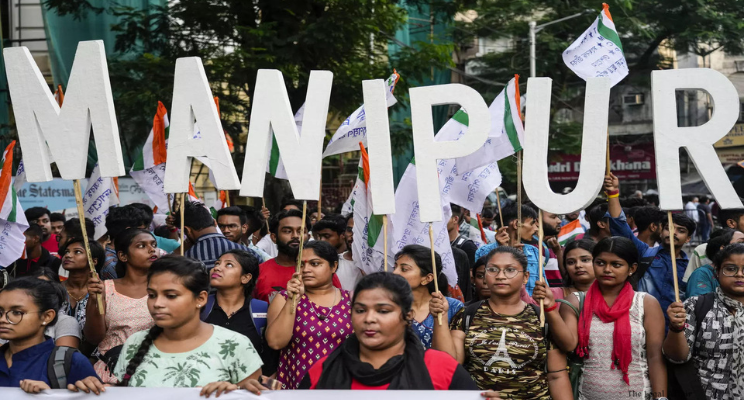
The Supreme Court recently in the case of YUMLEMBAM SURJIT SINGH vs. UNION OF INDIA, W.P.(C) No. 001341 – / 2023 declined a Writ Petition filed under Article 32, urging for the establishment of a commission to address the inter-ethnic tensions among the Nagas, Meiteis, and Kukis in Manipur. The plea sought to facilitate dialogue and resolve ongoing conflicts between these communities, emphasizing the court’s pivotal role in such situations.
Three petitioners, including a victim, a concerned citizen, and a law student, filed the PIL. Senior Advocate Gopal Sankaranarayanan represented the petitioners, highlighting the urgent need for reconciliation and peace-building among the conflicted groups.
During the proceedings, the Court expressed reservations about the scope and jurisdiction of such a commission, citing complexities in implementing its recommendations. The Chief Justice emphasized that such matters might require resolution by the political executives rather than judicial intervention.
The advocate stressed the specificity of a “commission” with a limited mandate, distinct from a “committee,” to facilitate dialogue among the communities. However, the Court suggested referring specific issues to the committee led by Justice Gita Mittal, appointed to examine violence against women in Manipur, if applicable.
The advocate highlighted the ongoing ethnic clashes and territorial disputes among the communities, emphasizing the urgent need for a focused approach to address these issues.
Arguments of Both Parties:
Petitioners Urged for the establishment of a commission to facilitate dialogue and reconciliation among the Nagas, Meiteis, and Kukis. Stressed the Court’s role as an institution looked upon in such circumstances and emphasized the urgency of addressing the conflict. The state Raised concerns about the jurisdiction and effectiveness of establishing a commission, suggesting that matters of this nature might require the attention of the political executives. Referred to the existing committee headed by Justice Gita Mittal and encouraged the petitioners to approach it with specific grievances.
Court Analysis:
The Court deliberated on the petition’s request for a commission to resolve ethnic tensions in Manipur. It expressed reluctance in intervening through the establishment of a commission due to challenges in implementation and jurisdiction. The Court emphasized the need for clear outcomes from its intervention and suggested approaching the existing committee led by Justice Gita Mittal for specific issues related to the conflict.
The bench underscored the importance of not raising false expectations and diverting attention from the executive’s responsibility in addressing such complex socio-political issues. It acknowledged the limitations in ensuring ground-level changes solely through judicial intervention, emphasizing the need for executive involvement in addressing the underlying causes of the conflict.