


Factual Matrix
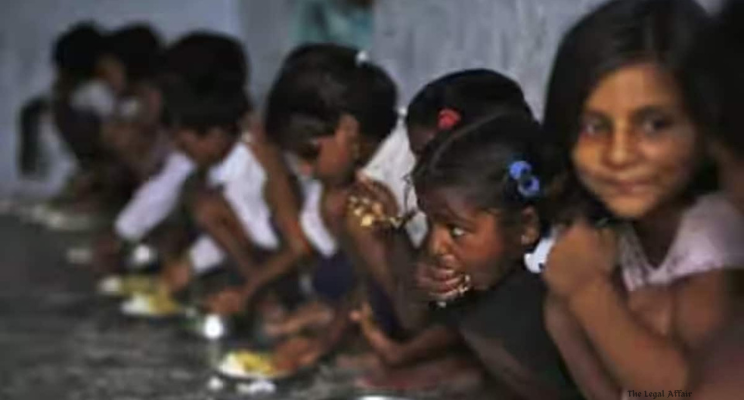
In the Instant Matter at hand Secretary, Food and Beverage Foundation Society Regd. v. Directorate of Education A appeal was filed to overturn a decision made by the Directorate of Education’s Mid-Day Meal Branch that prevented the petitioner from providing midday meals under the Central Government’s Mid-Day Meal Scheme on the grounds that some of the food was allegedly rotting. The government stated in 2020 that it would distribute dry-ration packages comprising six months’ worth of food to pupils in all Government and Government-aided schools in Delhi, replacing the petitioner’s dry ration and cooked meals. When the petitioner gave the school bad chana and vanaspati dalda rather than refined oil, a disagreement occurred.The dry ration packages instead of using refined oil included vanaspati dalda, the Chief Consultant told the Ministry of Education. The petitioner was given a show cause notice for breaking PM POSHAN food standards, but the petitioner argued that he shouldn’t be viewed as careless for giving a high-quality ration and that no action should be taken against him for supplying subpar goods. The petitioner was immediately prohibited by the respondent from providing midday meals to any of the respondent’s schools. To contest this judgement, the petitioner filed a writ petition.
Analysis of Court Order
Justice Subramonium Prasad of the Delhi High Court’s Single Judge Bench upheld the debarment order and stated that even though the actions taken have a significant impact on the public good in terms of children’s health and wellbeing, the utmost care should be taken to ensure that duties are carried out effectively.
In order to guarantee that kids have access to nourishing meals during COVID-19, the court decided that the rules for dry ration kits in Delhi schools were an interim policy measure. Cooked meals should be subject to the same requirements as in the original system and the ration packages. The petitioner’s argument that the 2017 clarification issued by the Ministry solely related to prepared meals was denied by the court. The court further pointed out that chana cannot decay in seven months and that the sale of vanaspati dalda is not expressly forbidden. The petitioner, an NGO working under PM POSHAN, was expected to be familiar with the culinary standards of the programme, The court ruled that it was unreasonable to define oil and fat to encompass foods like vanaspati dalda.
The Court expressed concern over the seriousness of the allegations, opining that it was the petitioner’s responsibility to ensure that nutritious meals were provided to the kids for their development and that, as a result, the supply of rotten chana or vanaspati and dalda could not be excused and that individuals who engaged in such activities could not be permitted to continue supplying food items under the PM-POSHAN Scheme. The Court also maintained the debarment judgement and stated that it was established legal precedent that debarment meant civil death and could never be permanent. As a result, the Court sent the case back to the respondent for determination of the duration for which the petitioner would be prohibited from providing mid-day meals. The writ petition was so dismissed.
CASE NAME – Secretary, Food and Beverage Foundation Society Regd. v. Directorate of Education, Govt. (NCT of Delhi), W.P. (C) 3826 of 2023