


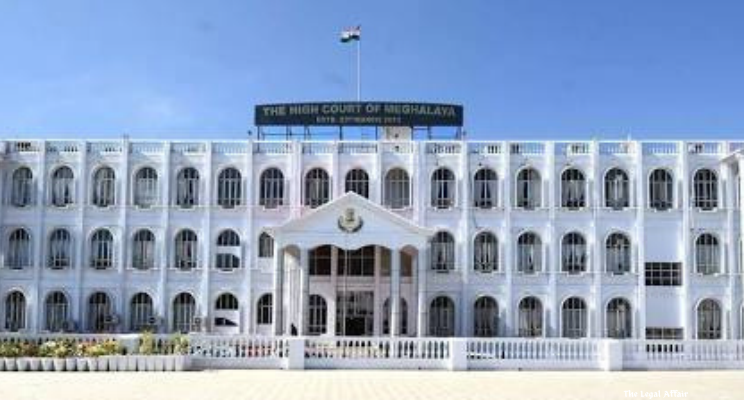
Introduction:
The Meghalaya High Court has declined to grant bail to two Bangladeshi nationals facing trial for alleged offences under the Bharatiya Nyaya Sanhita, 2023 (BNS), the Arms Act, 1959, the Foreigners Act, 1946, and the Explosive Substances Act, 1908. The Court noted that the trial had reached an advanced stage, with only one of the ten prosecution witnesses remaining to be examined. Considering this position, it found no sufficient reason to grant bail and instead requested the trial court to complete the proceedings expeditiously.
Justice W. Diengdoh passed the order on September 25, 2026, while deciding the third bail applications filed by Saem Hussain and Mafuzur Rahman. Both applicants are Bangladeshi nationals and are facing trial in connection with Nonghyllam Police Station Case No. 09 of 2025, registered as Sessions Case No. 11 of 2025.
The applicants approached the High Court under Section 483 of the Bharatiya Nagarik Suraksha Sanhita, 2023 (BNSS), seeking their release on bail. They contended that they had been falsely implicated in the case and that the prosecution material did not disclose a prima facie case against them. They also expressed their willingness to furnish adequate sureties to ensure their appearance before the trial court whenever required.
The State opposed their applications, relying on the seriousness of the alleged offences and the possibility that the applicants might abscond if released. The fact that both applicants are foreign nationals was relevant to the State’s concern regarding their availability for trial.
The proceedings arose in the context of a prosecution involving several serious statutory provisions. The BNS provides the general criminal law framework for offences under the new criminal code. The Arms Act regulates the possession, acquisition, use and other dealings involving arms and ammunition, while the Explosive Substances Act addresses offences involving explosive substances. The Foreigners Act, 1946, provides the legal framework governing the presence and regulation of foreign nationals in India.
The applicants’ third attempt to secure bail required the High Court to consider their grounds for release alongside the progress of the criminal trial. The Court was particularly concerned with the fact that the prosecution evidence was almost complete. Out of ten prosecution witnesses, only one remained to be examined.
This stage of the proceedings became a significant consideration in the Court’s decision. Rather than granting bail when the trial was close to completion, the Court considered that an early conclusion of the proceedings would be an appropriate course. It therefore rejected both applications and requested the trial court to proceed expeditiously and conclude the trial at the earliest.
The order highlights the relevance of the stage of a criminal trial when courts consider repeated applications for bail. While the seriousness of the allegations and the personal circumstances of the accused remain relevant, the progress already made in the proceedings may also influence whether release on bail is justified.
Arguments of the Parties:
The applicants, Saem Hussain and Mafuzur Rahman, sought bail through separate third applications filed under Section 483 of the BNSS. Their principal contention was that they had been falsely implicated in the criminal case and that the material collected by the prosecution did not establish a prima facie case against them.
They challenged the basis for their continued detention by questioning the sufficiency of the prosecution evidence. According to their position, the allegations against them did not justify keeping them in custody, particularly when the prosecution material was said not to establish their involvement in the alleged offences.
The applicants also sought to assure the Court that their release would not interfere with the trial. They expressed their willingness to furnish sufficient sureties and comply with the conditions that might be imposed to secure their presence before the trial court. Their offer was intended to address concerns that they might fail to attend future proceedings.
By offering sureties, the applicants sought to demonstrate that their attendance could be ensured through appropriate bail conditions. Their request required the Court to consider whether the possibility of non-appearance could be adequately addressed through conditions rather than continued detention.
The fact that these were their third bail applications also formed part of the procedural background. Having approached the Court previously, the applicants again sought judicial consideration of their request for release. However, the case summary does not specify the grounds or findings recorded in the earlier bail proceedings. It would therefore be inappropriate to attribute any particular reasoning or change in circumstances to those earlier applications.
The State opposed the grant of bail. Its principal objection was based on the seriousness of the offences alleged against the applicants. The prosecution involved provisions under the BNS, the Arms Act, the Foreigners Act and the Explosive Substances Act. The State relied on the nature of these allegations to contend that the applicants should not be released while the trial was still pending.
The State also raised concerns about the possibility of the applicants absconding. Since both applicants are Bangladeshi nationals, the prosecution argued that their release could create difficulties in ensuring their continued availability for the criminal proceedings.
This objection was relevant to the Court’s consideration of whether the applicants’ offer to furnish sureties would adequately address the risk of non-appearance. The State’s position was that the seriousness of the allegations, coupled with the possibility of the applicants leaving the jurisdiction, weighed against their release.
The prosecution’s opposition was therefore founded on two principal considerations: the gravity of the offences alleged and the risk that the applicants might not remain available to face trial if granted bail.
The competing positions required the Court to examine the applicants’ claim that the prosecution evidence was insufficient against the State’s concerns regarding the nature of the charges and the possibility of absconding. However, the progress of the trial also assumed importance. With nine out of ten prosecution witnesses already examined, the Court had to consider whether continued custody until the conclusion of the remaining evidence and trial would be more appropriate than granting bail at that stage.
The case summary does not record any additional detailed submissions by either side concerning the individual allegations, the evidence of the witnesses already examined or the specific circumstances of the applicants. Accordingly, the central arguments can be understood from their challenge to the prosecution case, their offer of sureties and the State’s objections based on the seriousness of the allegations and the risk of absconding.
Court’s Judgment:
The Meghalaya High Court dismissed both third bail applications, finding no sufficient reason to grant the relief sought by the applicants. Justice W. Diengdoh placed particular emphasis on the advanced stage of the trial and the fact that only one prosecution witness remained to be examined out of a total of ten.
The Court observed that the prosecution evidence was nearing completion. In these circumstances, it considered that granting bail was not warranted and that the appropriate course would be to ensure that the trial was concluded without unnecessary delay.
The Court stated:
“This Court is also made to understand that out of ten prosecution witnesses, only one witness remains to be examined. As such, in the interest of justice, this Court finds no reason to allow the prayer made in this petition, but would request the Trial Court to proceed with the trial expeditiously and to conclude the same at the earliest.”
This observation formed the central basis for the dismissal of the applications. The Court did not consider the bail requests in isolation from the stage of the proceedings. Instead, it took into account that the prosecution had already examined nine witnesses and that only one remained.
The significance of this consideration lies in the practical position of the trial. When most of the prosecution evidence has already been recorded, the court may consider whether an early conclusion of the proceedings would be a more appropriate way of addressing the accused persons’ request than releasing them shortly before the remaining evidence is completed.
The Court’s approach indicates that the progress of a trial can be an important consideration in determining whether continued detention is justified in the circumstances of a particular case. The fact that the applicants had filed third bail applications did not, by itself, determine the outcome. Their request had to be considered in the context of the material circumstances then existing, including the near completion of the prosecution evidence.
The applicants had contended that they were falsely implicated and that the prosecution material did not disclose a prima facie case against them. They had also offered to furnish sufficient sureties. However, the Court did not find these grounds sufficient to justify granting bail at the stage when only one prosecution witness remained to be examined.
The Court’s order must be understood in the context of Section 483 of the BNSS, under which the applicants had invoked the High Court’s jurisdiction to seek bail. The provision concerns the special powers of the High Court and Court of Session regarding bail. It empowers these courts to direct that an accused person be released on bail, subject to the statutory framework and appropriate conditions.
The exercise of bail jurisdiction involves judicial consideration of the circumstances of the case. The seriousness of the alleged offences, the nature of the accusations, the possibility of the accused evading the proceedings and the interests of a fair trial may all be relevant considerations. The Court’s decision in the present matter particularly highlights the importance it attached to the stage already reached in the trial.
The allegations in this case arise under multiple enactments. The prosecution includes offences under the BNS, the Arms Act, the Foreigners Act and the Explosive Substances Act. The involvement of these statutes formed part of the State’s objection to bail, which relied on the seriousness of the alleged criminal conduct.
The Foreigners Act was also relevant to the State’s concern regarding the applicants’ availability. Both accused are Bangladeshi nationals, and the prosecution expressed apprehension that they might abscond if released. Although the applicants offered to furnish sureties, the State maintained that their release could create difficulties in securing their presence during the trial.
The Court’s order, however, primarily records its conclusion based on the advanced stage of the proceedings. It did not set out a detailed examination of each alleged offence or make a final determination on the merits of the prosecution case. Nor did it record a finding that the applicants were guilty of the charges. The question before the Court was whether they should be released on bail while the criminal trial remained pending.
It is important to distinguish the rejection of a bail application from a finding of guilt. The applicants continue to be entitled to the presumption of innocence, and the prosecution must establish the charges in accordance with law. The dismissal of their applications merely means that the Court declined to grant bail at this stage of the proceedings.
The Court also did not treat the applicants’ status as foreign nationals as an independent determination of guilt or as a substitute for examining the bail request. The State’s concern about their possible absconding formed part of its opposition, while the Court’s recorded reasoning focused on the fact that the trial was close to completion.
Another important aspect of the order is the direction to the trial court to conclude the proceedings expeditiously. Rather than merely rejecting the applications, the High Court expressly requested the trial court to proceed with the remaining evidence and complete the trial at the earliest.
This direction is significant because the Court recognised that the applicants’ continued detention should not be prolonged through avoidable delays in the trial. Once the prosecution evidence had reached the final stage, an early conclusion of the proceedings would enable the matter to be determined without unnecessary postponement.
The direction also reflects the broader principle that criminal proceedings must be conducted with reasonable expedition. The right to a speedy trial is an important component of fair procedure under Article 21 of the Constitution of India. An accused person facing criminal proceedings is entitled to have the charges determined within a reasonable time, and unnecessary delay can have serious consequences, particularly where the accused remains in custody.
Although the order, as summarised, does not expressly undertake a detailed Article 21 analysis, the request for an expeditious conclusion of the trial is consistent with the importance of avoiding prolonged criminal proceedings. The Court’s direction seeks to ensure that the rejection of bail does not become a reason for the trial to remain pending indefinitely.
The Court’s reasoning also demonstrates that bail decisions are sensitive to the procedural stage of a case. The position may be different where the trial has barely commenced, where several witnesses remain to be examined or where substantial delays are anticipated. In the present matter, however, the examination of nine out of ten prosecution witnesses suggested that the trial had reached a stage where an early conclusion was feasible.
The applicants’ willingness to furnish sureties was therefore not considered sufficient to outweigh the circumstances that influenced the Court’s decision. The Court found no reason to allow the applications and considered that the interests of justice would be better served by directing an expeditious completion of the trial.
Ultimately, Justice W. Diengdoh dismissed both bail applications as devoid of merit. The Court requested the trial court to proceed with the remaining proceedings expeditiously and conclude the trial at the earliest.
The order dated September 25, 2026, underscores the importance of considering the progress of criminal proceedings while deciding repeated bail requests. It also reinforces that the rejection of bail should be accompanied, where appropriate, by attention to the need for a speedy trial. While the seriousness of the allegations and the State’s apprehension regarding the applicants’ possible absconding formed part of the dispute, the decisive consideration recorded by the High Court was that only one prosecution witness remained. The Court therefore declined to grant bail and called for the earliest possible conclusion of the trial, leaving the determination of the applicants’ guilt or innocence to the trial court.