


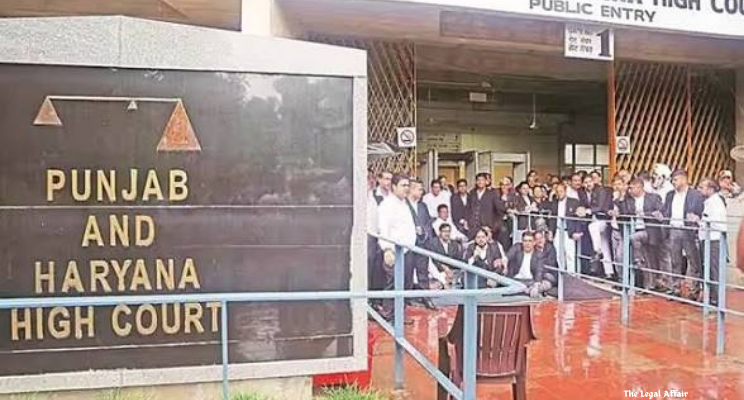
Introduction:
The Punjab and Haryana High Court has clarified that an accused facing criminal charges that do not carry a punishment of imprisonment for ten years or more cannot be declared a “proclaimed offender” under Section 84(4) of the Bharatiya Nagarik Suraksha Sanhita, 2023 (BNSS). The Court held that in such cases, the accused may, depending on the circumstances and applicable legal requirements, be declared a “proclaimed person” or an “absconder,” but the more serious statutory designation of a proclaimed offender cannot be applied indiscriminately. The Court also emphasised that the procedure prescribed for publishing a proclamation must be followed strictly and that merely affixing copies of a proclamation at certain locations does not establish valid publication when the other mandatory requirements have not been fulfilled.
Justice Shalini Singh Nagpal delivered the ruling while allowing a petition challenging an order passed by the Judicial Magistrate First Class, Kharar, District SAS Nagar (Mohali), which had declared the petitioner a proclaimed offender in a case involving allegations of cheating, criminal breach of trust and criminal conspiracy. The High Court set aside the impugned order after identifying multiple procedural and legal defects in the proceedings initiated against the accused.
The case arose from a criminal prosecution registered in 2023 at Police Station Kharar under Sections 406, 420 and 120-B of the Indian Penal Code, 1860. These provisions concern criminal breach of trust, cheating and criminal conspiracy, respectively. Although the High Court had granted the accused regular bail on November 27, 2024, he subsequently failed to appear before the trial court on March 12, 2026. The proceedings that followed ultimately resulted in the cancellation of his bail, forfeiture of his bonds, issuance of non-bailable warrants and, eventually, an order declaring him a proclaimed offender.
The central legal issue before the High Court was whether the Magistrate had the authority to declare the petitioner a proclaimed offender for the offences alleged against him. The Court was also required to examine whether the statutory procedure governing the issuance and publication of a proclamation had been properly followed, including the requirement to establish that the accused had absconded or concealed himself and the obligation to ensure that the proclamation was published in the manner prescribed by law.
Section 84 of the BNSS governs proclamations issued against persons who are absconding or concealing themselves to avoid execution of a warrant. It establishes a procedural framework through which a court may require an accused person to appear at a specified place and time. Section 84(4) provides an additional statutory consequence in cases involving specified serious offences punishable with imprisonment of ten years or more, life imprisonment or the death penalty. The distinction between a proclaimed person and a proclaimed offender is therefore legally significant and cannot be ignored merely because an accused has failed to appear before the court.
The High Court’s decision underscores that criminal courts must exercise their powers within the limits prescribed by statute. The failure of an accused to attend proceedings may justify appropriate legal action, but it does not dispense with mandatory procedural safeguards or permit a court to impose a statutory designation that the alleged offences do not support. The judgment also reinforces the principle that procedural compliance in criminal proceedings is not a mere formality; it is essential to the legality and validity of judicial orders.
Arguments of the Parties:
The petitioner challenged the Magistrate’s order on the ground that the proceedings leading to his declaration as a proclaimed offender were legally defective. His principal submission concerned the applicability of Section 84(4) of the BNSS. According to the petitioner, the offences invoked against him under Sections 406, 420 and 120-B of the IPC did not satisfy the statutory punishment threshold required for declaring a person a proclaimed offender. Consequently, even if the circumstances justified initiating proclamation proceedings, the Magistrate could not lawfully confer upon him the status of a proclaimed offender under the relevant provision.
The petitioner maintained that the statutory distinction between a proclaimed person and a proclaimed offender was substantive and had to be respected by the criminal court. He argued that the power under Section 84(4) could not be extended to offences falling outside its prescribed category merely because the accused had failed to appear. In his submission, the impugned order was therefore unsustainable on the face of the record.
A further challenge concerned the procedure adopted by the Magistrate before issuing and acting upon the proclamation. The petitioner contended that the requirements of Section 84 of the BNSS had not been complied with. In particular, he questioned whether the Magistrate had recorded the necessary satisfaction that he was absconding or concealing himself to evade the execution of a warrant. He argued that a mere inability to secure his presence through ordinary legal process was not equivalent to a judicial finding that he had deliberately absconded.
The petitioner also disputed the validity of the proclamation’s publication. He relied on the statutory requirements governing the manner in which a proclamation must be made public and argued that the material placed before the Magistrate did not establish compliance with all the prescribed modes of publication. The fact that copies had allegedly been affixed at certain locations, according to his challenge, could not independently establish that the proclamation had been validly published.
Another important objection concerned the date specified in the proclamation. The Magistrate had issued the proclamation on June 5, 2026, making it returnable on August 5, 2026. However, the matter was subsequently adjourned on multiple occasions, and the final order declaring the petitioner a proclaimed offender was passed on September 29, 2026. The petitioner argued that no fresh proclamation had been issued for the later date and that he had not been notified of any revised date in accordance with the statutory procedure. He maintained that the trial court could not treat the original proclamation as sufficient when the date specified in it had passed without his appearance.
The petitioner further submitted that his bail had been cancelled without proper notice and challenged the consequential action taken against him, including the forfeiture of his bonds and the issuance of non-bailable warrants. His case was that the procedural shortcomings were not isolated technical errors but defects affecting the legality of the proceedings as a whole.
In addition to his objections concerning statutory interpretation and procedural compliance, the petitioner informed the High Court that the dispute with the complainant had been settled through a compromise. He expressed his willingness to participate in the proceedings and stated that he was ready to join the trial. This submission was intended to demonstrate that he was prepared to cooperate with the judicial process rather than continue to evade it. However, the existence of a compromise was a separate consideration from the legality of the proclamation order and did not, by itself, determine whether the statutory requirements had been satisfied.
The State opposed the petition and defended the Magistrate’s decision. Its principal contention was that the petitioner had failed to appear before the trial court despite being required to do so and that the legal process initiated to secure his presence had proved unsuccessful. According to the State, the proclamation had been published and the petitioner had nevertheless failed to appear, justifying the subsequent declaration that he was a proclaimed offender.
The State relied on the petitioner’s absence from the proceedings and the steps taken by the Magistrate to secure his attendance. It maintained that the accused could not disregard court proceedings and then seek to invalidate the consequential orders when the court resorted to the measures available under criminal procedure.
The State’s position was essentially that the proclamation process had been undertaken because the petitioner’s presence could not be secured through the existing process and that the subsequent action was justified by his continued non-appearance. It therefore sought to sustain the impugned order.
The competing submissions required the High Court to distinguish between an accused person’s failure to attend court and the statutory conditions necessary for declaring that person a proclaimed offender. The question was not simply whether the petitioner had remained absent, but whether the Magistrate had acted within the limits of Section 84 of the BNSS and complied with every mandatory requirement governing the proclamation.
Court’s Judgment:
The Punjab and Haryana High Court allowed the petition and quashed the Magistrate’s order dated September 29, 2026, declaring the petitioner a proclaimed offender. Justice Shalini Singh Nagpal found that the impugned order could not be sustained because the offences alleged against the petitioner did not satisfy the punishment threshold under Section 84(4) of the BNSS. The Court also identified serious defects in the procedure adopted for issuing and publishing the proclamation.
The first and fundamental issue concerned the statutory distinction between a proclaimed person and a proclaimed offender. Section 84 of the BNSS provides the framework for issuing a proclamation when a court has reason to believe that a person against whom a warrant has been issued has absconded or is concealing himself so that the warrant cannot be executed. Section 84(4), however, deals with the more specific situation in which a person may be declared a proclaimed offender in connection with offences falling within the prescribed category of seriousness.
The Court examined the provisions invoked against the petitioner, namely Sections 406, 420 and 120-B of the IPC. It concluded that these offences, as invoked in the case, did not meet the statutory requirement of being punishable with imprisonment of ten years or more for the purpose of Section 84(4) of the BNSS. The Magistrate therefore lacked a sufficient statutory basis to declare the petitioner a proclaimed offender under that provision.
The Court observed that the petitioner could not have been declared a proclaimed offender in the circumstances and that, at most, he could have been described as a proclaimed person or an absconder, subject to compliance with the applicable legal requirements. It held that the order was vitiated on this ground alone.
The significance of this finding lies in the Court’s insistence that the consequences attached to a particular statutory classification must be determined by the legislation itself. A person’s failure to appear before a court does not automatically permit the court to apply every consequence associated with absconding. The nature of the offences and the statutory conditions governing the relevant designation must first be examined.
The ruling accordingly makes clear that Section 84(4) cannot be invoked as a general provision for every accused who fails to appear in response to judicial process. The provision must be applied in accordance with its prescribed threshold. A court cannot bypass that threshold simply because it considers the accused’s conduct unsatisfactory or because its efforts to secure the accused’s presence have been unsuccessful.
The High Court then examined the procedural validity of the proclamation itself. In doing so, it relied on the decision of a co-ordinate Bench in Anita Sharma v. State of Punjab, CRM-M-41715-2021, which summarised the essential requirements for a valid proclamation. Applying the principles discussed in that decision, the Court identified additional defects in the proceedings before the Magistrate.
The first procedural defect concerned the absence of a recorded judicial finding that the petitioner had absconded or concealed himself to avoid the execution of the warrant. The Magistrate’s order dated June 5, 2026, recorded that the petitioner’s presence could not be secured through the existing process. However, the order did not record prima facie satisfaction that the petitioner had absconded.
This distinction was important because Section 84 does not authorise the issuance of a proclamation merely on the ground that a warrant has remained unexecuted or that an accused has failed to attend court. The court must have reason to believe, on the basis of the circumstances before it, that the person has absconded or is concealing himself in a manner that prevents execution of the warrant.
The requirement serves an important judicial purpose. It ensures that proclamation proceedings are initiated on the basis of a legally relevant assessment rather than automatically following every instance of non-appearance. Absence from court may arise in different circumstances, and the statutory power to issue a proclamation requires the court to apply its mind to the particular facts before it.
The High Court’s reasoning therefore highlights the importance of recording the satisfaction required by law. A statement that the accused’s presence could not be secured does not necessarily establish that the accused had deliberately absconded. Where the statute requires a particular judicial satisfaction, the order must demonstrate that the relevant condition has been considered and fulfilled.
The second procedural defect related to the manner in which the proclamation had allegedly been published. The statement of the serving official showed that copies of the proclamation had been affixed in the petitioner’s locality, at the bus stand in Kharar and on the notice board of the court complex. However, the statement did not establish that the proclamation had been publicly read out in the place where the petitioner ordinarily resided.
The Court held that the modes of publication specified under Section 84(2)(i) of the BNSS were conjunctive rather than disjunctive. In other words, the prescribed methods were not alternative options from which the executing official could select one or more at discretion. Compliance required proof of all the mandatory modes specified by the provision.
The Court explained the legal consequence of this requirement in clear terms:
“The three sub-clauses (a)-(c) in Section 84(2)(i)(a) BNSS are conjunctive and not disjunctive, which means that there would be no valid publication of the proclamation unless all the three modes of publication are proved. All three sub-clauses are mandatory and any violation whereof entails quashing of the order declaring an accused, a proclaimed person/offender.”
This observation underscores the importance of distinguishing between an incomplete procedural act and a valid statutory publication. Affixing copies of a proclamation at selected locations may demonstrate that some steps were taken, but it does not establish compliance with the entire procedure prescribed by law. Where the statute requires publication through multiple specified modes, each requirement must be satisfied.
The requirement that a proclamation be publicly read out is particularly significant because it serves the objective of bringing the direction of the court to public notice in the manner prescribed by legislation. The statutory procedure is intended to provide a formal and verifiable mechanism through which the person concerned is called upon to appear. If one of the mandatory methods is omitted, the court cannot simply presume that the proclamation was validly published.
The High Court therefore found that the serving official’s statement was insufficient to establish compliance with the mandatory requirements of Section 84(2). The absence of evidence that the proclamation had been read out meant that the publication could not be treated as valid merely because copies had been affixed at the locations mentioned in the statement.
The third procedural defect concerned the date for which the proclamation had been issued. The Magistrate’s order dated June 5, 2026, directed that the proclamation be returnable on August 5, 2026. Instead of deciding the matter on that date, the trial court adjourned the proceedings three times to secure the appearance of the serving official. The official’s statement was eventually recorded on September 29, 2026, and the petitioner was declared a proclaimed offender on the same day.
The High Court found that no fresh proclamation had been issued for the later date and that the petitioner had not been notified of the revised date in the manner required by law. The original proclamation had specified August 5, 2026, as the date for appearance. Once the proceedings moved beyond that date, the court could not disregard the statutory framework governing the date and notice requirements.
In examining this issue, the Court relied on Ashok Kumar v. State of Haryana and Navneet Sharma v. State of Punjab. These decisions were relied upon in connection with the requirement to comply with Section 84(1) of the BNSS and the procedural consequences of proceeding without a valid proclamation for the relevant date.
The High Court held that the trial court had failed to comply with the applicable requirements. The proclamation procedure must provide a clear and legally valid direction requiring the person concerned to appear at the specified place and time. A proclamation cannot be treated as an indefinite authority to proceed against an accused regardless of the date mentioned in it or subsequent changes in the proceedings.
This aspect of the judgment reinforces the principle that procedural safeguards must be observed throughout the process, rather than only at the initial stage. Even if a proclamation is lawfully initiated, subsequent proceedings must remain consistent with the statutory requirements. The passage of the specified date and the adjournment of the matter do not automatically authorise the court to proceed as though the original direction remains sufficient in every respect.
Taken together, the three procedural defects revealed that the impugned order suffered from more than one deficiency. The Magistrate had not recorded the required prima facie satisfaction that the petitioner had absconded; the serving official’s statement did not establish compliance with every mandatory mode of publication; and the proceedings continued beyond the returnable date without a fresh proclamation for the later date. These defects were additional to the fundamental problem that the offences alleged did not justify declaring the petitioner a proclaimed offender under Section 84(4).
The Court’s decision does not mean that an accused person may disregard criminal proceedings without consequences. Courts retain the power to take appropriate measures when an accused fails to appear, subject to the conditions and procedures prescribed by law. The judgment instead clarifies that the exercise of such powers must remain within statutory boundaries. Non-appearance may justify further action, but it cannot substitute for the judicial satisfaction and procedural compliance that the legislation expressly requires.
The petitioner’s submission that the dispute had been settled through a compromise and that he was willing to participate in the proceedings formed part of the overall background of the case. Nevertheless, the principal basis for the igh Court’s intervention was the illegality of