


Introduction:
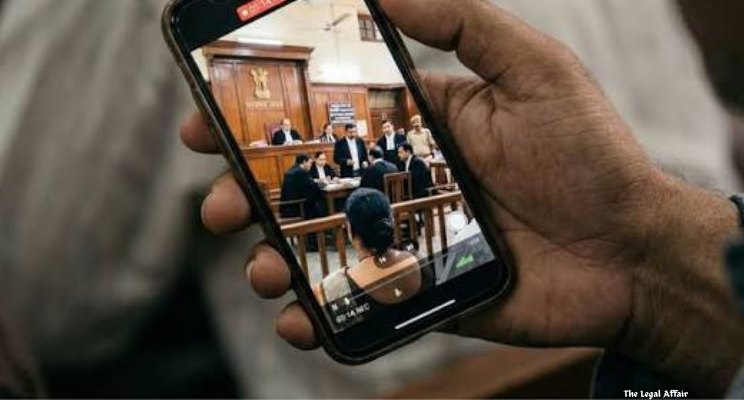
The Bombay High Court has taken a firm stand against the unauthorised recording of judicial proceedings, ordering the seizure of a mobile handset used to record a court hearing and imposing costs of ₹10,000 on an advocate’s clerk and ₹25,000 on the junior advocate who had allegedly instructed him to make the recording. The Court emphasised that although courtrooms are open to lawyers, litigants, students and members of the press, everyone attending proceedings must respect the rules governing courtroom conduct and maintain appropriate professional etiquette.
The order was passed on October 19 by a Division Bench comprising Justice Girish Kulkarni and Justice Dr Neela Gokhale. The matter came to the Court’s attention when the Prothonotary and Senior Master of the Bombay High Court noticed an individual recording proceedings while passing through the court corridor. Recognising the seriousness of the conduct, the officer immediately entered the courtroom and informed the Bench.
The incident raised an important question concerning the distinction between open court proceedings and the unauthorised recording of those proceedings. The principle of open justice allows members of the public to attend hearings, subject to applicable restrictions. However, the opportunity to observe judicial proceedings does not automatically confer a right to record, reproduce or circulate them through personal electronic devices. Such activities remain subject to the applicable rules and directions of the court.
In this case, the Bench recorded that the proceedings were being recorded without the approval required under the law and the rules governing the High Court. The judges expressed particular concern that the recording had allegedly been undertaken on the instructions of a junior advocate. Lawyers, as officers of the court, are expected to understand and comply with the rules governing courtroom procedure and professional conduct. Directing a clerk to engage in conduct expressly prohibited by the Court raised concerns about the responsibilities that accompany legal practice.
The Bench noted that the Bombay High Court’s rules expressly prohibit the recording of court proceedings, whether through live streaming or otherwise. The restriction was not confined to the unauthorised broadcasting of a hearing in real time; it also covered recording proceedings without the necessary permission. Consequently, the fact that the recording was made on a mobile phone, rather than through an organised broadcasting arrangement, did not make the conduct permissible.
The Court also considered the professional standing of the junior advocate. While expressing surprise at the incident, the judges acknowledged that a junior at the Bar might lack experience and require guidance on courtroom discipline and professional etiquette. Nevertheless, the Bench made clear that inexperience could not excuse disregard for the rules of the institution in which an advocate practises.
In view of the circumstances, the Court ordered the seizure of the mobile handset used for the recording and directed the clerk to pay costs of ₹10,000. The junior advocate was directed to pay ₹25,000, with the amount to be deposited in the High Court Employees Medical Welfare Fund. Although the Bench observed that it could have initiated contempt proceedings and referred the advocate’s conduct to the Bar Council, it refrained from taking those steps in the present instance.
The order carries a broader message for advocates, court staff, litigants and members of the public: access to court proceedings must be exercised responsibly and in accordance with the law. The open-court principle promotes transparency and public confidence in the justice system, but it does not authorise individuals to disregard restrictions imposed to preserve the orderly and dignified conduct of judicial proceedings.
Arguments of the Parties:
The available case summary does not identify a conventional adversarial dispute involving a petitioner and respondent, nor does it set out detailed submissions made by the clerk or the junior advocate in response to the Court’s observations. The matter arose after the Prothonotary and Senior Master brought the unauthorised recording to the Bench’s attention during a hearing. The Court’s response therefore centred on the conduct observed, the applicable courtroom rules and the professional responsibilities of those involved.
The circumstances recorded by the Bench indicated that an individual was using a mobile phone to record the proceedings without obtaining the approval required by law. The Prothonotary and Senior Master noticed the activity while passing through the corridor and immediately informed the Court. The judges subsequently recorded that the clerk had been making the recording allegedly on the instructions of a junior advocate.
The central issue was not whether the public could attend the hearing. The Bench expressly recognised that courtrooms are open to a broad range of people, including lawyers whose cases may not be listed, junior members of the Bar, students seeking practical exposure to court proceedings, litigants and members of the press. The question was whether the privilege of attending a hearing could be treated as permission to record it using a personal device despite an express prohibition under the High Court’s rules.
The circumstances also raised the question of responsibility within the legal profession. An advocate’s clerk may assist with administrative and procedural tasks, but such assistance cannot be used to carry out an activity that the rules prohibit. If the recording was made at the direction of a junior advocate, that direction would not remove the need to comply with the Court’s rules. Rather, it would raise a separate concern about the advocate’s understanding of professional obligations and the example set for others working with the advocate.
The Court’s observations suggest that it regarded the incident as more serious than an isolated technical breach. The Bench expressed surprise that an advocate had allegedly instructed a clerk to record judicial proceedings on a mobile phone despite the existence of an express restriction. Advocates are expected to be familiar with the rules governing the institution in which they practise and to ensure that their conduct does not undermine the authority of the Court.
At the same time, the judges acknowledged the junior advocate’s relative inexperience. Their observation that a junior at the Bar might lack basic training and courtroom etiquette reflected an awareness that professional discipline is also developed through mentorship and practical learning. However, the Court did not treat this lack of experience as a complete defence. Instead, it considered the advocate’s junior status while deciding how to respond to the incident.
The available summary does not specify whether the clerk or the junior advocate offered an explanation, expressed remorse, disputed the circumstances or made submissions concerning the proposed costs. It would therefore be inappropriate to attribute particular defences or mitigating arguments to either individual. What can be stated is that the Bench considered the conduct sufficiently serious to warrant financial consequences and the seizure of the device used to record the proceedings.
The order also reflected the Court’s concern about the recurrence of similar incidents. The judges referred to the seriousness, casualness and frequency of unauthorised recording in courtrooms and observed that stronger action, as permitted by law, had become necessary. Their remarks indicate that the Court viewed the incident in the wider context of compliance with courtroom restrictions and the need to discourage further violations.
The distinction between attending a hearing and recording it was central to the Court’s approach. Open justice allows people to observe the judicial process, but courtroom access does not displace the authority of the Court to regulate what happens within its premises. A person may be permitted to sit in court and listen to arguments without being permitted to create an audio or video record of the hearing.
This distinction is particularly relevant in an age when smartphones allow recordings to be made quickly and potentially shared widely. A recording created without permission may be circulated beyond the courtroom, detached from its procedural context or used in ways that the Court’s rules are intended to prevent. The Court’s concern, however, was not limited to possible online circulation. The act of recording itself was found to be contrary to the applicable rules.
The Bench was consequently required to respond in a manner that upheld the authority of the Court, reinforced professional standards and discouraged similar conduct, while also taking account of the junior advocate’s position at the Bar. Its decision to impose costs and seize the mobile handset, while refraining from initiating contempt proceedings or referring the matter to the Bar Council, reflected the approach adopted in the particular circumstances of the incident.
Court’s Judgment:
The Division Bench of Justice Girish Kulkarni and Justice Dr Neela Gokhale made it clear that the openness of judicial proceedings must not be confused with an unrestricted right to record them. The Court began by recognising the broad range of people who may attend hearings. Lawyers, including those whose matters are not listed, junior advocates, students, litigants and members of the press all have legitimate reasons to be present in court. Such access contributes to legal education, transparency and public understanding of the justice system.
However, the Bench stressed that everyone entering a courtroom must conduct themselves responsibly and observe basic standards of etiquette. The right to attend a hearing does not remove the obligation to follow the rules established for the orderly functioning of the Court. Open justice is intended to facilitate public access to the judicial process, not to permit conduct that disregards the authority of the institution.
The incident came to light when the Prothonotary and Senior Master, while passing through the court corridor, noticed an individual recording the proceedings. The officer immediately entered the courtroom and brought the matter to the Bench’s attention. The judges recorded that the recording was being made without the approval required under the applicable law and rules.
The Court considered the act unlawful because the relevant rules expressly prohibit the recording of court proceedings without the required authorisation. The restriction applies to both live streaming and other forms of recording. In other words, a person cannot avoid the prohibition merely by claiming that a recording was made for private viewing or was not being broadcast live. The controlling question is whether the recording was permitted under the applicable rules.
The Bench’s observation is significant because recording and broadcasting are not identical activities. Live streaming involves transmitting proceedings as they occur, while a recording may be stored and circulated later. The Court made clear that the prohibition applicable in this case extended beyond live streaming. Unauthorised recording through a mobile phone therefore fell within the conduct that the rules prohibit.
The judges were particularly surprised by the allegation that a junior advocate had instructed a clerk to record the hearing. Advocates occupy a position of responsibility within the justice system. They are expected to understand the rules governing court proceedings and to conduct themselves in a manner consistent with their duties as officers of the court. Their professional obligations extend beyond presenting arguments or representing clients; they also include respecting the institution and complying with its lawful directions.
A junior advocate’s relative lack of experience may explain the need for guidance, but it does not eliminate the responsibility to observe courtroom rules. The Bench acknowledged that the advocate was junior at the Bar and might not yet have acquired adequate training in professional conduct and etiquette. Nevertheless, the Court made clear that the mandate of the law had to be followed.
This aspect of the order reflects the importance of professional mentorship. The early years of legal practice are a period in which advocates develop an understanding of courtroom procedure, professional responsibilities and the conventions that govern interactions with judges, court staff, opposing counsel and litigants. Senior members of the profession and law offices have an important role in ensuring that junior advocates and their staff understand these obligations.
At the same time, professional inexperience cannot be treated as permission to disregard express rules. An advocate who asks a clerk to perform a task remains responsible for ensuring that the task is lawful and consistent with courtroom directions. The fact that the actual recording was carried out by the clerk does not make the alleged instruction irrelevant to the Court’s assessment of the advocate’s conduct.
The Bench also emphasised that the conduct could have attracted more serious consequences. It observed that contempt proceedings could have been initiated and the advocate’s case could have been referred to the Bar Council. Contempt jurisdiction protects the authority of courts and the proper administration of justice, while professional disciplinary mechanisms address conduct that may be inconsistent with the standards expected of advocates.
However, the Court chose not to initiate contempt proceedings or make a referral to the Bar Council in the present instance. The judges’ decision to refrain from taking those steps was accompanied by financial sanctions and the seizure of the device used for recording. This approach allowed the Court to register its disapproval and impose consequences without pursuing the more serious measures it had identified as possible.
The Bench directed the junior advocate to pay costs of ₹25,000. The amount was to be deposited in the High Court Employees Medical Welfare Fund. The direction connected the financial consequence to a recognised welfare fund associated with the Court’s employees and made clear that the conduct would not be treated as a matter of no consequence.
The clerk was separately directed to pay costs of ₹10,000, and the mobile handset used to record the proceedings was ordered to be seized. The combined costs imposed on the two individuals amounted to ₹35,000. The measures reflected the Court’s assessment that both the act of recording and the alleged instruction behind it warranted a response.
The order should not be overstated as a final finding that the junior advocate had committed contempt or had been found guilty of professional misconduct by the Bar Council. The Bench expressly stated that it was refraining from initiating contempt proceedings and referring the advocate’s case to the Bar Council. The sanctions imposed were those specified in the order: seizure of the handset and payment of costs by the clerk and the junior advocate.
The Court also issued a strong warning against future violations. It observed that, given the seriousness, casualness and frequency of incidents involving unauthorised recording, it was time for action to be taken as mandated by law. The warning indicates that the Court expects strict compliance with its recording rules and may respond more severely if similar conduct occurs again.
This emphasis on deterrence is understandable in the context of modern technology. Mobile devices can record proceedings discreetly, and digital files can be copied, edited or circulated quickly. Once a recording leaves the courtroom, the Court may have limited control over its subsequent use or dissemination. Clear rules governing recording help preserve the integrity of proceedings and prevent the unauthorised creation or distribution of material from judicial hearings.
The judgment also illustrates the difference between transparency and unrestricted access to recordings. Public attendance is one way in which open justice operates. Other forms of access, including official recording or live streaming where permitted, depend on the applicable legal framework and the directions governing a particular court. A person cannot assume that the general principle of open justice overrides an express rule requiring permission before proceedings may be recorded.
Nor does the Court’s decision suggest that the press, students or litigants are categorically excluded from observing hearings. To the contrary, the Bench specifically recognised their place in an open court system. Its concern was that people exercising the opportunity to attend proceedings must comply with the rules and behave responsibly. The order therefore seeks to reconcile public access with the need for orderly and lawful courtroom conduct.
The ruling is also a reminder that courtroom etiquette is not merely a matter of formality. Respect for court procedures enables judges to hear cases without unnecessary disruption, protects the dignity of judicial proceedings and ensures that everyone present understands the limits of permitted conduct. Compliance is particularly important for advocates, who are expected to model professional responsibility and guide the clerks and other personnel who assist them.
By imposing costs on both the clerk and the junior advocate, the Court signalled that responsibility for unauthorised recording may extend beyond the person physically holding the device where another individual has allegedly directed the conduct. The specific liability of any person must, of course, be assessed in accordance with the facts and applicable law. In this case, the Bench considered the circumstances sufficient to impose separate financial consequences on the two individuals.
The order further underlines the importance of ensuring that junior lawyers receive adequate professional guidance. A junior advocate’s early experience should include not only learning how to research, draft pleadings and present submissions, but also understanding the rules and expectations that govern the courtroom. Respect for the institution is an essential part of professional competence.
Ultimately, the Bombay High Court ordered the seizure of the mobile handset, imposed costs of ₹10,000 on the clerk and ₹25,000 on the junior advocate, and warned that future violations would be treated with the utmost seriousness. Although the Court refrained from initiating contempt proceedings or referring the advocate to the Bar Council, it made clear that unauthorised recording of judicial proceedings could not be dismissed as a harmless or casual act.
The decision reinforces a straightforward principle: courts may be open to the public, but courtroom conduct remains subject to law and institutional rules. Attendance does not automatically confer permission to record or broadcast proceedings. Lawyers, their staff, litigants, students and visitors must respect those limits to protect the dignity, orderly functioning and credibility of the justice system.