


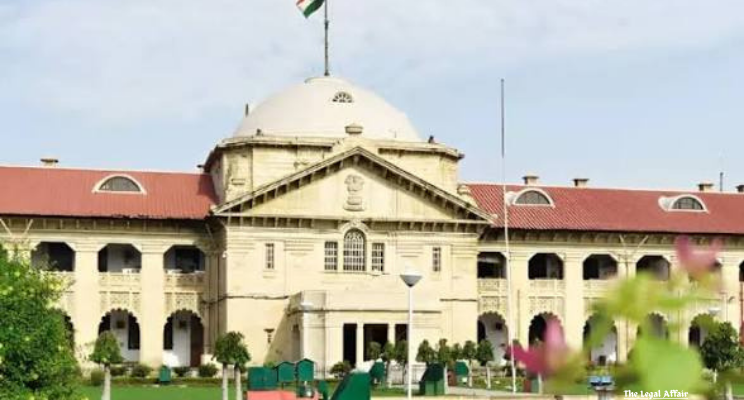
Introduction:
The Allahabad High Court has held that when a public authority cancels an advertisement after issuing a Letter of Intent (LOI), and the cancellation results from the authority’s own mistake rather than any breach by the selected applicant, the applicant cannot be left to bear the financial losses incurred in complying with the conditions of the LOI. Recognising the need for fairness in administrative decision-making, the Court awarded compensation of ₹15,78,486 to a man selected for a retail outlet dealership of Hindustan Petroleum Corporation Limited (HPCL).
A Division Bench comprising Justice Saral Srivastava and Justice Siddharth Nandan moulded the relief under Article 226 of the Constitution of India and directed the Corporation to reimburse the amount spent by the petitioner in preparing the proposed dealership site. The Court held that although the Corporation possessed the authority to cancel the advertisement and the Letter of Intent did not constitute a concluded contract, the petitioner had acted upon the assurance extended by the Corporation and invested money to fulfil the stipulated conditions. Since the cancellation was attributable to an error on the authorities’ part, the financial consequences could not justly be imposed entirely upon the petitioner.
The dispute arose from an advertisement published by HPCL on November 25, 2018, inviting applications for a retail outlet dealership on State Highway 99 in Ghazipur district, Uttar Pradesh. The petitioner applied for the dealership and deposited the prescribed application fee of ₹10,000. He was subsequently selected through a draw of lots conducted on February 1, 2019.
Following his selection, HPCL issued a Letter of Intent dated August 2, 2019. The letter required the petitioner to undertake certain development work at the proposed site, including raising the land to road level and constructing a retaining wall and a compound wall measuring 1.5 metres in height. The LOI also specified that failure to satisfy the stipulated conditions could result in its withdrawal without notice.
Acting on the requirements communicated by the Corporation, the petitioner proceeded to develop the site and incurred expenditure towards fulfilling the conditions. However, by a communication dated March 11, 2021, he was informed that the dealership location had been cancelled. The cancellation came after the petitioner had spent a substantial amount in preparation for establishing the retail outlet.
The controversy arose because the proposed location had already been notified as part of a national highway before HPCL published the advertisement. The relevant notification dated March 6, 2018, had been issued under Section 2(2) of the National Highways Act, 1956. Consequently, the advertisement published on November 25, 2018, contained a defect concerning the status of the road on which the proposed retail outlet was to be established.
The Corporation relied on this circumstance to justify the cancellation. However, the petitioner had neither caused the defect in the advertisement nor been found to have violated any condition of the Letter of Intent. His expenditure had been incurred in response to the Corporation’s own selection process and the conditions communicated to him.
The central question before the High Court was whether the Corporation could rely on its contractual discretion to cancel the dealership location while leaving the selected applicant to absorb the entire financial loss caused by the Corporation’s own mistake. The Court examined the distinction between the power to cancel an advertisement, the contractual status of a Letter of Intent and the obligation to act fairly when an applicant has incurred expenditure in reliance on an official representation.
The Bench concluded that the cancellation itself fell within the Corporation’s contractual discretion, but that this did not mean the petitioner had to bear the resulting losses without a remedy. Invoking its constitutional jurisdiction under Article 226, the Court directed HPCL to pay ₹15,78,486 within one month from the date on which a certified copy of the order was produced. In the event of non-payment within that period, the amount would carry simple interest at 8% per annum until actual payment.
The judgment is significant because it demonstrates that administrative discretion and contractual flexibility do not necessarily extinguish the obligation to address losses suffered by an innocent applicant who has acted upon an official assurance. It also highlights the role of legitimate expectation and constitutional fairness in disputes arising from public-sector commercial decisions.
Arguments of the Parties:
The petitioner approached the Allahabad High Court after HPCL cancelled the proposed retail outlet location despite his selection in the draw of lots and his subsequent compliance with the requirements specified in the Letter of Intent. His grievance was primarily financial: he had invested substantial resources in developing the site because the Corporation had selected him and communicated the conditions that needed to be fulfilled before the dealership could proceed.
The petitioner’s case rested on the sequence of events. HPCL had first invited applications for the dealership, accepted his application and prescribed fee, selected him through the draw of lots and subsequently issued the LOI. The letter required him to undertake specific construction and development work at the proposed location. In response, he incurred expenditure to prepare the site in accordance with the communicated conditions.
The petitioner maintained that the cancellation was not occasioned by any default on his part. There was no allegation, according to the case summary, that he had failed to satisfy a condition imposed upon him or that he had acted contrary to the requirements of the LOI. Instead, the problem arose because the location had already been notified as a national highway before HPCL issued the advertisement.
The petitioner could not reasonably have been expected to discover or rectify an administrative error committed by the Corporation in identifying and advertising the proposed dealership location. The relevant information concerning the road’s legal status and the decision to publish the advertisement fell within the sphere of the authorities responsible for the dealership process.
From the petitioner’s perspective, the expenditure was not incurred voluntarily in the absence of any official assurance. It followed his selection and the issuance of a document setting out the conditions for proceeding with the dealership. The development work was undertaken for the specific purpose of fulfilling those conditions and advancing the proposed commercial arrangement.
The petitioner also placed before the Court a detailed break-up of the expenditure amounting to ₹15,78,486, incurred between February 1, 2019, and March 11, 2021. A photograph of the developed site was also produced to support his claim that work had been undertaken in preparation for the proposed retail outlet.
The documentary material was important because it connected the claimed financial loss with the steps taken in response to the LOI. The petitioner was not merely asserting that the cancellation had caused him disappointment or deprived him of an anticipated business opportunity. He sought reimbursement for identifiable expenditure allegedly incurred in developing the site in accordance with the Corporation’s requirements.
Another important aspect of his case was that the Corporation’s counter-affidavit did not specifically deny the expenditure claimed by him. The absence of a specific denial strengthened the evidentiary basis on which the Court considered the amount of compensation.
The petitioner’s claim therefore raised a question of fairness in the exercise of public power. Even if HPCL was legally entitled to withdraw the advertisement, the petitioner argued, the existence of that power should not allow the Corporation to avoid the financial consequences of its own mistake after an applicant had acted upon the official process and incurred expenditure in good faith.
The Corporation, on the other hand, relied on Clause 14 of the general conditions accompanying the advertisement. This clause permitted HPCL to cancel the advertisement at its sole discretion without assigning reasons. According to the Corporation’s position, the cancellation was within the scope of the authority reserved to it under the conditions governing the dealership process.
HPCL also relied on the notification dated March 6, 2018, issued under Section 2(2) of the National Highways Act, 1956. The notification had declared the relevant stretch of road to be a national highway before the dealership advertisement was published on November 25, 2018. The Corporation argued that this circumstance rendered the advertisement defective and justified its decision to cancel the location.
The Corporation’s argument was essentially that it could not be compelled to continue with a dealership advertisement that had been issued in circumstances affected by the road’s prior notification as a national highway. The existence of the defect provided the context for withdrawing the proposed location, notwithstanding the earlier selection of the petitioner and the issuance of the LOI.
HPCL further relied on the legal character of a Letter of Intent. Its counsel contended that an LOI does not ordinarily amount to a concluded contract because it does not necessarily constitute an unconditional offer accepted by the other party. The proposed arrangement remained subject to the fulfilment of specified conditions, and the issuance of the LOI did not, by itself, create an unconditional contractual obligation to award the dealership.
This argument was relevant because the petitioner sought monetary relief even though the dealership had not reached the stage of a completed contractual relationship. The Corporation’s position sought to distinguish the preliminary nature of the LOI from a binding agreement under which contractual damages might ordinarily be claimed.
The Corporation also relied on the conditions attached to the LOI, including the requirement to develop the site to road level and construct the specified walls. The letter itself provided that it could be withdrawn without notice if the stipulated conditions were not met. The legal issue, however, was whether that condition could justify leaving the petitioner without compensation when the cancellation was not based on his breach.
The dispute thus required the Court to consider two competing considerations. On one hand, HPCL relied on the discretion expressly reserved under the advertisement and the preliminary character of the LOI. On the other, the petitioner relied on the expenditure incurred in response to an official selection and the absence of any default attributable to him.
The Court was required to determine whether the Corporation’s authority to cancel the advertisement necessarily meant that it could retain the benefit of its contractual discretion without addressing the losses caused to an applicant who had acted upon its representations. The issue was not simply whether the dealership could be forced to proceed, but whether a monetary remedy was justified when the proposed arrangement was abandoned because of an error attributable to the Corporation.
Court’s Judgment:
The Allahabad High Court allowed the writ petition and awarded the petitioner compensation of ₹15,78,486. The Division Bench of Justice Saral Srivastava and Justice Siddharth Nandan held that although HPCL had the authority to cancel the advertisement under Clause 14 and the Letter of Intent did not constitute a concluded contract, the petitioner could not fairly be made to bear the financial loss arising from an administrative mistake for which he was not responsible.
The Court first considered the Corporation’s reliance on Clause 14 of the advertisement. The clause authorised HPCL to cancel the advertisement at its sole discretion without assigning reasons. The Bench accepted that the withdrawal of the advertisement was within the Corporation’s power under the applicable conditions.
This finding was important because the Court did not treat the cancellation as automatically invalid merely because the petitioner had already been selected and had incurred expenditure. The Corporation’s contractual discretion remained relevant, particularly because the advertisement had been issued in circumstances affected by the earlier notification of the road as a national highway.
The Court also accepted the distinction between a Letter of Intent and a concluded contract. An LOI does not necessarily amount to a firm or unconditional offer capable of being treated as a completed contractual commitment. Its legal effect depends on its terms and the circumstances in which it is issued. Where further conditions must be fulfilled before a final agreement can be concluded, the LOI may remain a preliminary step in the contractual process.
However, the Court did not consider these propositions sufficient to resolve the petitioner’s claim. The absence of a concluded contract did not automatically eliminate the consequences of the Corporation’s own conduct, particularly when the petitioner had acted upon the LOI and incurred expenditure in complying with its requirements.
The central feature of the judgment was the distinction between the Corporation’s power to cancel the proposed dealership and the fairness of leaving the financial consequences entirely to the selected applicant. The Court recognised that the two questions were not identical. An authority may possess the legal power to withdraw an advertisement without necessarily being entitled to disregard the losses suffered by a person who relied on the official process in good faith.
The Bench observed that the defect in the advertisement arose because the relevant road had already been notified as a national highway under the National Highways Act, 1956, before HPCL issued the advertisement. The notification was dated March 6, 2018, whereas the advertisement inviting applications was published on November 25, 2018.
The chronology demonstrated that the legal status of the road predated the dealership advertisement. The petitioner had not created the defect or caused the Corporation to advertise the location. The responsibility for identifying and advertising a suitable location rested with the authority administering the dealership process.
The Court therefore treated the cancellation as arising from a mistake attributable to the authorities rather than a failure by the petitioner to comply with the conditions of the LOI. This distinction was fundamental to the relief granted.
The Letter of Intent had required the petitioner to develop the site to road level and construct a retaining wall and a compound wall of 1.5 metres. Those conditions were communicated to him after his selection in the draw of lots. The petitioner proceeded to undertake the work in preparation for the proposed retail outlet.
The Court recognised that such expenditure had been incurred in response to the Corporation’s own actions. The petitioner had participated in the selection process, been chosen through the draw of lots and received a formal communication specifying what needed to be done to advance the proposed dealership.
The LOI thus carried significance even though it did not amount to a concluded contract. It conveyed an official representation concerning the next steps in the process and induced the petitioner to undertake expenditure directed towards satisfying the prescribed requirements.
In this context, the Bench relied on the principle of legitimate expectation. The doctrine recognises that when a public authority makes a representation or follows a course of conduct that reasonably leads a person to expect a particular procedural or substantive treatment, the authority may be required to act fairly when departing from that position.
Legitimate expectation does not invariably guarantee that a proposed benefit must ultimately be granted. Nor does it prevent a public authority from changing its decision where the law and circumstances justify such a change. However, public authorities must exercise their powers fairly and cannot disregard the consequences of their conduct without considering the interests affected.
In the present case, the Court recognised that the petitioner could not claim an absolute right to insist that HPCL proceed with the dealership regardless of the defect in the advertisement. Nevertheless, the Corporation’s own conduct had led him to incur expenditure in anticipation of establishing the retail outlet.
The Court therefore considered whether relief could be moulded to address the financial consequences of the cancellation without compelling the Corporation to continue with a dealership arrangement that it was entitled to withdraw. This approach enabled the Court to distinguish between enforcing the proposed commercial arrangement and providing a remedy for the loss caused by the authority’s own mistake.
Article 226 of the Constitution empowers High Courts to issue appropriate writs, directions and orders for the enforcement of fundamental rights and for other purposes within the scope of their constitutional jurisdiction. The power is discretionary and may be exercised to ensure that public authorities act lawfully and fairly.
The Court invoked this constitutional jurisdiction to mould the relief in the circumstances of the case. Rather than directing HPCL to proceed with the dealership despite the defect in the advertisement, the Bench awarded monetary compensation corresponding to the expenditure incurred by the petitioner in complying with the LOI.
The Court observed that it would not be just to require the petitioner to bear the losses arising from investments made to satisfy the conditions of the Letter of Intent when the cancellation was not occasioned by any fault on his part. It specifically distinguished the circumstances from a case in which an LOI is withdrawn because the applicant has breached one of its conditions.
This distinction demonstrates that the Court’s reasoning was based on the allocation of responsibility for the loss. Where an applicant fails to comply with a condition imposed by the authority, the withdrawal of the LOI may have a different legal consequence. Here, however, the cancellation arose because the location had been advertised despite the road’s prior notification as a national highway.
The petitioner had no responsibility for that administrative error. The Court considered it unfair to leave him to absorb the entire financial loss merely because the LOI had not matured into a final contract. The absence of a concluded contract did not, in the Court’s assessment, justify ignoring the expenditure incurred in reliance on the official process.
The judgment also highlights the importance of legitimate expectations in public-sector commercial dealings. Public authorities frequently conduct selection processes for dealerships, licences and other commercial opportunities. Applicants may be required to undertake preparatory work, submit documents, arrange facilities or incur expenditure before a final agreement is concluded.
Although participation in such a process does not automatically guarantee the award of a contract, authorities must ensure that the process is conducted with due care. Where a public body makes an error that leads an applicant to incur substantial expenditure, the legal consequences cannot always be resolved solely by referring to a clause permitting cancellation.
The Court’s approch was particularly significant because the petitioner