


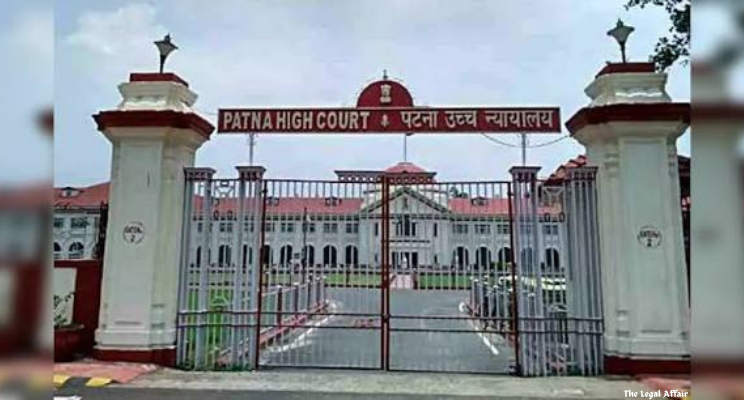
Introduction:
The Patna High Court has held that the mere fact that a Covid-19 test was conducted by a laboratory that was not formally authorised or empanelled by the State Government cannot, by itself, be used as a ground to deny ex-gratia compensation to the family of a person who died of Covid-19. The Court emphasised that the eligibility conditions governing Covid-19 compensation do not prescribe the accreditation, empanelment or authorisation status of the laboratory as a disqualifying requirement.
Justice Alok Kumar delivered the judgment while hearing Aneesh Singh and Ors. v. State of Bihar and Ors., Civil Writ Jurisdiction Case No. 6457 of 2024. The eight petitioners had approached the High Court seeking payment of ₹4 lakh each under the Bihar Covid Sahayata Yojana, 2022, following the deaths of their respective family members during the second wave of the Covid-19 pandemic.
The petitioners’ family members had contracted Covid-19 during the second wave and died between April 20, 2021 and May 20, 2021. The deaths occurred while the deceased persons were either undergoing treatment or remaining in home isolation in the Mokama and Maranchi areas of Patna. Importantly, the deaths were reflected in the serial list of Covid-19 deaths compiled and forwarded by the State Health Society, Bihar.
Following the deaths, the petitioners submitted claims before the concerned authorities seeking the ex-gratia assistance available under the State’s Covid-19 relief scheme. Their claims were supported by relevant documents, including death certificates, medical prescriptions and bank statements. However, the authorities rejected the claims on the ground that the Covid-19 tests relied upon by the petitioners had been conducted at a laboratory situated at Mokama which had not been formally authorised by the State Government for conducting RT-PCR, RAT or TruNat tests.
The controversy before the High Court, therefore, was not primarily about whether the deceased persons had actually tested positive for Covid-19. Rather, the dispute concerned whether the administrative status of the laboratory which conducted the test could independently determine the eligibility of the bereaved families for ex-gratia compensation.
The Court examined this question against the backdrop of the eligibility criteria laid down by the Supreme Court in Gaurav Kumar Bansal v. Union of India & Anr. Those criteria contemplated, among other cases, situations where a deceased person had been diagnosed Covid-19 positive through an RT-PCR, molecular test or Rapid Antigen Test, or had been clinically determined to be a Covid-19 case, provided the death occurred within the prescribed period following such diagnosis or clinical determination.
While examining these conditions, the High Court found that there was no requirement stating that a Covid-19 test would be disregarded merely because the laboratory conducting it had not been formally authorised by the State Government. The Court consequently held that the authorities could not introduce such an additional disqualification into the eligibility framework.
The judgment also relied upon the High Court’s earlier decision in C.W.J.C. No. 13671 of 2023, Sushila Devi & Manoj Kumar v. State of Bihar & Ors., in which a similar issue had arisen concerning Covid-19 tests conducted at a laboratory that was not formally notified or authorised by the State Government.
The High Court’s decision is significant because it places emphasis on the beneficial and welfare-oriented nature of Covid-19 ex-gratia schemes. According to the Court, the purpose of such compensation is to provide financial assistance to families who lost their members during an unprecedented public health emergency. A technical condition that is not found in the governing eligibility criteria cannot ordinarily be imported to defeat such a claim.
The Court ultimately directed the authorities to reconsider the claims of all eight petitioners within four weeks. If the petitioners were found otherwise eligible, the authorities were directed to release the compensation payable under the Bihar Covid-19 Sahayata Yojana, 2022, along with consequential ex-gratia benefits, within a further period of four weeks.
Arguments of the Parties:
The petitioners challenged the rejection of their compensation claims primarily on the ground that the authorities had relied upon a condition which was not part of the prescribed eligibility criteria. According to the petitioners, the rejection was based solely on the fact that the Covid-19 tests had been conducted at a laboratory located at Mokama which had not been formally authorised by the State Government.
Counsel for the petitioners submitted that the authorities had never disputed the genuineness of the Covid-19 test reports themselves. There was also no dispute regarding the fact that the petitioners’ family members had died during the relevant period and that their deaths were connected with Covid-19. The rejection, therefore, did not arise from any finding that the medical records were fabricated, unreliable or otherwise incapable of establishing Covid-19 infection.
The petitioners contended that their claims were supported by contemporaneous documentary material. The death certificates recorded the deaths, medical prescriptions demonstrated the treatment received by the deceased persons, and the bank statements and other documents accompanied the applications for compensation. Most importantly, the deaths had been included in the serial list of Covid-19 deaths compiled and forwarded by the State Health Society, Bihar.
It was therefore argued that once the substantive requirements relating to Covid-19 diagnosis and death were satisfied, the authorities could not reject the claims merely because the testing laboratory did not possess a particular administrative authorisation.
The petitioners further relied upon the High Court’s earlier decision in Sushila Devi & Manoj Kumar v. State of Bihar & Ors., arising out of C.W.J.C. No. 13671 of 2023. According to the petitioners, the earlier case involved materially similar facts. The family members of those petitioners had also undergone Covid-19 testing at the same laboratory, and their claims had initially been rejected on substantially the same ground.
However, the similarly situated claimants in that case had subsequently been granted reconsideration and compensation. The petitioners argued that once the High Court had rejected the laboratory-authorisation objection in a materially similar situation and the authorities had thereafter released compensation to those claimants, the present petitioners could not be treated differently without a legally sustainable distinction.
The argument was therefore also founded on the principle of equality. The petitioners submitted that persons who were similarly situated and whose claims arose from the same pandemic circumstances and the same testing facility could not be subjected to different standards for receiving welfare assistance.
The petitioners effectively urged the Court to examine the substance of their claims rather than permit a technical objection concerning the administrative status of the laboratory to override the medical and governmental records available on record.
On behalf of the State, however, the rejection of the claims was defended on the basis of the procedure adopted by the competent authorities. The State submitted that the claims had not been rejected casually or by an individual officer without examination. Rather, they had been considered first by the District Committee headed by the Civil Surgeon, Patna, and thereafter by the State-level three-member Committee constituted by the Executive Director of the State Health Samiti, Bihar.
The State’s counsel submitted that these committees had examined the claims in accordance with the applicable guidelines and had concluded that the Covid-19 tests relied upon by the petitioners had been conducted at a laboratory which was not authorised for RT-PCR, RAT or TruNat testing.
According to the State, therefore, the reports generated by such a laboratory could not be treated as satisfying the prescribed conditions for granting ex-gratia compensation under the scheme. The authorities had accordingly treated the laboratory’s lack of authorisation as a deficiency affecting the eligibility of the claims.
The State’s position was essentially that compliance with the prescribed testing framework was an important safeguard in determining whether a death was attributable to Covid-19 for purposes of compensation. Since the laboratory in question was not formally authorised by the State Government, the authorities considered the test reports insufficient for establishing eligibility under the scheme.
The State thus defended the administrative decisions by relying on the scrutiny undertaken by the competent committees and the regulatory status of the testing facility. The issue before the High Court consequently required reconciliation between the State’s administrative framework for Covid-19 testing and the substantive eligibility criteria governing ex-gratia assistance.
The Court was therefore required to determine whether the authorities were entitled to treat laboratory authorisation as an independent condition of eligibility, even though such a condition did not expressly appear in the eligibility criteria considered by the Supreme Court.
Court’s Judgment:
The Patna High Court examined the dispute by first identifying the governing eligibility framework for Covid-19 ex-gratia compensation. The Court placed particular reliance upon the criteria laid down by the Supreme Court in Gaurav Kumar Bansal v. Union of India & Anr.
The eligibility framework recognised cases in which the deceased had been diagnosed Covid-19 positive through an RT-PCR test, molecular test or Rapid Antigen Test, as well as cases where the person had been clinically determined to be a Covid-19 case. The criteria also contemplated the requirement concerning the period within which the death occurred following such diagnosis or clinical determination.
The High Court carefully examined the language of these conditions and found that the accreditation, empanelment or authorisation status of the laboratory conducting the test was nowhere specified as an independent ground of disqualification.
The Court made the significant observation that “nowhere in the said eligibility criteria does the accreditation, empanelment or authorisation status of the testing laboratory that conducted the RT-PCR/RAT test find mention as a disqualifying factor.”
This finding went to the heart of the dispute. The Court held that where the governing guidelines identify the circumstances in which a person would be treated as a Covid-19 death for the purpose of compensation, administrative authorities cannot add a new condition which the guidelines themselves do not contain.
In other words, the authorities were required to apply the eligibility criteria as framed and could not expand the grounds of disqualification by introducing an additional technical requirement relating to the testing laboratory.
The Court treated the fact and timing of Covid-19 diagnosis or clinical determination as the material considerations. Where those requirements were supported by contemporaneous medical records and other relevant material, the administrative status of the laboratory could not, standing alone, defeat the claim.
The Court’s reasoning was also informed by the welfare character of the compensation scheme. Covid-19 ex-gratia assistance was intended to provide relief to families that had lost members during an extraordinary public health crisis. Such schemes are remedial and beneficial in character.
The Court therefore cautioned against interpreting the eligibility conditions in a manner that would introduce an additional barrier not found in the governing framework. It observed that to hold otherwise would amount to reading into the Supreme Court’s guidelines a disqualifying condition which the guidelines themselves did not contain.
The Court expressly stated that doing so “would defeat the beneficial and welfare object underlying the ex-gratia scheme.”
The judgment consequently adopts a purposive approach to the interpretation of welfare benefits. While administrative authorities are entitled to verify the genuineness of claims and ensure that public funds are not released on the basis of unreliable or fabricated documents, a technical requirement cannot be elevated into a condition of eligibility unless the governing framework actually makes it one.
The Court then considered its earlier decision in Sushila Devi & Manoj Kumar v. State of Bihar & Ors., C.W.J.C. No. 13671 of 2023. In that case, the High Court had already considered whether an ex-gratia claim could be rejected solely because the Covid-19 test had been conducted at a laboratory that had not been formally notified or authorised by the State Government.
The Court found the earlier decision directly relevant to the controversy before it. The objection raised by the authorities in the present case was materially the same as the objection considered in Sushila Devi. The earlier decision therefore provided a strong basis for determining how the laboratory-authorisation issue was to be treated.
The Court held that the non-authorisation of the laboratory, by itself and without anything more, could not constitute a valid ground for rejecting an otherwise eligible Covid-19 compensation claim.
The expression “by itself” is important. The judgment does not mean that every document produced in support of a Covid-19 compensation claim must automatically be accepted regardless of its authenticity. Authorities retain the power to examine whether the diagnosis was genuine, whether the death satisfied the applicable criteria and whether the supporting medical material was reliable.
What the authorities cannot do is reject the claim solely because the laboratory that conducted the test did not have the administrative authorisation which the authorities sought to rely upon, when that authorisation requirement does not form part of the applicable eligibility criteria.
The High Court next applied this principle to the facts concerning the eight petitioners.
The Court noted that the deaths occurred during the second wave of the pandemic, between April 20 and May 20, 2021. The deceased persons had been undergoing treatment or home isolation in the Mokama and Maranchi areas of Patna. Their deaths were also reflected in the serial list of Covid-19 deaths prepared and forwarded by the State Health Society.
The petitioners had supported their claims with death certificates, medical prescriptions and bank statements. Thus, the claims were not founded merely upon isolated test reports produced independently by the petitioners long after the deaths. There was contemporaneous material supporting the circumstances surrounding the deaths.
The Court further noted that the authorities had rejected the claims solely because the Covid-19 tests had been conducted at a laboratory which had not been authorised for RT-PCR, RAT or TruNat testing.
There was no indication that the authorities had rejected the claims because the Covid-19 reports were found to be fabricated, that the deceased persons had never been diagnosed with Covid-19, or that their deaths otherwise fell outside the applicable period or eligibility conditions.
In these circumstances, the High Court found that the rejection of the claims could not be sustained merely on the ground of laboratory authorisation.
The Court also accepted the petitioners’ argument concerning parity. Since similarly situated persons in the earlier proceedings had obtained reconsideration and compensation after raising the same objection concerning the same laboratory, the present petitioners were entitled to have their claims considered consistently.
The principle of equality requires that similarly situated persons should ordinarily receive similar treatment unless there exists a legally relevant distinction. The Court found no such distinction in the present case.
The Court consequently held that the rejection of the petitioners’ claims was indistinguishable from the ground already rejected in Sushila Devi. The authorities were therefore directed to reconsider the claims rather than mechanically reject them on the basis of the laboratory’s non-authorisation.
Importantly, the High Court did not itself direct immediate payment of ₹4 lakh to every petitioner without further scrutiny. Instead, it directed the competent authorities to reconsider the claims of all the petitioners within four weeks.
The Court further directed that if, upon reconsideration, the petitioners were found eligible under the applicable criteria, the compensation payable under the Bihar Covid-19 Sahayata Yojana, 2022, together with consequential ex-gratia benefits, should be released within a further period of four weeks.
This approach preserves the authority of the administrative mechanism while removing the legally unsustainable ground on which the claims had been rejected. The authorities remain entitled to examine the claims in accordance with the applicable eligibility requirements, but they cannot treat laboratory non-authorisation as an automatic disqualification.
The judgment thus strikes a balance between administrative scrutiny and the beneficial purpose of the compensation scheme. It does not eliminate the requirement that claimants establish their entitlement. Rather, it ensures that the determination of entitlement is made on the basis of the conditions actually prescribed by law and the applicable governmental guidelines.
The ruling also carries wider significance for welfare schemes administered through detailed eligibility criteria. Administrative authorities may be required to verify claims carefully, particularly where public money is involved. However, such scrutiny must remain within the boundaries of the governing framework. An authority cannot create a new substantive disqualification merely because it considers that requirement administratively desirable.
The Patna High Court’s decision therefore reinforces the principle that beneficial schemes should not be defeated by importing technical conditions that are absent from the prescribed eligibility criteria. In the context of Covid-19 compensation, where families suffered the loss of their members during an unprecedented health emergency, the Court considered the substance of the claims more important than an administrative defect relating to the status of the testing laboratory.
By directing reconsideration within a fixed period and providing a further fixed period for payment if eligibility is established, the Court has also sought to prevent the claims from being subjected to indefinite administrative delay.
The decision in Aneesh Singh and Ors. v. State of Bihar and Ors. consequently establishes that the lack of formal authorisation of a laboratory cannot, standing alone, become a new ground to deny Covid-19 ex-gratia compensation when the applicable eligibility criteria do not prescribe it as a disqualification. The Court’s reasoning is firmly anchored in the language of the governing criteria, the Supreme Court’s decision in Gaurav Kumar Bansal, the High Court’s earlier ruling in Sushila Devi, and the welfare-oriented purpose of the compensation scheme.
The matter ultimately returns to the competent authorities for reconsideration. The petitioners’ entitlement will depend upon satisfaction of the prescribed substantive conditions, but the laboratory-authorisation objection, by itself, can no longer be used as a basis for rejecting their claims.