


Introduction:
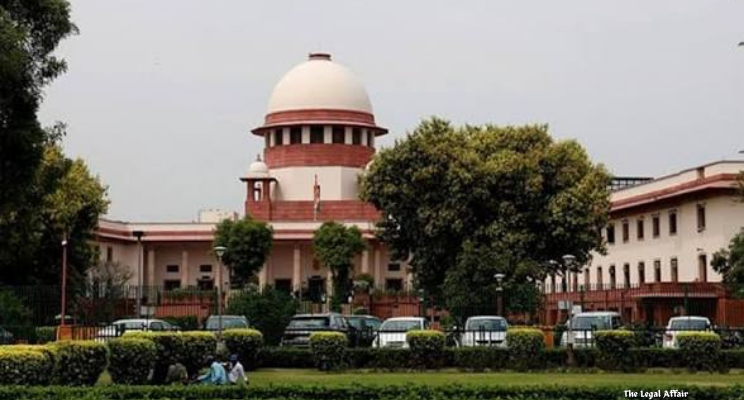
TThe Supreme Court has directed the Central Bureau of Investigation (CBI) to proceed with a Preliminary Enquiry (PE) into issues surrounding the construction of the DLF Primus project in Gurugram, particularly the alleged deviation from the project plan and brochure shown to homebuyers.
A Bench comprising Justice Ahsanuddin Amanullah and Justice R. Mahadevan said a housing project must be delivered in accordance with the representations made to prospective buyers through the brochure and plan. The Court observed that the 24-metre-wide road shown as cutting across the DLF Primus project does not exist in the manner represented in the original plan.
The exercise to determine whether the nature of the road has been altered was entrusted by the Court to Saurabh Gupta IPS of the Central Bureau of Investigation(CBI). In the CBI officer’s status report dated August 3, 2026, it was found that the road did not exist as such within the project. According to the report and material placed before the Court, portions of the earmarked area were being used for parking, while other portions had been developed as a green track.
At the outset, the bench took the view that the road in the middle of the project is not in conformity with the original brochure, which was promised to the consumers.
“We pause here to indicate that from the very beginning, this Court has been emphasizing that the project, as sold to the consumers, was required to be delivered/constructed strictly in accordance with the representations made in the brochure/plan provided by DLF to the prospective buyers/consumers. A comparison of the same with the report and photographs contained in the Status Report dated 03.08.2026 leaves no manner of doubt that the 24-metre-wide road in the middle of the project is not in conformity with the original plan/brochure.”
The bench further noted that the deviation is not merely minor but substantial, because of the 147-metre stretch earmarked for the road, about 52 metres has been developed as a green patch, while the remaining area is being used for parking by the residents.
“Thus, out of the said 147-metre stretch, approximately 100 metres is either a green patch or is being used for parking, constituting almost two-thirds of the entire stretch. We are at a loss to understand why, despite repeated opportunities having been granted to ensure that the project is brought into conformity with what was represented in the brochure, the aforesaid deviation has not yet been rectified.”
The Court equally expressed dissatisfaction with the manner in which the State of Haryana and its officials handled the acquisition of the 100-metre portion of the land required for the road to connect the project with the 60-metre sector road. It said that the government failed to take effective steps to overcome the impediment and bring an end to any pending litigation which may come in the way of holding elections to the Residents Welfare Association.
CBI Officer Gupta IPS, who was entrusted with the fact-finding, submitted that as per the July 21 order, he was granted two months to submit a Preliminary Enquiry report. He urged that if additional manpower is assigned, it would expedite the process.Accordingly, the bench directed the CBI Director to assign two additional inspectors to assist Gupta.
“The Director, CBI, is accordingly requested to assign two additional Inspectors to assist Mr. Saurabh Gupta in completing the PE.”
However, the bench warned that if, on the next hearing, the entire project is not completed as per the representation made in the brochure, the Court will take serious action.
“It is made clear that if by the next date of hearing the entire project is not completed in all respects in accordance with the representations made in the brochure, this Court shall proceed to pass appropriate orders. The State and its officials are also cautioned that if by the next date, necessary steps in all respects are not taken by them, this Court shall not show any further indulgence.”
Lastly, the Additional Advocate General for Haryana has been asked to file detailed responses to the affidavits filed by private parties, disclosing the steps taken generally to ensure all constructions are being carried out in accordance with law.
The Supreme Court has reaffirmed that universities and educational institutions cannot disregard statutory regulations, government guidelines and prescribed pay scales governing the service conditions of teaching staff. In Dr. Harish Chandra Tiwari v. Union of India & Others, the Supreme Court held that a university cannot deny an eligible teacher the revised pay scale prescribed under the applicable Ministry of Human Resource Development (MHRD) guidelines and University Grants Commission (UGC) regulations by merely describing the pay scale mentioned in a recruitment advertisement as a typographical error. The judgment was delivered by a Bench comprising Justice Aravind Kumar and Justice Vipul M. Pancholi.
The dispute arose from the appointment of the appellant as an Associate Professor at Uttarakhand Sanskrit University, Haridwar. The controversy primarily concerned the pay scale to which the appellant was entitled from the date of his appointment. While the recruitment advertisement expressly prescribed the pay scale of an Associate Professor as Rs. 37,400–67,000 with an Annual Grade Pay (AGP) of Rs. 9,000, the appointment letter subsequently issued to the appellant mentioned a substantially lower pay scale of Rs. 15,600–39,100 with a Grade Pay of Rs. 8,000.
The University sought to justify the discrepancy by contending that the higher pay scale appearing in the advertisement was the result of a typographical error. The appellant, however, maintained that the advertised pay scale was not an isolated or accidental figure but was consistent with the revised pay structure introduced pursuant to the recommendations of the Sixth Central Pay Commission and the corresponding MHRD and UGC guidelines governing teachers and equivalent cadres in universities and colleges.
The issue assumed significance because the revised pay scale was not merely a matter of administrative discretion. The MHRD had communicated the revision of pay scales to the UGC in 2008 following the recommendations of the Sixth Central Pay Commission. The revised structure was intended to govern teaching posts in universities and colleges covered by the relevant regulatory framework. Thus, the controversy before the Supreme Court was not simply about whether an employer could correct a clerical mistake in an advertisement. It concerned whether an educational institution could use an alleged error in its recruitment advertisement to deny an employee a benefit that was otherwise supported by the governing regulations and government guidelines.
The appellant had initially sought correction of his pay through representations before the competent authorities. The matter ultimately reached the High Court. During the course of the proceedings, the State Government clarified that candidates selected for the post of Associate Professor were entitled to the pay band prescribed under the MHRD and UGC norms, namely Rs. 37,400–67,000 with an AGP of Rs. 9,000. Despite this clarification, the appellant was granted the revised pay scale only with effect from 27 December 2018 and not from his original date of appointment, namely 15 September 2016.
The appellant again approached the High Court challenging the denial of the revised pay from the date of appointment. The High Court dismissed his claim, reasoning that an employee could not claim a benefit merely because of a typographical error in an advertisement. The appellant thereafter approached the Supreme Court, which was called upon to determine whether the University was justified in treating the advertised pay scale as a mistake and, consequently, in denying the appellant the revised scale from the date of his appointment.
The Supreme Court ultimately answered the issue in favour of the appellant. It held that the University was bound by the applicable MHRD guidelines and UGC regulations and could not bypass the revised pay structure. The Court also found that the documentary material on record demonstrated that the higher pay scale was applicable to the post even before the appellant’s appointment. Consequently, the appellant was held entitled to the revised pay scale from 15 September 2016, along with the consequential arrears.
Arguments of the Parties:
The appellant challenged the University’s decision primarily on the ground that the pay scale mentioned in the recruitment advertisement was neither an isolated mistake nor inconsistent with the governing legal framework. According to the appellant, the advertisement clearly prescribed Rs. 37,400–67,000 with an AGP of Rs. 9,000 for the post of Associate Professor. He had applied for and been selected to the post on the basis of the terms and conditions reflected in the advertisement.
The appellant contended that the subsequent appointment letter could not lawfully reduce the benefits attached to the post by prescribing a lower pay scale contrary to the applicable MHRD and UGC norms. The advertisement, according to him, merely reflected the revised pay scale that was already applicable to the post. Therefore, even if the University genuinely believed that the figure in the advertisement was erroneous, the applicable statutory and regulatory framework independently entitled him to the revised scale.
The appellant further relied upon the fact that the MHRD had communicated the revised pay structure to the UGC pursuant to the recommendations of the Sixth Central Pay Commission. The revised structure covered teachers and equivalent cadres in universities and colleges. The appellant’s case was therefore that the University’s obligation did not arise solely from the advertisement. It arose from the governing regulatory framework itself.
Another significant aspect of the appellant’s argument was the subsequent clarification issued by the State Government. Once the State authorities clarified that Associate Professors were entitled to the MHRD and UGC pay scale of Rs. 37,400–67,000 with an AGP of Rs. 9,000, there was little justification for limiting the benefit to a date in 2018. The appellant had been appointed in 2016, and the revised scale was applicable to the post at that time.
The appellant also challenged the reasoning that he was attempting to obtain an undue benefit from a typographical mistake. He argued that there was no question of granting him an accidental or unintended benefit because the figure appearing in the advertisement corresponded with the revised pay structure prescribed for the post. The University could not characterize a legally applicable pay scale as an error merely because its subsequent appointment letter contained a different figure.
The appellant’s position was further strengthened by the principle that where recruitment conditions are governed by statutory rules or regulations, an administrative authority cannot act contrary to those rules. An appointment letter, being an administrative document, could not override the governing regulatory framework. Similarly, an alleged clerical or typographical mistake could not be used to defeat a right arising under applicable regulations.
On the other hand, the respondents, including the University, sought to defend the lower pay scale mentioned in the appointment letter. Their principal contention was that the higher figure appearing in the advertisement was a typographical or clerical mistake. According to the respondents, the appellant could not claim a financial benefit merely because an erroneous figure happened to be printed in the recruitment advertisement.
The respondents essentially sought to distinguish between an inadvertent error in the advertisement and the actual terms under which the appellant was appointed. Their case was that the appointment letter correctly prescribed the pay scale applicable to the post and that the appellant had accepted the appointment on those terms. From this perspective, allowing the appellant to claim the higher scale from the date of appointment would amount to giving effect to an unintended error.
The respondents also relied upon the reasoning adopted by the High Court, which had declined to extend the benefit of what it considered to be a typographical error. The underlying submission was that an error in an advertisement should not become a source of an enforceable financial claim against a public institution, particularly where the appointment letter contained a different pay scale.
However, the appellant countered that this argument ignored the distinction between an accidental benefit and a benefit independently supported by statutory or regulatory provisions. The higher pay scale was not merely an amount casually inserted into the advertisement. It corresponded with the revised pay structure communicated under the MHRD framework and recognized by the UGC. Therefore, according to the appellant, the University could not escape its obligation by describing the figure as a typographical mistake.
The dispute before the Supreme Court thus involved a balance between two competing propositions. On one side was the general principle that a genuine clerical mistake should not ordinarily create an unintended financial liability for an institution. On the other was the established principle that an administrative authority must act in accordance with the governing statutory regulations and cannot use an alleged error to defeat a substantive entitlement. The Court was required to determine which principle applied in the circumstances of the case.
Court’s Judgment:
The Supreme Court allowed the appeal and set aside the judgment of the High Court. The Court held that the appellant was entitled to the revised pay scale of Rs. 37,400–67,000 with an AGP of Rs. 9,000 from the date of his appointment, i.e., 15 September 2016.
At the heart of the judgment was the Court’s emphasis on the binding nature of the applicable MHRD guidelines and UGC regulations. The Court made it clear that universities cannot exercise unfettered discretion in determining the pay scales of teaching staff where the relevant statutory and regulatory framework prescribes the applicable scale.
The Court observed that a university has a responsibility to respect and uphold the rights of its teachers. Teaching staff perform an important institutional function by imparting knowledge and educating large numbers of students. In this context, the Court stressed that universities are expected to honour the regulatory framework governing their teachers rather than depart from prescribed standards for reasons that are inconsistent with those regulations.
The Court specifically observed that the University was “estopped from departing from the regulations and guidelines.” This observation is significant because it places the conduct of the University within the broader principle of administrative accountability. A public educational institution cannot selectively follow government and regulatory directions. Where the governing framework prescribes a particular pay structure, the institution must implement it.
The Court also examined the MHRD’s 2008 communication to the UGC concerning the revision of pay scales for teachers and equivalent cadres in universities and colleges. The revision followed the recommendations of the Sixth Central Pay Commission. The Supreme Court noted that the University could not bypass the revised pay scale applicable to the post under this framework.
This aspect of the judgment effectively answered the University’s principal defence. Even assuming that the advertisement contained a mistake, the question could not be resolved merely by looking at the advertisement. The Court had to consider the legal framework governing the post. If the applicable regulations and guidelines prescribed the revised scale, the University remained bound by those provisions.
The Court found that there was “clinching evidence” demonstrating that the post of Associate Professor carried the pay scale of Rs. 37,400–67,000 with an AGP of Rs. 9,000 even before the appellant was appointed. The advertisement itself expressly referred to the revised pay scale. Therefore, the University’s assertion that the higher figure was merely a typographical error could not withstand scrutiny.
The Court’s reasoning is particularly important because it demonstrates that not every error appearing in a recruitment advertisement can automatically be treated as irrelevant. Whether an alleged error can be corrected depends upon the surrounding legal and factual circumstances. If the allegedly erroneous term is consistent with the applicable statutory regulations and government guidelines, and there is other documentary evidence supporting it, the institution cannot simply disown it by calling it a typographical mistake.
The Court further observed that the advertisement clearly stated that the revised pay scale would apply to the post of Associate Professor. This strengthened the appellant’s case. The reference to the revised scale was not merely a numerical discrepancy but part of the recruitment terms concerning the post.
The Supreme Court also drew attention to the fact that the University had unnecessarily subjected the appellant to prolonged litigation. The appellant had been required to approach the authorities and thereafter the courts to secure a benefit that, according to the Court, was already available to him under the applicable framework. The Court viewed this as causing unnecessary hardship to the employee.
The judgment also reinforces an important principle concerning the relationship between recruitment advertisements and statutory regulations. The Court referred to the settled position that where there is abiguity between an advertisement and the governing regulations, the regulations must p