


Introduction:
The Orissa High Court has expressed strong concern over the continuing deterioration of roads in Cuttack, observing that a road is far more than an arrangement of “tar and stone” and constitutes a vital component of the rights guaranteed under Articles 19(1)(d) and 21 of the Constitution. The Division Bench comprising Justice K.R. Mohapatra and Justice V. Narasingh made the observations while monitoring the implementation of directions issued in the suo motu proceedings titled Registrar v. State of Odisha, SUO MOTU W.P.(C) PIL No. 2140 of 2020.
The proceedings have been continuing for several years and have focused on the condition of roads, waterlogging, repairs, maintenance and coordination between the authorities responsible for civic infrastructure in Cuttack city. Despite repeated assurances, compliance affidavits and deadlines, the Court found that the condition on the ground had not improved sufficiently. The Bench expressed particular displeasure that the assurances recorded in successive affidavits had not translated into roads that were actually motorable.
The Court’s latest observations are significant because they place the maintenance of public roads within the constitutional framework of fundamental rights. The Bench described a road as a “lifeline” under Article 19(1)(d), which guarantees citizens the right to move freely throughout the territory of India, read with Article 21, which protects life and personal liberty. In the Court’s view, the practical ability of citizens to move safely and reasonably through a city cannot be separated from the condition of its basic infrastructure.
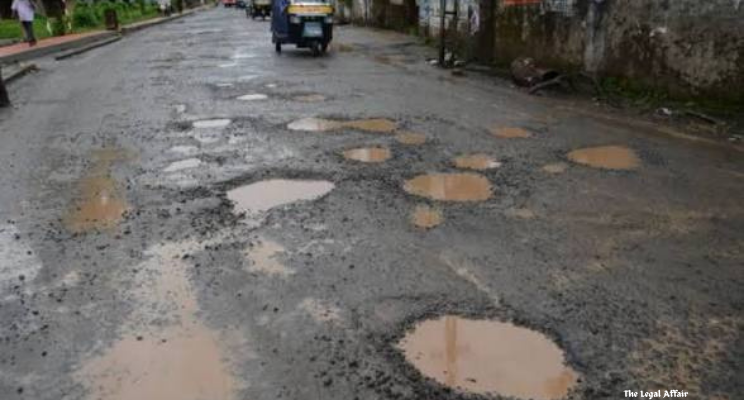
The Court’s concern was not confined to potholes or isolated stretches of damaged roads. Over the course of the proceedings, the Bench had repeatedly received reports concerning poor road conditions, waterlogging, incomplete repairs, inadequate supervision and deterioration of roads soon after repair work. The Court observed that the recurring cycle of potholes, repairs, monsoon and fresh potholes appeared to have become an enduring feature of the city’s road infrastructure.
The Bench expressed this frustration in unusually literary terms, comparing the situation to Shakespeare’s description of grief in King Lear. It observed that repeated judicial concern had been met by what it described as “blissful inaction on the ground”. The Court noted that compliance affidavits had failed to translate themselves into motorable roads and that the situation continued through an “agonising cycle” of potholes, repairs, the onset of monsoon and further potholes.
The proceedings have their origins in directions issued by the Court in September 2024. On September 12, 2024, the Court directed the concerned authorities to take immediate measures for repairing damaged roads in 15 wards and to submit a progress report. The Court’s intervention followed concerns regarding the condition of roads in various parts of Cuttack and the need for coordinated action by the Cuttack Municipal Corporation and other government departments.
The problem was compounded by waterlogging. On October 3, 2024, the Advocates’ Committee brought to the Court’s attention the accumulation of water on roads and its adverse impact on already damaged surfaces. The Court thereafter directed the Commissioner of the Cuttack Municipal Corporation to address the waterlogging problem and undertake necessary repairs.
The subsequent proceedings revealed that responsibility for several roads was not always clearly identified between the Cuttack Municipal Corporation and the Roads and Buildings Department. On October 30, 2024, the Bench questioned the Superintending Engineer of the R&B Division regarding proposed road work in Ward No. 2. The officer informed the Court that the road fell within the jurisdiction of the CMC.
The Court took exception to the apparent lack of coordination between government agencies. It described the situation as a “patent lack of coordination”, observing that one department appeared to be shifting responsibility to another. Such administrative uncertainty, the Court indicated, could not justify continued deterioration of public infrastructure.
The Court also found that the status report before it lacked definite timelines for completion of the proposed works. The CMC Commissioner subsequently assured the Bench that the works identified under the status of roads would be completed by the end of November 2024. The Court, however, noted that this was not the first deadline given by the Commissioner. An earlier assurance had reportedly been that the works would be completed by Durga Puja, but that commitment had not been fulfilled.
The proceedings thereafter continued through multiple compliance reports and judicial directions. In December 2024, the Court considered a report submitted by the City Engineer stating that repair and reconstruction work had been undertaken. According to the report, 64 out of 105 roads and drain works had been completed. Six roads fell within the R&B Department, while the remaining roads were placed in categories including private roads, roads already in good condition and roads falling under other classifications.
The Court’s scrutiny intensified in 2025. On August 21, 2025, the Bench noted that the poor condition of Cuttack’s roads was repeatedly being highlighted by print and electronic media. The Court observed that roads which had been repaired had deteriorated with “alarming alacrity”, raising concerns about the quality of the work and the adequacy of supervision.
The Bench consequently stressed the need for accountability of contractors responsible for substandard work. It also emphasised the importance of incorporating appropriate contractual provisions, including defect-liability mechanisms, so that the cost of repairing defective work could be recovered from contractors where the required standards were not maintained.
The Court subsequently sought greater transparency regarding road development and expenditure. It directed the CMC to provide ward-wise information concerning sanctioned funds, the condition of roads repaired during 2024 and the identity of Junior Engineers who had certified the completed works.
When the CMC later stated that roads requiring repair had been identified but failed to annex the list to its affidavit, the Court took serious exception. The Bench prima facie described the nondisclosure as a “brazen attempt to escape scrutiny”.
Against this prolonged background, the Court’s latest order reflects judicial frustration with a process in which assurances and affidavits have repeatedly been filed but visible improvements have remained inadequate. The Bench has therefore continued to monitor the matter and has directed the Advocates’ Committee to independently inspect arterial roads in the relevant wards.
The Court’s approach demonstrates that continuing mandamus in public interest litigation is not limited to issuing a one-time direction. Where implementation remains incomplete, the constitutional court can continue monitoring compliance, call for affidavits, summon senior officials and require objective verification of claims made by administrative authorities.
Arguments of the Parties:
The principal concern before the Court has been the continuing failure of the authorities to ensure proper repair and maintenance of roads in Cuttack. The proceedings have involved the Cuttack Municipal Corporation, the Roads and Buildings Department and other governmental authorities responsible for roads, drainage and urban development.
The authorities have repeatedly placed before the Court affidavits and status reports explaining the steps taken to repair damaged roads. The CMC informed the Court on various occasions about proposed works, technical sanctions, estimates and completed repairs. It also assured the Bench on more than one occasion that identified works would be completed within specified timelines.
The authorities also relied upon administrative decisions taken to accelerate road development. On August 26, 2025, the CMC informed the Court that, pursuant to a decision taken at a council meeting, proactive measures had been initiated with the objective of completing the relevant works before Durga Puja.
The CMC Commissioner further informed the Court about arrangements concerning roads falling within different administrative jurisdictions. In relation to roads in KDA Section 13, the Commissioner, who was also serving as Vice Chairman of the Cuttack Development Authority, stated that the roads would be handed over to the CMC for maintenance after completion of repair work.
The authorities also informed the Court about the preparation of a detailed project report. The Works Department placed before the Bench a special proposal concerning repairs to roads under the R&B Division and filed an affidavit outlining the steps taken and the proposed timeline.
These submissions reflected the administrative position that action was being taken progressively and that responsibility for road maintenance was being addressed through coordination between the relevant departments.
The authorities could also point to measurable progress. A December 2024 compliance report stated that 64 out of 105 roads and drain works identified for action had been completed. Other roads were stated to fall under the R&B Department or other categories, including private roads and roads already considered to be in satisfactory condition.
The authorities therefore sought to demonstrate that the Court’s directions were not being ignored and that substantial work had been undertaken in response to the judicial monitoring.
However, the Court’s concern was that the existence of compliance reports did not necessarily establish effective compliance. The Bench repeatedly distinguished between statements contained in affidavits and the actual physical condition of roads on the ground.
This distinction became particularly important when roads repaired during an earlier period reportedly deteriorated rapidly. The Court expressed concern that such deterioration could indicate poor-quality construction, inadequate supervision or failure to enforce contractual standards.
The Bench therefore stressed the need to hold contractors accountable where road works did not meet prescribed standards. It suggested that contracts should contain appropriate defect-liability provisions capable of ensuring that contractors bear responsibility for defective work and that public funds are not repeatedly spent repairing the same defects.
The Court also required greater disclosure from the authorities. It sought ward-wise details of sanctioned funds and the present condition of roads repaired in 2024, together with the names of the Junior Engineers who had certified the works. This was aimed at creating a clear chain of responsibility and allowing the Court to assess whether public expenditure had produced durable results.
The failure to annex the list of roads allegedly identified for repair attracted particularly strong criticism. The Bench considered that nondisclosure potentially impeded judicial scrutiny and described it prima facie as a “brazen attempt to escape scrutiny”.
The Court’s concerns also extended to the division of responsibility between the CMC and R&B Department. During the proceedings, the Bench encountered an apparent dispute concerning whether particular roads fell within municipal or departmental jurisdiction. The Court found such uncertainty unacceptable, particularly when residents were facing continuing difficulties because of damaged roads.
The Court’s position was effectively that jurisdictional disputes between government agencies cannot become an excuse for failing to maintain public infrastructure. Where several public authorities exercise responsibilities over different categories of roads, those authorities must coordinate to ensure that the public does not suffer because of administrative boundaries.
The Advocates’ Committee also played an important role in the proceedings. After concerns persisted regarding the actual condition of roads, the Court directed the Committee to visit the respective wards and independently report upon arterial roads. This mechanism enabled the Court to obtain information beyond the formal compliance affidavits submitted by the authorities.
The Court’s decision to seek independent verification demonstrates its concern that compliance must be measured by actual results rather than merely by administrative assurances.
The authorities also gave assurances at the highest administrative level. The Additional Chief Secretary, Housing and Urban Development Department, Government of Odisha, assured the Court that necessary measures would be taken and informed the Bench that a detailed project report had been prepared.
The Court acknowledged the seniority and responsibility of the officers giving these assurances. Nevertheless, it expressed reluctance to accept further assurances without visible results. The Bench stated that it could not continue to place “sanguine trust” in assurances unless they translated into tangible improvements on the streets of Cuttack.
The Court’s criticism was therefore not directed simply at the existence of road defects. It was directed at the repeated disconnect between what was represented to the Court through affidavits and what citizens actually experienced.
Court’s Judgment:
The Orissa High Court’s latest intervention rests on a fundamental constitutional proposition: public infrastructure can have a direct bearing upon fundamental rights. The Bench expressly stated that a road is not merely “tar and stone” but a “lifeline” under Article 19(1)(d) read with Article 21 of the Constitution.
Article 19(1)(d) guarantees citizens the right to move freely throughout the territory of India. Article 21 protects life and personal liberty. While neither provision expressly creates a standalone constitutional right to perfectly maintained roads, the Court’s reasoning recognises that meaningful enjoyment of constitutional freedoms necessarily depends upon access to safe and usable public infrastructure.
A road that is riddled with potholes, repeatedly waterlogged or rendered unsafe can directly interfere with mobility and expose residents to accidents, delays, inconvenience and hardship. For pedestrians, motorists, schoolchildren, elderly persons and emergency-service users, the condition of roads can have immediate consequences for safety and access.
The Court therefore treated road maintenance as more than a routine municipal matter. Where prolonged administrative failure results in conditions affecting the public’s mobility and safety, constitutional judicial review can legitimately be engaged.
The Bench’s strongest criticism was directed at the failure of repeated assurances to produce visible change. It observed that compliance affidavits had not “translated themselves to motorable roads”. The Court described the situation as a recurring cycle of potholes, repairs, monsoon and fresh potholes.
The reference to Shakespeare’s King Lear was unusual but revealing. By comparing the recurring situation to grief accompanied by a thousand “shrieks”, the Court conveyed its frustration with the repetitive nature of the problem. The language underscored that the Court’s concern was not based upon a single isolated complaint but upon years of repeated representations and incomplete implementation.
The Court’s monitoring of the matter also demonstrates the role of continuing mandamus in public interest litigation. Once a constitutional court identifies a systemic problem and issues directions, it may retain the matter on its docket to ensure that those directions are actually implemented.
In the present case, the Court has repeatedly sought progress reports, affidavits, ward-wise data, financial information, timelines and independent inspections. It has also summoned senior officials and required explanations from the concerned authorities.
The Court’s directions concerning contractor accountability are particularly important. Road construction involves substantial expenditure of public funds, and poor-quality work can result in the same road requiring repeated repairs. The Court therefore emphasised the incorporation of defect-liability clauses into contracts so that contractors responsible for defective work can be held financially accountable.
Such contractual accountability serves two purposes. First, it protects public funds by preventing the Government from repeatedly bearing the cost of correcting defects caused by poor workmanship. Second, it creates an incentive for contractors to comply with quality standards from the outset.
The Court also insisted upon greater transparency in certification of road works. By seeking the names of Junior Engineers who certified the repaired roads, the Bench sought to identify responsibility at the level at which work is inspected and certified.
This approach reflects an important principle of public administration: accountability cannot remain abstract. Where public money is spent on infrastructure and the quality of that infrastructure subsequently becomes a matter of serious concern, there must be a mechanism to determine who approved, supervised and certified the work.
The Court’s insistence upon ward-wise information similarly aims to make the administration’s response measurable. General statements that “roads are being repaired” are insufficient when the Court is monitoring a city-wide problem. The authorities must identify the roads concerned, the funds sanctioned, the work completed and the condition of those roads thereafter.
The Court also took serious exception to the failure to disclose the list of roads requiring repairs. Its observation that the nondisclosure was prima facie a “brazen attempt to escape scrutiny” demonstrates the level of transparency the Court expects from public authorities appearing before it.
The judicial concern over inter-departmental coordination was equally significant. The Court found a “patent lack of coordination” between the CMC and the R&B Department, with responsibility apparently shifting from one authority to another.
From the perspective of constitutional governance, such administrative fragmentation cannot be allowed to prejudice citizens. Government departments may have distinct statutory jurisdictions, but those divisions cannot result in a situation where nobody takes responsibility for maintaining a road used by the public.
The Court’s response was consequently to insist upon clarity regarding jurisdiction and responsibility. It also directed the preparation of comprehensive statements showing the total length of roads in each ward and identifying roads requiring repair.
The direction to the Advocates’ Committee to independently inspect arterial roads was another important step. The Court was no longer willing to rely exclusively upon official reports and instead sought ground-level verification of the actual condition of roads.
This is particularly significant because the Court had previously observed that roads had deteriorated with alarming speed after repairs. Independent inspection can assist the Court in determining whether official claims regarding completion and quality correspond with conditions experienced by residents.
The Court’s handling of the authorities’ assurances also reflects the principle that an undertaking given to a constitutional court must ultimately produce results. The Bench noted that several deadlines had already been promised and not achieved. An assurance that work would be completed by Durga Puja had not materialised, followed by another commitment to complete the work by the end of November 2024.
The Cour therefore became increasingly sceptical of assurances unsupp