


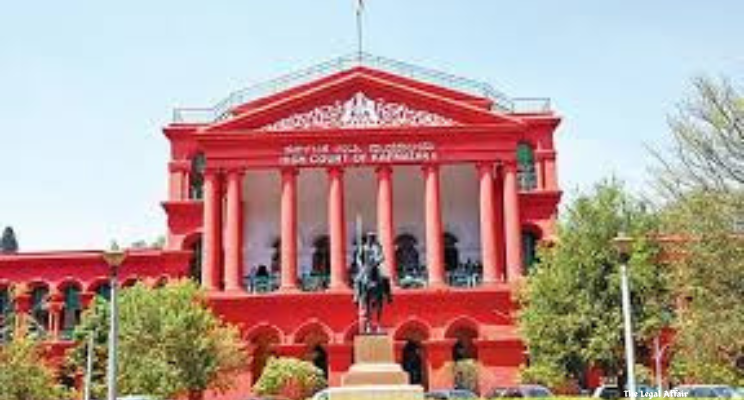
Introduction:
The Karnataka High Court has taken a firm view against alleged unauthorised construction within the prohibited zone of a centrally protected monument, questioning the Archaeological Survey of India (ASI) over its failure to effectively enforce its own statutory notices. The Division Bench comprising Chief Justice Vibhu Bakhru and Justice K.S. Hemaleka was hearing Madhusudhan C.G. v. Union of India & Ors., W.P. No. 11606/2026, a public interest litigation concerning alleged unauthorised construction by Shree Kudali Arya Akshobya Teertha Mutt in the vicinity of the protected Sri Rameshwara Temple at Kudli, Shivamogga District.
The petition raised concerns regarding construction allegedly being undertaken within the 100-metre prohibited area surrounding a centrally protected monument. The petitioner contended that such activity was contrary to the statutory restrictions imposed under the Ancient Monuments and Archaeological Sites and Remains Act, 1958 (AMASR Act) and continued despite notices issued by the ASI directing that the construction be stopped.
The matter assumes significance because the AMASR Act creates a special statutory regime for the protection and preservation of ancient monuments and archaeological sites of national importance. The legislation restricts construction and other activities around protected monuments so that their historical, architectural and archaeological character is not compromised by modern development.
The petitioner, Madhusudhan C.G., approached the High Court alleging that the Mutt was undertaking fresh construction in the prohibited area around Sri Rameshwara Temple. According to the petition, the ASI had already issued notices against the construction, including a notice dated February 7, 2025, directing that the unauthorised construction be stopped immediately. A further stop notice was allegedly issued on February 18, 2025.
Despite these directions, the petitioner claimed that construction had continued. Photographs placed before the Court were relied upon to demonstrate that construction activity had allegedly proceeded even after the ASI notices. The petitioner further submitted that the pace of construction had increased after the High Court itself issued notice in the public interest litigation on April 22, 2026.
The petitioner also raised a serious issue concerning the basis on which permission had allegedly been obtained for repair and renovation. It was submitted that the Mutt had relied upon a communication purportedly issued by the Tahsildar, Shivamogga Taluk, dated January 10, 2023, which allegedly granted conditional permission for repair and renovation of an existing structure.
According to the petitioner, subsequent verification raised doubts about the authenticity of this document. The Tahsildar’s office allegedly communicated on October 22, 2024 that the relevant file could not be found in its official records and that the person identified as “Bharati”, whose signature appeared on the document, was not employed in the Government office during the relevant period. On this basis, the petitioner alleged that the permission document was fabricated.
The controversy thereafter reached the National Monuments Authority, which allegedly withdrew the No Objection Certificate on January 30, 2025, recording that the document submitted in support of the construction was fabricated. The Mutt was also directed to stop construction and remove the unauthorised construction already undertaken.
Against this background, the High Court expressed concern over the apparent continuation of construction despite repeated official directions. The Bench questioned why the statutory authorities, particularly the ASI, had not taken effective steps to enforce their notices.
The Court’s intervention is particularly important because the AMASR Act does not merely create advisory standards for monument protection. It establishes statutory restrictions and assigns powers to designated authorities for preserving protected monuments and controlling activities in their vicinity. The proceedings therefore raise questions not only about alleged unauthorised construction but also about the effectiveness of statutory enforcement.
During the hearing on August 13, 2026, the Court orally questioned the ASI regarding the continued construction despite the notices. It observed that the ASI had been entrusted with powers under the AMASR Act and was expected to use those powers for the protection of centrally protected monuments.
Taking note of the photographs and submissions placed before it, the Court directed that no construction be carried out by Shree Kudali Arya Akshobya Teertha Mutt until the next date of hearing. The matter has been posted for further consideration on November 25, 2026.
Arguments of the Parties:
The petitioner, Madhusudhan C.G., approached the Karnataka High Court through a public interest litigation alleging that the Mutt was undertaking construction in violation of the statutory restrictions applicable to the protected Sri Rameshwara Temple. The principal submission was that the temple was a centrally protected monument and that construction within the prohibited area could not lawfully continue in the manner alleged.
Counsel for the petitioner, Aditya Bhat, drew the Court’s attention to the statutory framework under the AMASR Act and particularly relied upon the restrictions governing construction around protected monuments. The petitioner asserted that the statutory prohibition was intended to ensure that development in the immediate surroundings of protected monuments did not adversely affect their preservation or historical character.
The petitioner pointed out that the ASI itself had already recognised the alleged illegality of the construction. According to the submissions, the ASI issued a notice on February 7, 2025 directing the Mutt to stop the unauthorised construction immediately. A further notice dated February 18, 2025 was also issued.
The petitioner argued that these notices had not brought the construction to an end. Photographs produced before the Court allegedly showed that construction continued despite the directions issued by the competent authority. More significantly, the petitioner relied upon photographs taken as recently as August 12, 2026, one day before the hearing, to contend that construction was not merely continuing but had allegedly accelerated.
Counsel also submitted that the construction had continued even after the High Court issued notice in the PIL on April 22, 2026. This was presented as an indication that the statutory notices and even the pendency of judicial proceedings had failed to prevent further construction.
The petitioner further questioned the legality of the permission relied upon by the Mutt. It was submitted that the Mutt had obtained conditional permission on March 24, 2023 for what was described as “repair and renovation” of an existing structure. The permission allegedly relied upon a communication purportedly issued by the Tahsildar, Shivamogga Taluk, on January 10, 2023.
The petitioner contended that the authenticity of this document was subsequently called into question. The Tahsildar’s office allegedly informed the authorities on October 22, 2024 that the relevant file was not available in its records. It was further alleged that the person named “Bharati”, whose signature appeared on the document, was not working in the Government office at the relevant time.
On the strength of these circumstances, the petitioner alleged that the document was fabricated and that the construction could not be justified on the basis of such purported permission. The petitioner therefore sought effective intervention by the statutory authorities and the Court to ensure that the protection afforded to the monument was not rendered ineffective.
The petitioner also relied upon the subsequent action of the National Monuments Authority, which allegedly withdrew the No Objection Certificate on January 30, 2025 after recording that the document submitted in support of the construction was fabricated. The authority was also stated to have directed the Mutt to stop the construction and remove the unauthorised structures already erected.
The petitioner’s case, therefore, was that there was no genuine uncertainty about the position of the statutory authorities. According to the petitioner, the authorities had already issued notices and taken decisions against the construction, but effective enforcement had not followed.
The State authorities, during the hearing, indicated that action could be taken against the alleged unauthorised construction. Counsel appearing for the State submitted that the competent officer of the Archaeological Department would initiate proceedings for demolition.
This submission indicated that the State authorities accepted that further proceedings could be warranted in relation to the alleged unauthorised structures. However, the question arose as to which authority was responsible for actually carrying out the demolition.
The Additional Solicitor General, Arvind Kamath, appearing for the ASI, took the position that the District Administration would have to undertake the demolition exercise. According to the ASI’s submission, the ASI would cooperate with the process if appropriate directions were issued to the Tahsildar.
The division of responsibility between the ASI and the District Administration therefore became a significant issue during the hearing. While the petitioner sought immediate and effective enforcement of the statutory restrictions, the authorities appeared to indicate that different stages of the enforcement process fell within the jurisdiction of different administrative bodies.
The High Court, however, was not satisfied merely with an explanation regarding which authority would eventually undertake demolition. The Bench emphasised that the ASI had statutory powers under the AMASR Act and questioned why those powers had not resulted in effective enforcement of the stop notices.
The Court’s concern was particularly sharpened by the allegation that construction had continued despite the ASI’s notices and even after the High Court had issued notice in the PIL. The Court therefore sought a practical explanation as to how construction could continue when the statutory authority had already directed that it be stopped.
The Mutt, which was arrayed as a respondent, sought time to place its objections before the Court. Its position will therefore be considered further when the matter is taken up on the next date. At the stage reflected in the proceedings, the High Court’s immediate concern was to preserve the status quo and prevent further construction while the legality of the activity and the competing claims of the parties are examined.
The dispute thus presented the Court with two interconnected issues. The first concerned the legality of construction around a centrally protected monument under the AMASR Act. The second concerned the effectiveness of statutory enforcement when a competent authority has already issued directions restraining the activity.
Court’s Judgment:
The Karnataka High Court adopted a firm approach towards the alleged continuation of construction despite statutory notices. The Division Bench comprising Chief Justice Vibhu Bakhru and Justice K.S. Hemaleka expressed serious concern over the apparent failure of the ASI to enforce the directions it had itself issued.
The Court’s oral observations reflected the central issue before it. The Bench questioned the ASI as to why construction was continuing when the organisation had been entrusted with responsibility for protecting centrally protected monuments and had powers under the AMASR Act.
The Court observed, in substance, that the ASI could not simply issue notices and then remain inactive if those notices were allegedly being disregarded. The statutory authority had been given powers precisely to protect monuments and regulate activities affecting them.
The Court’s intervention must be understood against the statutory scheme of the Ancient Monuments and Archaeological Sites and Remains Act, 1958. The legislation establishes restrictions around centrally protected monuments in order to preserve their physical integrity and protect them from incompatible construction and development.
The petitioner specifically relied upon Section 20A of the AMASR Act, which imposes restrictions on construction within the 100-metre prohibited area around a protected monument. The statutory restriction reflects Parliament’s recognition that activities immediately surrounding a protected monument can affect the monument itself and therefore require heightened regulation.
The petitioner also referred to Section 20C, which permits limited repair or renovation of certain structures existing before the statutory cut-off date, subject to the requirements of the Act and the applicable permissions. The distinction between genuine repair or renovation and fresh construction is therefore legally significant.
The allegation in the present case was that the Mutt had undertaken fresh construction while attempting to rely upon permission relating to repair and renovation. The Court did not finally determine the disputed allegations at this stage, but the statutory restrictions and the circumstances surrounding the alleged permission were sufficient to warrant interim protection.
The Court took particular note of the photographs placed on record. According to the petitioner, the photographs showed continuing construction despite the ASI notices. Photographs taken on August 12, 2026 were specifically brought to the Court’s attention during the August 13 hearing.
The Court also considered the fact that notice had already been issued in the PIL on April 22, 2026. The petitioner submitted that rather than slowing down, construction had allegedly increased after the Court’s intervention.
This allegation considerably strengthened the case for an interim restraint. Courts exercising public interest jurisdiction are entitled to ensure that the subject matter of litigation is not altered substantially while the legality of the disputed activity is under examination.
The High Court accordingly directed that no construction be carried out by Shree Kudali Arya Akshobya Teertha Mutt until the next date of hearing. The direction is significant because it operates as an immediate protective measure while the Court continues to examine the underlying dispute.
The Court’s order was not a final adjudication that every allegation made by the petitioner had been conclusively established. Rather, it was an interim measure intended to prevent further construction during the pendency of the proceedings.
The Court’s dissatisfaction with the ASI’s response is equally significant. During the hearing, the ASI indicated that demolition would have to be undertaken by the District Administration and that it would cooperate if directions were issued to the Tahsildar.
The Bench, however, indicated that this response did not adequately address the fundamental problem. If the ASI had already issued stop notices, the Court wanted to know why construction had continued and what concrete steps had been taken to enforce those notices.
The Court’s observation that the authorities “have powers given to you” reflects a broader principle of administrative law: statutory powers conferred for public protection carry with them a corresponding responsibility to exercise those powers effectively when the circumstances require it.
A regulatory authority cannot ordinarily discharge its statutory responsibility merely by issuing a direction if it subsequently allows the prohibited activity to continue unchecked. Effective enforcement is particularly important where the subject matter involves a protected monument and statutory restrictions enacted specifically for its preservation.
The Court therefore indicated that it would examine the matter further and expected the authorities to take meaningful steps. The Bench’s observation, “Nobody follows your notices? I will examine,” demonstrates the Court’s concern about the apparent gap between statutory direction and actual enforcement.
The issue of the alleged forged permission also adds another layer to the proceedings. According to the petitioner, the document purportedly issued by the Tahsildar could not be traced in the official records and the person whose signature appeared on it was allegedly not employed in the concerned Government office at the relevant time.
The National Monuments Authority allegedly took cognisance of this issue and withdrew the No Objection Certificate on January 30, 2025, recording that the document was fabricated. The Mutt was thereafter directed to stop the construction and remove the unauthorised construction already made.
The High Court will ultimately have to consider the legal effect of these developments and the respective explanations of the parties. At the present stage, however, the Court’s priority was to prevent further alteration of the site.
The direction restraining construction also reflects the precautionary approach commonly adopted in cases involving heritage and environmental protection. Once a protected monument is alleged to be under threat from ongoing construction, allowing further development during litigation could potentially make the dispute more difficult to remedy later.
The case also illustrates the importance of the statutory distinction between prohibited construction and permitted repair or renovation. The existence of an old structure does not necessarily confer an unrestricted right to undertake new construction in the prohibited zone. Any activity must satisfy the requirements of the AMASR Act and the applicable permissions.
The Court’s proceedings also demonstrate that the protection of heritage monuments is not merely a matter of administrative discretion. Once Parliament has established statutory restrictions, public authorities are required to implement them in accordance with law.
At the same time, the Court has not finally determined the disputed allegations against the Mutt. The respondent has sought time to file its objections, and the matter has been posted for further hearing on November 25, 2026. The final determination will depend upon the material placed before the Court, the statutory framework and the responses of the concerned authorities and the Mutt.
The interim order nevertheless sends a clear message concerning the protection of centrally protected monuments. Construction cannot be permitted to continue merely because enforcement proceedings are pending or because responsibility is being divided between different government authorities.
The ASI’s role is particularly important in this context. As the principal national agency responsible for the protection and preservation of centrally protected monuments, it is expected to ensure that statutory safeguards are translated into effective action on the ground.
The Court’s intervention also highlights the role of public interest litigation in cases involving protection of heritage assets. A monument of national importance is not merely private property or a local structure. Its protection serves a broader public and cultural interest, which can justify judicial scrutiny where statutory safeguards are alleged to have failed.
The proceedings therefore raise a broader question of administrative accountability: what is the value of a statutory prohibition if the authorities do not effectively enforce it? The High Court’s observations indicate that statutory powers must be accompanied by meaningful enforcement, particularly when continued violations are brought to te Court’s attention.
By directing that no further constructio